Hanwha Q-Cells sues Jinko, Longi and REC for patent infringement
The Korean solar manufacturer has lodged a patent infringement lawsuit against Jinko and REC in Germany, and two more against the same companies plus Longi in the U.S. Hanwha Q Cells claims its three rivals have used its patented solar cell passivation technology to increase the performance of their products.
Understanding why cesium and rubidium salt improve the yield of perovskite solar cells
The addition of either salt enables more even distribution of halide atoms within the perovskite material – key to increasing cell conversion efficiency. The explanation should speed up the process of identifying the best perovskite mixes.
Silver price to rise 7% this year
According to the Silver Institute, demand for the precious metal in the solar industry will remain stable up to 2022, despite recent changes in China’s PV policy.
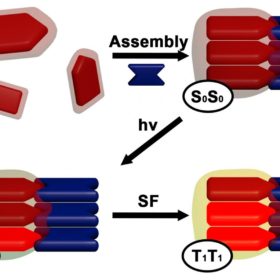
Singlet fission may raise theoretical efficiency of solar cells to 44%
According to a U.S. research team, new nanomaterials relying on dyes based on diketopyrrolopyrrole and rylene can generate a singlet fission reaction that extends the life of harvestable electronic charges.
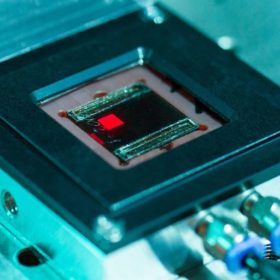
German researchers increase open circuit voltage of perovskite solar cells to 1.26 volts
The voltage is key to improving efficiency, the scientists say. It indicates how much energy is lost within the cell through ‘recombination processes’.
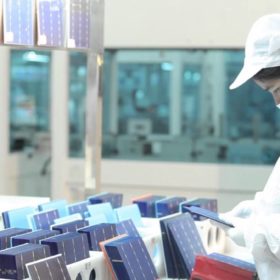
Jinko achieves 24.2% efficiency for its n-type monocrystalline cell
The Chinese module maker said the result was certified by the Photovoltaic and Wind Power Systems Quality Test Center at the Chinese Academy of Sciences. The record, Jinko said, is thanks to its high quality n-type wafers, selective doping technology and advanced fine-line printing.

UK researchers say transport layers with low permittivity and doping make perovskite solar cells more stable
Scientists are seeking to push ion migration to areas of perovskite-based solar cells where more electric charge can be extracted.

Sentis Capital urges Meyer Burger to establish GW-scale HJT production
Meyer Burger’s largest single shareholder has requested the company change strategy. Sentis Capital has urged the Swiss technology company’s board to raise sufficient capital for it to set up its own GW-sized production facility for its heterojunction and tandem cell PV technology. Meyer Burger has responded that it is view of only one shareholder.
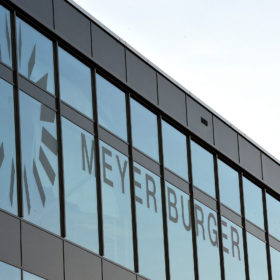
Meyer Burger to lay off 100 workers and relocate most of PV business to Asia
There may be a much-vaunted ‘solar renaissance’ in the offing for Europe, but it hasn’t come quickly enough for the Swiss PV equipment supplier, which wants to handle most of its sales and services from China.
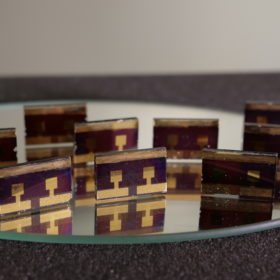
Swiss research group develops methylammonium-free perovskite cells
The organic methylammonium (MA) molecules in the cell were replaced with inorganic elements such as rubidium and cesium. The planar perovskite cells resulting from the research have an efficiency of more than 20%.
