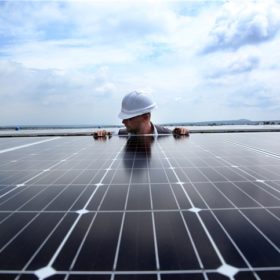
Iberdrola plans another giant solar park in Spain
The project, in its preliminary development phase, should reach a total generation capacity of around 800 MW. The two solar parks that will make up the Castilla-La Mancha project would each have a 400 MW capacity.
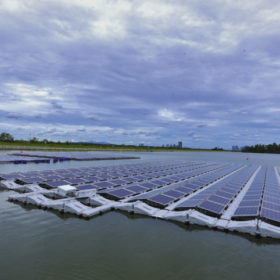
Thai utility EGAT launches tender for 58.5 MW floating project
The project is part of the utility’s plan to deploy large-scale floating PV installations at several hydroelectric dams it operates in Thailand.
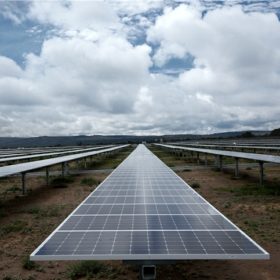
Mexico reaches 4 GW milestone
Of the nation’s installed operational PV capacity, 3,364 MW is in the form of solar parks while distributed generation contributes around 693 MW.
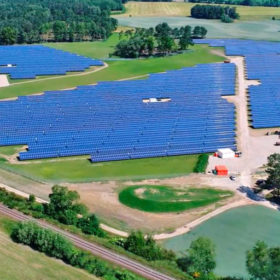
Average final price in Germany’s solar tenders falls to €0.0547/kWh
In a highly oversubscribed tender Germany’s Federal Network Agency allocated 204 MW of solar capacity. The lowest bid was €0.049/kWh and a large project was assigned in the northern region of Mecklenburg-Vorpommern.
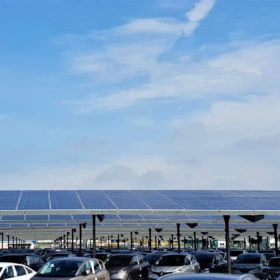
France resumes self-consumption tenders
The procurements relate to self-consumption projects with a generation capacity of 100 kW-1 MW. The next tender will be launched in September and will allocate 25 MW of solar capacity. The tenders had been suspended because of low interest and disproportionately high final tariffs for surplus power injected into the grid.
EU publishes directive, regulations for Clean Energy Package
The two documents urge member countries to adopt more favorable legislative frameworks to help improve operation of renewables and distributed generation in relation to other energy networks of gas or heat. The new provisions are also expected to facilitate the development of energy communities and aggregators, while opening the market for flexibility services to small power producers.
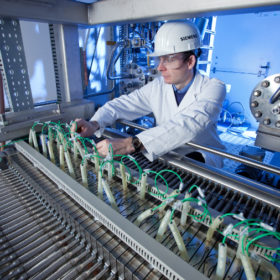
IEA report outlines ‘Future of Hydrogen’
The G20 meeting of environment and energy ministers on the weekend in Karuizawa, Japan, came out largely in favor of adopting lower-emission energy technologies. That means cleaner coal, as well as the development of solar- and wind-powered green hydrogen.
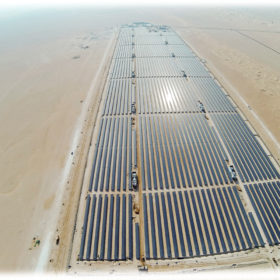
DEWA issues tender for fifth 900 MW phase of 5 GW solar park
Overall, 64 companies have expressed interest in building the next 900 MW phase of the huge Mohammed bin Rashid Al Maktoum Solar Park. The first section of this part of the park is scheduled for completion in the second quarter of 2021.
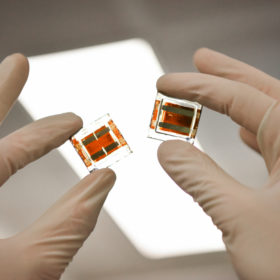
Copper iodide, another option to stabilize perovskite cells
A research team from Russia’s institutes NUST MISIS and IPCE RAS, and Italy’s University of Rome Tor Vergata, have applied an additional layer of p-type copper iodide semiconductor between perovskite and the hole-transport NiO layer of the cell. According to the scientists, this inorganic material is more accessible and easy-to-use.
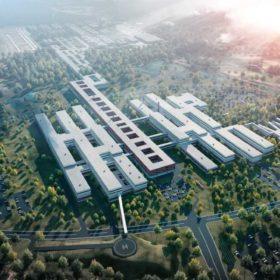
MW-sized solar park for 100% self-consumption in Denmark
A 4.8 MW solar park, which is being built by Danish developer Better Energy, will cover 20% of total power demand of a new hospital complex in Odense. The energy produced by the plant will be 100% self-consumed.
