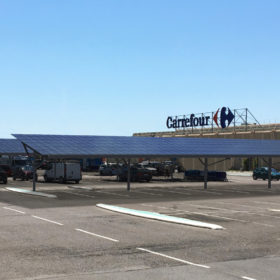
Carrefour deploys solar on 36 superstores in France
The French retailer will use energy generated by the PV installations exclusively for self-consumption. The projects will be developed by French developer Urbasolar.
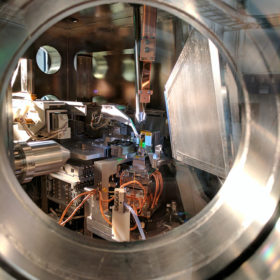
Understanding why cesium and rubidium salt improve the yield of perovskite solar cells
The addition of either salt enables more even distribution of halide atoms within the perovskite material – key to increasing cell conversion efficiency. The explanation should speed up the process of identifying the best perovskite mixes.

World’s largest private solar PPA signed in Iberia
Audax Renovables has signed an agreement with Welink under which the Spanish company will buy – for 20 years at a fixed price – the energy produced by solar facilities with a total 708 MW of generation capacity that Welink will develop in Spain and Portugal. German group Allianz will buy the solar plants after completion.
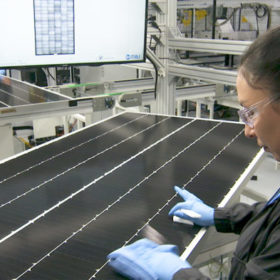
SunPower officially producing P-Series at former SolarWorld factory in the U.S.
The largest shingled solar cell production facility in the Western Hemisphere at 220 MW, marking the first of a group of massive factories expected to go on-line this year.
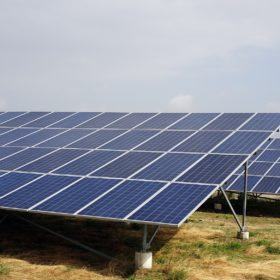
India will miss 100 GW solar target according to Wood Mackenzie
Reports emphasize the likelihood of India remaining a world leader for solar but warn of missed targets for PV overall and rooftop in particular.

Russian Duma approves net metering for solar up to 15 kW
Under the new rules, expected to come into force by the end of the year, Russian residential PV system owners will be able to sell excess power to the grid. The provisions were discussed for almost two years before yesterday’s vote.
India prioritizes domestic products in plan for 12 GW of new solar
The Indian Cabinet Committee on Economic Affairs has approved a plan for projects to be enabled by public bodies in the hope that avoiding competitive procurement will enable it to circumvent WTO rules related to import parity.
Silver price to rise 7% this year
According to the Silver Institute, demand for the precious metal in the solar industry will remain stable up to 2022, despite recent changes in China’s PV policy.
Kness Group commissions module factory in Ukraine
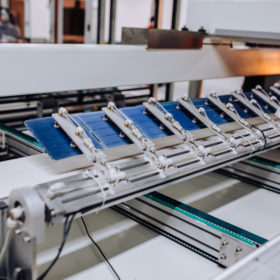
The panel fab, with a production capacity of 200 MW, is in Vinnytsia, central Ukraine. The factory’s capacity is expected to double by the end of the year.

Large-scale solar arrives in Quebec
State-owned utility Hydro-Quebec will deploy its first 10 MW of ground-mounted solar to test the technology at the province’s latitude. The hydropower company is also using storage to better manage winter peak demand. Bifacial modules will be included in both projects.
