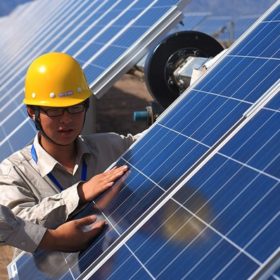
GCL-Poly plans to sell wafer unit, expects $77.6 million loss for first 10 months of 2018
After the failed attempt to sell a majoritry stake in its main polysilicon unit, Jiangsu Zhongneng, the Chinese solar manufacturer has now agreed to sell its wafer unit Suzhou Kezhun to Huajun Holding Group for US$123.6 million. The operation is part of the company’s plan to focus on wafer manufacturing based on the diamond-wire sawing technology and shift production to low-cost locations.
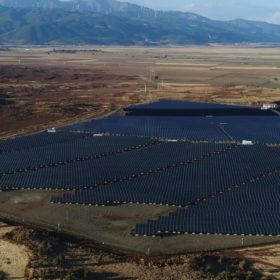
Turkey hits 5 GW of registered PV capacity
A total of 1.58 GW of new PV systems have been registered with Turkey’s grid administrator in 2018. Of this new capacity, 1.51 GW is in the unlicensed project segment, for arrays up to 1 MW in capacity, while the remaining 63 MW is for larger projects that had been successful in bidding for PEKA auctions.
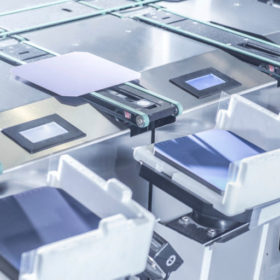
Sentis Capital urges Meyer Burger to establish GW-scale HJT production
Meyer Burger’s largest single shareholder has requested the company change strategy. Sentis Capital has urged the Swiss technology company’s board to raise sufficient capital for it to set up its own GW-sized production facility for its heterojunction and tandem cell PV technology. Meyer Burger has responded that it is view of only one shareholder.
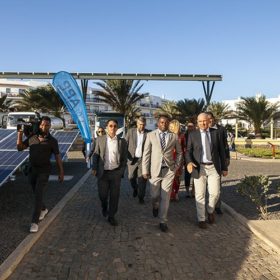
Cape Verde commissions solar plant, sets 2030 RE target at 50%
Although renewable energy targets have been revised down, the archipelago’s government said that wind and solar will still see their share increase considerably over the next decade.
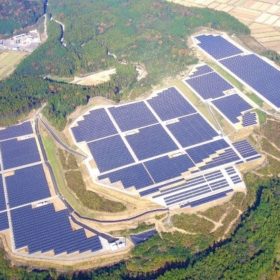
Japan postpones FIT cuts by six months for projects over 2 MW
A reduction of the feed-in tariff to ¥21/kWh (around US$0.19) for projects over 2 MW in size and approved between 2012 and 2014 will be applied starting from September 2019 and not from March, as originally planned. For approved projects with a capacity of less than 2 MW, however, no postponement has been granted.
Construction begins on 60 MW solar park in Malawi
The large-scale power plant is being built by JCM Matswani Solar Corp Limited. A 20-year PPA has been signed with the Electricity Supply Corporation of Malawi Limited (ESCOM).
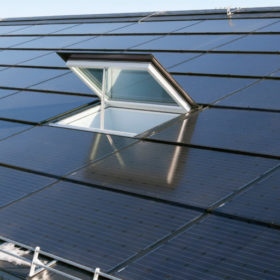
Switzerland’s third largest canton launches $3 million incentive scheme for solar-plus-storage
The scheme will provide incentives for solar-plus-storage projects for self-consumption, as well as for projects for virtual power storage.
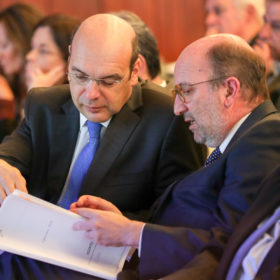
Portugal aims for 100% renewables by 2050
Solar is expected to play a leading role in the Portuguese Government’s new energy plan, which includes the goals of covering 80% of the country’s total power demand with clean energy by 2030, and electrifying 65% of its economy by 2050.
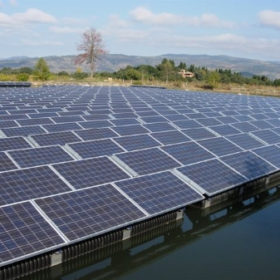
Floating PV conquers two new countries
This time, the countries revealing their first floating PV plans are Albania and the Ivory Cost. In the first, a 12.9 MW plant is being proposed by local hydropower producer KESH, while in the second, the local government has secured funds for what it claims will be Africa’s first floating PV array.
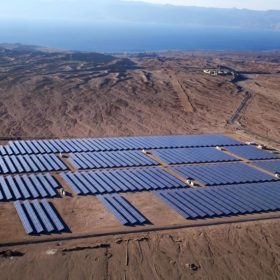
Jordan gets $265 million loan to improve grid capabilities, integrate more solar
The funds, provided by the European Bank for Reconstruction and Development, will help utility NEPCO repay short-term debt, as well as financing expansion of the grid’s capability to increase the share of solar and other renewable energy.
