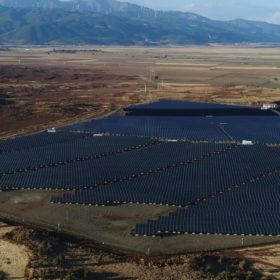
Turkey issues 1 GW PV tender, sets maximum price of $0.065/kWh
Three seperate tenders will be held for the deployment of large-scale solar plants across three locations, chosen by the Turkish Government. Selected developers will not be required to open a module factory, as in the last tender, but will have to buy at least 60% of the necessary modules from Turkish panel makers. The new maximum price has been set slightly lower than the final price of the previous 1 GW solar auction, held in 2017.
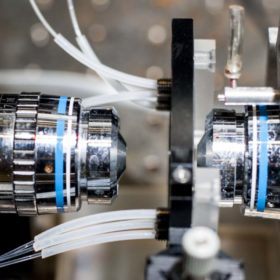
“Optical Tweezers can benefit solar cell research” – Interview
pv magazine interviewed Ricardo Arias González, who holds a PhD in Physical Sciences and introduced the Optical Tweezers applied to biology in Spain. It is one of the tools of photonics for which Arthur Ashkin received the Nobel Prize in Physics in 2018, together with Donna Strickland and Gérard Mourou.

Brazil’s Cemig contracts 152 MW of wind, solar capacity in second auction
Selected projects, which have a combined capacity of 338 MW, are scheduled to begin delivering power in January 2022 under a 20-year PPA.

Everwood Capital launches €300 million fund for unsubsidized solar in Spain
Unlike its three previous funds, which focused on plants in operation, the Spanish asset manager will raise €300 million for the construction of plants without subsidies.
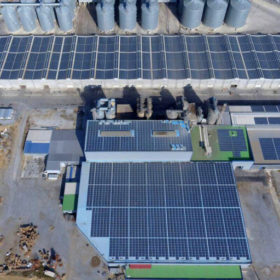
Turkey expected to reach 14 GW of solar in 2023
According to the Solar Energy Roadmap, released by Turkish PV association, Günder, the country may even achieve 38 GW of installed solar power by 2030. Several factors, however, could hinder this projected growth.

Italy set to reach 20 GW milestone
Although the Italian solar market registered an 11% drop in new PV installations in the first eight months of 2018, by the end of the year, it will likely surpass 20 GW of cumulative installed solar power. No large-scale PV facilities have been grid connected so far this year, but monthly average growth remains in line with that of the previous two years.

Ivory Coast gets financing for 37.5 MW solar plant
Funds totaling €36.7 million have been awarded by Germany’s development bank KfW and the European Union. The project is set to be located in Boundiali, in the northern part of the Sub-Saharan country.
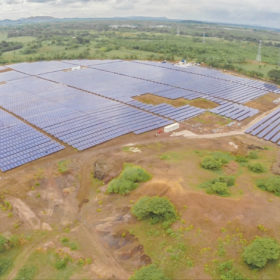
Private PPAs for solar are proliferating in Latin America
New deals or projects related to the sale of solar power to big energy consumers were announced in Brazil, Panama, Mexico, Colombia, and Chile over the past weeks.
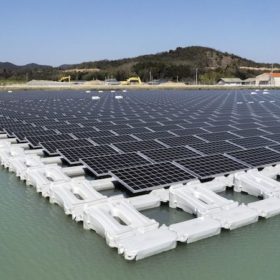
Floating PV goes everywhere
While a large floating solar power plant is being planned in Ukraine, within a huge renewable energy complex at the water reservoir Kakhovka, the Asian Development Bank has targeted Afghanistan, Azerbaijan, and the Kyrgyz Republic as three countries possessing strong potential for this emerging technology.
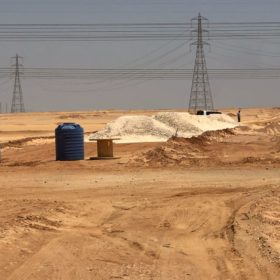
Developers’ alliance helps bring Egypt’s 1.8 GW Benban PV complex online
The realization of Egypt’s 1.8 GW Benban solar complex has posed a long series of challenges to its numerous developers. The creation of the Benban Solar Developers Association (BSDA) has helped move the project forward amid initial grid constraints and several logistical issues, among others. Although only one of the 33 projects has now reached completion, all are set to be grid-connected by June 2019 – the final deadline set by the Egyptian government, according to Assem Korayem, a member of the BSDA and the operating general manager at Access-Power Egypt. In a conversation with pv magazine, he provides an extensive update on the current status of the huge PV complex.
