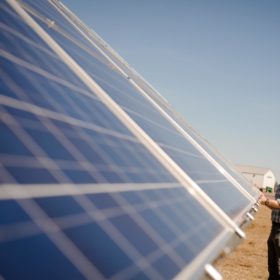
US scientists claim PV system owners subsidize their non-PV neighbors
Researchers at the Michigan Technological University claim to have demonstrated that PV system owners in the United Stated are unjustly subsidizing electric utilities. Their analysis showed that, thanks to rooftop PV, utilities and their non-PV customers can save money from avoided costs for new grid, reserve, and generation capacity, as well as for avoided operation and maintenance and environmental and health liabilities due to fossil fuel power generation.

Augwind’s compressed air tech for renewables storage
Augwind CEO Or Yogev recently spoke to pv magazine about the Israeli company’s new storage solution for the renewables sector. The underground compressed-air storage specialist recently secured 166 MWh of capacity in Israel’s latest solar+storage tender, and plans to take equity stakes in all five projects.

Excess renewables production to make fuel, chemicals and feedstocks for industry
The University of New South Wales and several other universities in Australia are embarking on a feasibility study into how New South Wales can utilize excess renewable energy to make fuel, chemicals, and feedstocks for the industry. The aim is to develop a plan for how fuels and chemicals such as green hydrogen and ammonia produced from renewables can decarbonize the industry.
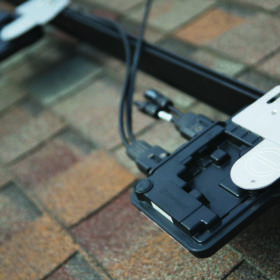
Enphase closes 2020 with a strong Q4
After a Covid-19-stunted Q2, the company reported improved revenues for a second straight quarter, and closed 2020 with revenues north of $770 million.
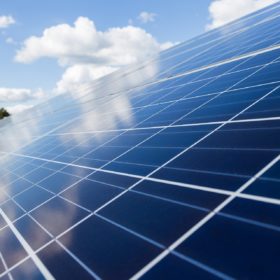
Macquarie’s second renewable energy fund raises €1.6bn for large scale investment
Macquarie-owned Green Investment Group’s Renewable Energy Fund 2 has far exceeded its own expectations by raising over €1.6 billion in investment commitments for large scale solar and wind projects all over the world.
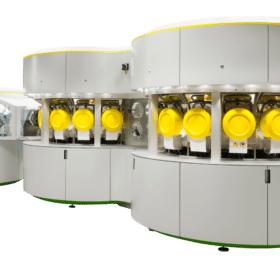
Midsummer ships CIGS production line to Russia
The production equipment was bought by Russian nanotechnology specialist Rusnano. The line will be used to produce BIPV modules at a factory in the Republic of Mordovia.

Nice Solar Energy files for insolvency under self-administration
The CIGS thin-film specialist employs 160 people in Germany. Business operations will continue with no disruption for the time being.
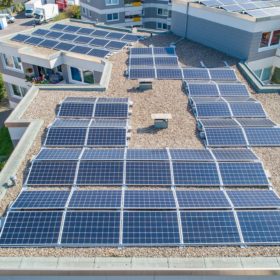
Brazil’s PV module demand reached almost 5 GW in 2020
According to a recent report from Brazilian consultancy Greener, the country imported 4.76 GW last year. Domestic PV module makers had a 3.8% market share with around 190 MW in shipped modules. The analyst also revealed that prices for distributed generation PV systems rose by 20% in 2020.
Italy’s next renewables auction may deliver even worse result
The poor outcome of Italy’s recent auctions for large scale solar suggests that the next tender will have similar results. pv magazine has spoken with two major experts from the Italian PV sector who claim that a change of pace is required, hinging on a streamlined authorization process, more competition and a focus on agricultural land.
India eyes 10 GW of ingot-to-module manufacturing capacity within two years
Under a production-linked incentive scheme, the government will reward manufacturers for building vertically integrated PV production lines. The scheme aims to attract 10 GW of production capacity by April 2023.
