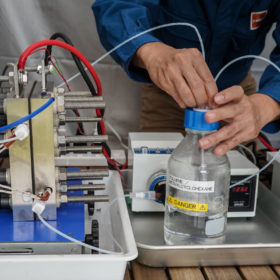
Queensland sends first green hydrogen shipment to Japan
Green hydrogen has been exported from Australia to Japan, under a trial executed by researchers from JXTG, Japan’s largest petroleum conglomerate, using Queensland University of Technology’s cutting-edge Redlands Research Facility. The Queensland government has also announced AUD 250,000 ($177,000) in funding toward the establishment of a renewable hydrogen production pilot plant.
Australian government unveils $35.7m pot to power remote communities
Australia’s Coalition government has announced funding to support up to 50 off-grid and fringe-of-grid feasibility studies that will investigate whether building a microgrid is cost-effective and whether existing off-grid capabilities can be upgraded with more up-to-date technology.
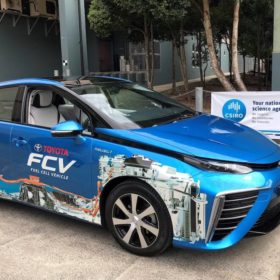
Hydrogen home storage, refueling hub get financial shot into the arm
Toyota Australia will transform its former manufacturing site in West Melbourne into a renewable energy hub to produce green hydrogen with the help of funding from the Australian Renewable Energy Agency (ARENA). In other hydrogen-related news, researchers at UNSW Sydney with partners H2Store have received a $3.5 million investment from Providence Asset Group to develop a hydrogen residential storage.
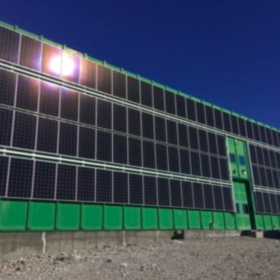
Australia’s first solar farm in Antarctica opens at Casey research station
A 30 kW vertical array has been powered up at Australia’s Casey research station in Antarctica. The project is one the largest solar installations on the ice-covered continent.
Solar becomes a must-have for utilities
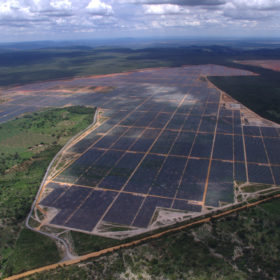
Motivated by steeply declining cost curves, leading utilities are building solar portfolios around the globe. The latest statistics show the cumulative capacity of the biggest utility-scale solar plant owners topped 18 GW at the end of last year, with power companies in China, the U.S. and India to the fore.
China’s largest renewables hybrid project adds 100 MWh battery
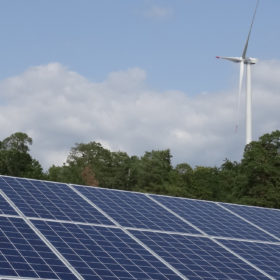
Chinese li-ion battery manufacturer CATL has delivered a 100 MWh battery storage system to the country’s largest mixed renewables plant, which features 400 MW of wind energy, 200 MW of PV and 50 MW of concentrating solar.
Europe passes 500 TWh of renewables demand – but solar loses ground
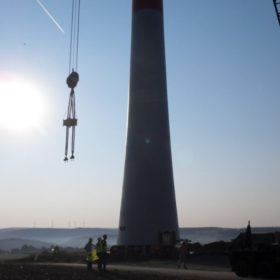
The 2018 figures for the Guarantee of Origin (GO) certificate market show a marked growth in clean energy demand in Europe. Demand surpassed 500 TWh, while GO prices reached record levels. Solar GO, however, saw a slight fall.
Swiss fintech startup builds platform for post-tariff renewable energy markets
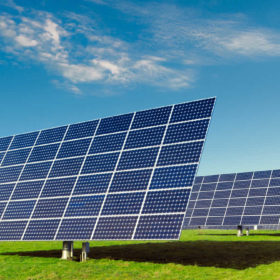
As renewable energy subsidies slowly evaporate, managing risks and securing revenue streams is becoming increasingly complex for investors. Pexapark is looking to address this helping companies transact PPAs and manage energy sales.
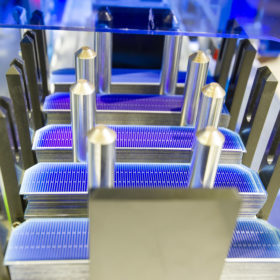
Solar sector to add 552 GW by 2027 led by China
The leading trio – China, the United States and India – will comprise 70% of the projected 552 GW of solar capacity, which will be added between end-2017 and 2027, finds Fitch Solutions, which has revised down its original forecast for solar capacity growth in China. The curbed growth in China, due to subsidy cuts and restricted access to the United States and India, is expected to squeeze domestic solar equipment manufacturers, but also lead to access to cheaper solar panels in other smaller markets.
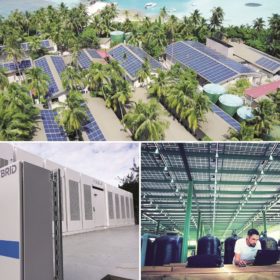
The weekend read: Decision-making through data
According to a study conducted by Massachusetts Institute of Technology, companies that use data-driven decision-making are 5% more productive and profitable than their competitors. Jean-Yves Bellet, cofounder and VP-CTO of QOS Energy asks,“Can we apply the results of this study to solar PV operations and maintenance?” Today, solar plant owners expect to generate value from their data using real-time decision-making tools, analytics, and machine learning models.
