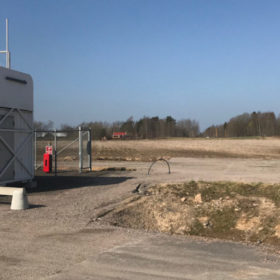
AT Solar builds innovative storage project based on hydrogen in Sweden
The goal of the project, RE 8760 is to show how the storage of renewable energies can make them usable all year round. The generated solar power is stored and converted into hydrogen. It can also be conserved over long periods and used to recharge fuel cell vehicles during the dark winter months.
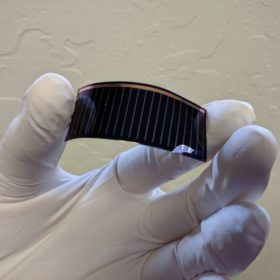
Alta Devices launches new solar cell for vehicle integration
U.S. technology company, Alta Devices has launched a new gallium-arsenide based solar cell, which it says improves on the power to weight ratio of its previous cell by 160%. The cell is designed to provide lightweight, high efficiency generation for integration with cars, drones and other vehicles.
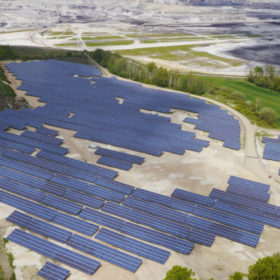
Germany covered 12.1% of its power demand with solar in April
Eon announced that, for the first time, more than 10 billion kWh of solar power were generated in Germany between January and April. Bruno Burger of Energy Charts has also determined that the last week of April was the best week for renewable energies in the current year, with a share of 53.2% in electricity generation across the country’s grid.
SkyPower Global enters deal to deploy 1 GW of solar in Uzbekistan
The Canadian solar developer has signed an agreement with local power utility, Uzbekenergo for several large-scale PV projects, which would span several regions in Uzbekistan. Overall, around US$1.3 billion is expected to be invested in this plan.

Iconic Mercedes-Benz star to disappear from residential battery market
The German car maker entered the solar PV home storage business in mid-2016. In the future, its parent company, Daimler will align the stationary storage segment with its grid business.
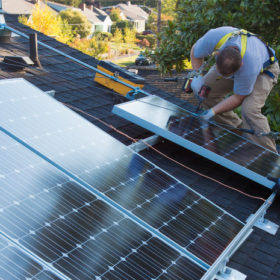
Four-junction tandem thin film cells have strong potential for residential applications, MIT scientists say
Four different thin film solar PV technologies were tested by the MIT experts across three types of environment in the U.S.: Arid (Arizona); temperate (South Dakota); and humid (Florida).

Stanford scientists unveil new manganese-hydrogen battery for storage of wind, solar
The water-based battery relies on a reversible chemical reaction that stores electrons in the form of hydrogen gas. Despite encouraging first results, the prototype developed by the research team now needs to be further developed.
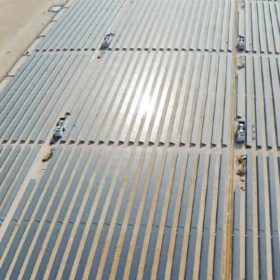
EDF brings 200 MW of PV online in Dubai
The PV plant is the first section of the third 800 MW phase of the 1 GW Rashid Al Maktoum Solar Park. The facility will sell power to the Dubai Electricity & Water Authority at US$0.00299 per kWh.
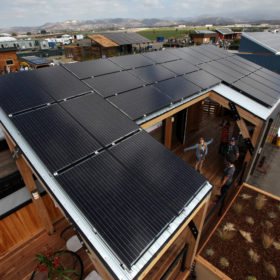
Ontario earmarks $70 million for solar, storage rebates
Under the GreenON’s Solar Rebates Program, homeowners will be able to install solar-plus-storage systems with a capacity of up to 10 kW, while businesses will be entitled to deploy up to 500 kW of rooftop PV capacity.

Tunisia preliminarily approves 10 solar projects selected in 70 MW tender
The solar PV parks, which will range in size from 1 MW to 10 MW, will sell power to the country’s state-owned utility, Société Tunisienne de l’électricité et du gaz (STEG) under a long-term PPA.
