Price of solar keeps falling in Lebanon
According to a report from the United Nations Development Programme, the turnkey price for solar in the nation declined by around 17.4% between 2016 and 2017 – and by 79% over the last seven years. By the end of last year, cumulative installed Lebanese PV capacity reached 35.4 MW.

Uzbekistan’s steeplechase towards renewable energy
French oil group Total has reached agreement with national utility Uzbekenergo to build a large-scale PV plant in Samarkand province. However, construction on a 100 MW project by China’s Syngyes has been suspended.

Spain may introduce additional measures to support self-consumption
A few days after the Spanish government introduced new rules for self-consumption and canceled the solar tax, the Spanish Parliament is now reviewing new provisions to reduce the time frame of the registration for a project under the self-consumption regime, while also simplifying bureaucratic procedures.
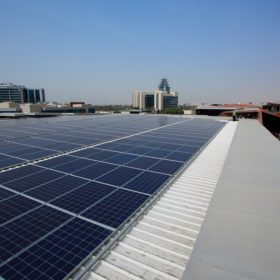
SirajPower develops 50 MW under DEWA’s Shams Dubai initiative
The UAE-based solar company has signed a 15 year lease for a 1.8 MW rooftop project on two warehouses of Apparel Group, a global fashion and lifestyle retail conglomerate.

Ienova secures another long-term solar PPA in Mexico
The Mexican gas and electricity provider will sell solar power to Canadian multinational bank Novascotia under a 15-year PPA. The electricity will be provided by the solar plant portfolio the company is developing in the Mexican states of Sonora and Baja California.
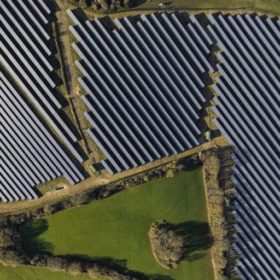
Encavis buys 80% stake in 300 MW solar project in southern Spain
The Talayuela plant will be built by British developer Solarcentury in the region of Extremadura and will sell electricity under a PPA contract.

Ecoprogetti supplies 250 MW production line for Moroccan bifacial module fab
The line, supplied by the Italian PV equipment provider, will produce glass-glass and bifacial modules. Almaden’s factory is expected to begin manufacturing activities in late October.
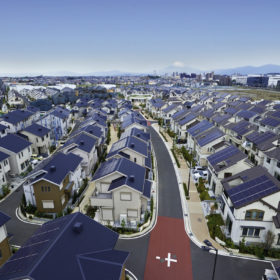
Japan to add 17 GW of new solar by the end of 2020 – Fitch
The additonal capacity is expected to come from the backlog of projects under Japan’s FIT mechanism and would raise cumulative installations to over 65 GW. In the period 2021-2027, however, the industry is expected to grow at a considerably lower pace, due to grid constraints, land availability and lower prices coming from auctions.

Egypt could reach 44 GW of solar by 2030 – IRENA
In its report, Renewable Energy Outlook: Egypt, the International Renewable Energy Agency (IRENA) envisages a scenario in which solar becomes the second largest energy source in the country, after gas. If current plans and RE strategies are maintained, however, just 9 GW will be installed by 2030, compared 44 GW. The agency recommends a series of actions to achieve a 2030 renewable energy target of 52%.
Module prices have decreased by up to 25% so far this year, TrendForce says
According to the Gold Member Solar Report by EnergyTrend (Q3 2018), monocrystalline module prices have fallen almost 20% this year, while those for polycrystalline modules have dropped by more than 25%. Increased consolidation among manufacturers and developers is expected to occur in China and the global solar market, with more merger deals, plans for capacity reductions and even factory closures.
