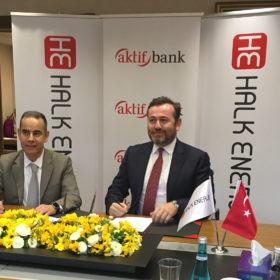
Çalik Group acquires 50% stake in Turkish solar EPC contractor Halk Enerji
Halk Enerji will focus on unlicensed PV projects up to 1 MW, which in Turkey are expected to reach a volume of 2 GW this year.
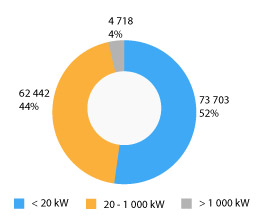
Sweden tops 140 MW of installed PV capacity
The Scandinavian country added only 13 MW of new PV systems in 2016. Around 52% of the cumulative capacity is represented by PV systems up to 20 kW.
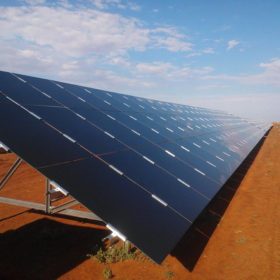
Germany supports implementation phase of Tunisian Solar Plan
The German Federal Enterprise for International Cooperation (GIZ) will provide the Tunisian government with €7 million. The North African country will use the donation to finance the preliminary support project of its 1 GW renewable energy plan, which includes the installation of 650 MW of solar.
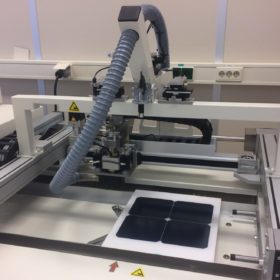
Tempress & ECN develop process for IBC cell production
Equipment manufacturer Tempress has teamed up with Dutch research center ECN to develop a production process for n-type IBC solar cells with efficiency above 21%. A pilot of the new process was completed in just three months, illustrating its compatibility with mass production.
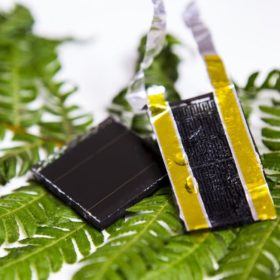
Solutions unveiled for next generation storage
Two innovative new technologies with potential applications in solar were unveiled this week. Research teams across the world are looking at new way to boost solar’s stability by integrating with storage. Scientists in Australia and in China demonstrate their innovative steps toward achieving this.

France releases renewable energy plan for French Guiana, solar FITs to be increased by 35%
The French Government this week unveiled a new renewable energy plan for French Guiana. The program includes development of distributed generation, self-consumption and storage solutions, and a 35% increase of FITs for grid-connected installations. Around 40 MW of additional PV capacity is expected to be installed in the region.
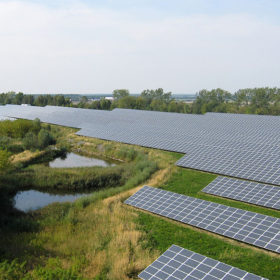
Solar and wind set new record in Germany in March
According to provisional statistics from German institute IRW, PV systems in Germany have provided approximately 3.3 billion kWh in March, up 35% from the same month a year earlier and 118% from February 2017.

Mexico publishes requirements for clean energy certificates
The Mexican Government intends to facilitate the planning of renewable energy projects over the next years. Clean energy certificates, which apply to power provider and industrial consumers, will increase from 7.4% in 2020 to 10.9% in 2021 and 13.9% in 2022.
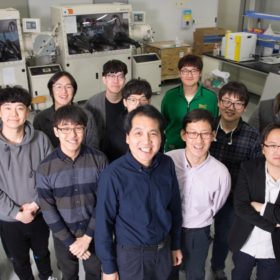
Korean University team develops 21.2% efficient perovskite solar cell
Researchers at the Ulsan Institute of Science and Technology (UNIST) in South Korea have announced the development of a method to produce perovskite solar cells, which the University says could contribute to commercialization of the technology.

Hungarian PV market sees robust growth
Hungary’s solar market could see its largest growth ever in 2017. Although the country’s FIT scheme was closed in mid-2016, 2 GW of projects approved under the program could still potentially be installed over the next two years.
