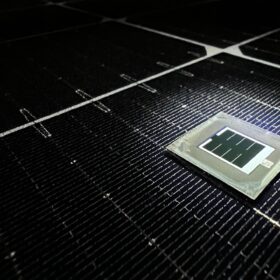
South Korea sets 2030 goal for perovskite-silicon tandem solar panels
South Korea has allocated KRW 33.6 billion ($22.8 million) for R&D on perovskite-silicon tandem solar technology with a goal of commercializing 28%-efficient modules by 2030, according to the Ministry of Economy and Finance.
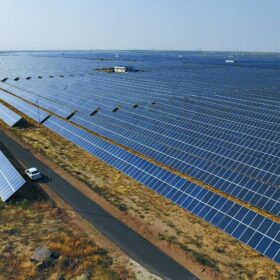
What can South Korea learn from India’s rapid solar deployment?
Korean policy analyst focusing on solar power plant siting and permitting, Daun Kim, has reported on her recent trip to India’s Bhadla Solar Park. The analyst highlights how clear siting policies and streamlined permitting helped India scale renewables, something that South Korea can learn as it pursues a 100 GW renewable energy target by 2030.
South Korea launches 1 GW PV tender
South Korea’s Ministry of Trade, Industry and Energy (MOTIE) has kicked off a tender for 1 GW of solar and 1.25 GW of wind. The ceiling prices for solar contracts stands at KRW 157,307 ($113.6)/MWh.
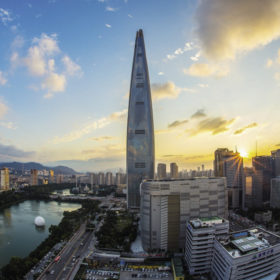
South Korea’s new solar installations hit 2.5 GW in 2024
South Korea installed 2.5 GW of new solar capacity in 2024, bringing its cumulative PV capacity to more than 29.5 GW, according to the Korean Energy Agency.
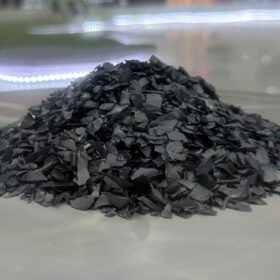
China reviewing anti-dumping duties on solar-grade silicon from US, South Korea
The Chinese government says it will review 2014 anti-dumping duties on US and South Korean polysilicon imports, and will maintain them during its investigation, which was requested by 13 Chinese manufacturers.
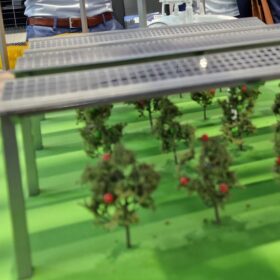
South Korea offers support for agrivoltaics
The South Korean government has announced a new package of measures to support agrivoltaic projects. It says that the agrivoltaics business should be a priority for agricultural companies.
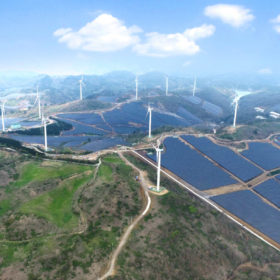
South Korean regional governments bypass minimum distance guidelines to allow solar PV
Jaebin Choe, renewables permitting team researcher at environmental advocacy organization Solutions for our Climate (SFOC), told pv magazine that some South Korean regional governments have been forced to pass exceptional clauses to allow the construction of solar PV arrays in their municipalities despite federal recommendations. The association claims this represents the ‘biggest bottleneck’ in the country’s solar pursual.
South Korea announces results of latest nationwide solar inspections
The South Korean authorities have identified 5,359 examples of illegal subsidy use for renewable energy plants selected in tenders between 2019 and 2021.

Key takeaways from South Korea’s Green Energy Expo
Green Energy Expo, South Korea’s largest solar event, attracted a higher number of visitors and exhibitors this year, underscoring the strength of the domestic PV industry, despite recent unfavorable regulatory changes.
South Korea to allocate $185 million for renewables rebates in 2023
The South Korean government says its rebates for building-integrated PV (BIPV) systems have gone up from 13.4% to 15%, but its rebates for conventional rooftop PV systems have gone down from 50% to 47%.
