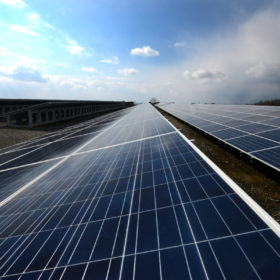
Construction starts on 50 MW PV plant in Togo
The 50 MW Sheikh Mohammed Bin Zayed photovoltaic power plant is located in the Blitta region. The plant is being built by Amea Togo Solar – a subsidiary of Amea Power, a global renewables developer based in the United Arab Emirates.
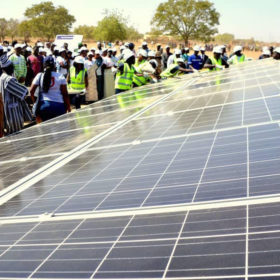
Work begins on 30 MW solar plant in Burkina Faso
Electricity generated by the facility will be sold at $0.08/kWh to national utility Sonabel. Burkina Faso recently adopted a solar-oriented energy policy.

Togo launches large scale solar tender
With the country’s first procurement exercise for bigger projects, the Togolese government intends to develop solar parks with a combined generation capacity of up to 80 MW. The tender is being held under the umbrella of the World Bank’s Scaling Solar initiative.
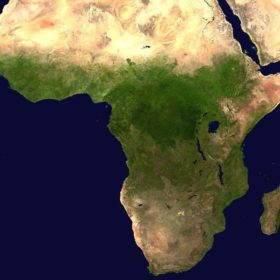
Unrealistic price signals and an explosion of tenders hinder African PV
French thinktank the Institut Montaigne says Africa is absent from the global solar revolution for several reasons including a lack of suitable financing tools, the small size of projects and a systematic recourse to tendering. Removing artificial price signals set by ever more competitive tenders could be a step towards a more mature market, ready for large scale solar tenders.
Namibia and Botswana mull 20-year, 4.5 GW solar push
The governments of the two African nations are considering deploying huge volumes of generation capacity over two decades. The project, still in its initial phase, is being supported by the World Economic Forum’s Global Future Council on Energy.
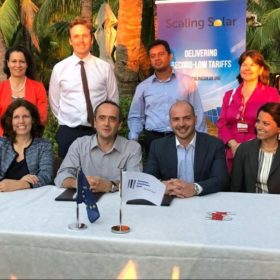
International investors provide $34 million for solar plant in Zambia
The Ngonye project proposed by Italian energy giant Enel Group and Zambia’s Industrial Development Corporation, will be financially underpinned by senior loans of up to $10 million from the International Finance Corporation, up to $12 million from IFC-Canada Climate Change Program and up to $11.75 million from the European Investment Bank.
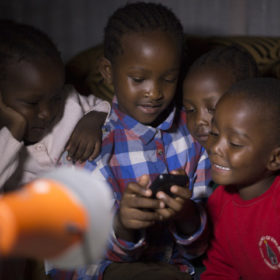
EIB earmarks $25 million financing for d.light solar kit deployment in Africa
Looking to support rural and suburban populations and micro-entrepreneurs with no reliable electricity source, U.S. off-grid solution provider, d.light has secured further funding for the deployment of its solar kits across Africa.
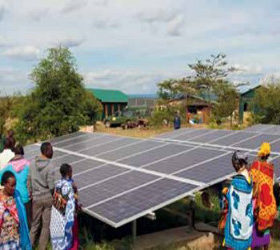
Growing political will and falling costs make universal energy access possible by 2030, IEA finds
The report, published in Energy Access Outlook: from Poverty to Prosperity, is the first instance of this sort of historical analysis, with this particular study looking at 140 countries and showing that the number of people without electricity fell to 1.1 billion in 2016, down from 1.6 billion in 2000.
