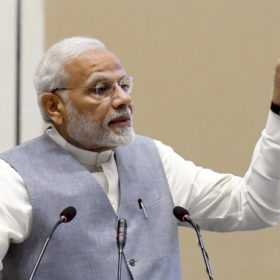
India’s solar industry digests prime minister’s latest landslide victory
With Narendra Modi’s government stunning pollsters with another huge win, the solar industry expects renewable power momentum to be maintained with steps including anti-dumping duty on solar module imports, a national policy for rooftop solar and an emphasis on easing private-sector participation in the power sector.
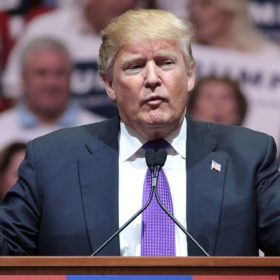
US brings Turkish PV modules under Section 201 tariff regime
U.S. President Donald Trump has removed Turkey from the list of developing nations that are exempted from Section 201 tariffs on PV cells and modules.
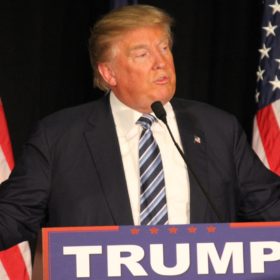
Little benefit to US solar as Trump lifts Canadian steel and aluminum tariffs
While the lifting of any tariffs is welcome news to the U.S. solar industry, manufacturers say low materials prices are unlikely to return as long as protectionist measures elsewhere remain in place.

Trump tariff increase to have limited effect on U.S. solar market
Most large manufacturers supplying the inverter market have diversified production outside of China, but this will affect Huawei and other Chinese inverter makers, as well as U.S. module makers.

Supply distribution under trade barriers and the trend of market diversification
Despite a number of unfavorable policy announcements, the global PV market still added 101 GW in 2018. It looks likely that this momentum will continue this year, with as much as 110 GW of new capacity expected.
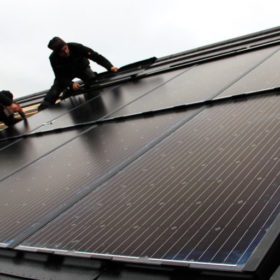
Germany adds another 223.6 MW of PV in November
Overall, the country’s cumulative installed PV power has now surpassed 45.55 GW. In the first 11 months of 2018, newly registered PV capacity reached 2.6 GW.
3: PV’s day of judgement
China continued to take center stage in Q3 2018; however the focus shifted from its now notorious policy change. In both positive and negative news, Europe announced the end of the MIP, at almost the same time as the United States slapped tariffs on Chinese imports of inverters, AC modules and non-lithium batteries. Yin yang. Ping pong.
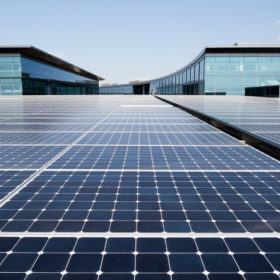
US: SunPower’s back-contact technology excluded from Section 201 tariffs
The role of SunPower’s planned purchase of SolarWorld Americas in getting a rare reprieve from the Trump Administration’s bellicose trade actions is unclear.
India to introduce cap on solar tariff
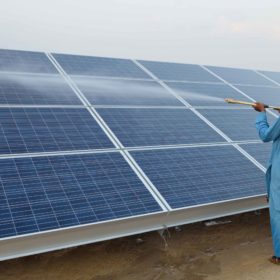
In a major development, the Ministry of New & Renewable Energy (MNRE) has directed the Solar Energy Corporation of India (SECI) to fix the upper permissible solar tariff at Rs. 2.50 (US$0.036)/kWh and Rs. 2.68 ($0.038)/kWh for developers using domestic solar cells and modules (without safeguard duties), and imported products (with safeguard duties), respectively.
China files section 201, 301 WTO complaints against US
China has officially filed two complaints with the World Trade Organisation (WTO) against the United States, in response to its 30% Section 201 and 25% Section 301 tariffs.
