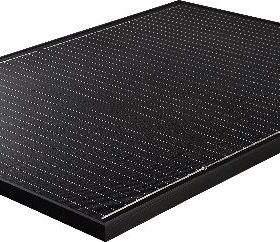
Solar Frontier abandons thin-film, launches 250 W monocrystalline panel
The Japanese manufacturer decided to close its CIS module production in October and has now launched its first 250 W monocrystalline product for the residential market.

Global online inventory of PV systems exceeding 10 kW in size
Through the inventory, an international group of researchers was able to identify 68,661 PV facilities, totaling 423 GW across 31 countries. According to the scientists, the online database provides insight into global trends for PV siting decisions, as well as into the gap between facility-level final investment decisions, construction start dates, construction completion dates and facility operations.
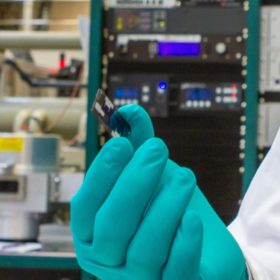
Solliance hits 29.2% efficiency on perovskite/silicon tandem solar cell
The Solliance consortium has built a solar cell in a four-terminal tandem configuration that combines a 17.8%-efficient highly near-infrared transparent perovskite cell with a prototype of an 11.4%-efficient c-Si interdigitated back contact silicon heterojunction cell developed by Panasonic.

H2X to make hydrogen fuel cells, equipment in Australia
H2X, a hydrogen vehicle manufacturer, has announced a deal with Gippsland Circular Economy Precinct in Australia to make a range of hydrogen-focused products. The move comes less than a week after Pure Hydrogen bought a significant stake in H2X Global.
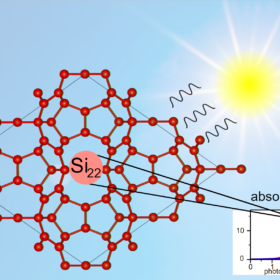
A whole new structure for silicon
Scientists in the United States theorized that a new allotrope of silicon – the same element arranged into a different atomic structure – could show greatly improved photovoltaic performance compared to that used in today’s solar cells. The allotrope, Si22, could also have important properties for use in quantum computing, carbon sequestration and other applications – though fabrication and actual physical testing of the material will be needed to back up the theoretical findings presented so far.
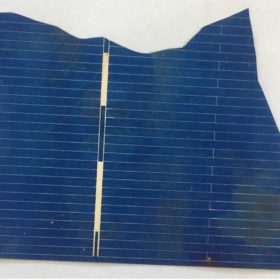
New tech to recover pure silicon from end-of-life solar cells
An Indian research group has used three different chemicals instead of commonly used hydrofluoric acid to separate silicon from the cell. The technique is claimed to be able to deliver recycled silicon with a purity of up to 99.9984%.
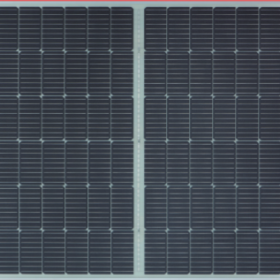
Sunman unveils 430 W glass free solar module
The new product has a power conversion efficiency of up to 19.3% and a weight of 11.2 kg. The module is produced with glass fiber reinforced plastic, which the manufacturer says reduces light reflection and opens up new assembly options.
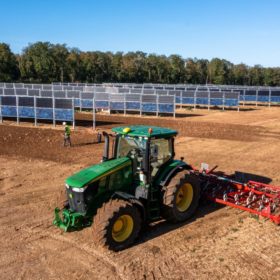
TotalEnergies commissions vertical agrivoltaic demonstrator in northeastern France
The 240 kW facility was built with the support of German mounting system provider Next2Sun.
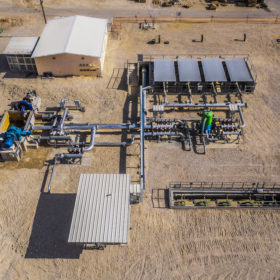
Compressed-air storage for commercial applications
Israel-based Augwind has built its first 250 kW/1 MWh compressed air storage system for the collective community of Yahel, in the southern, desert part of the country. The commercial scale facility will be connected to a PV system and will be used for behind-the-meter services.
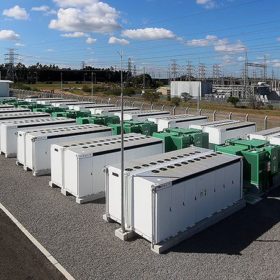
Synthetic inertia put to test with big battery registered in Australia
From pv magazine Australia Lumea, the commercial arm of AustralianMega transmission network operator TransGrid, said commissioning of the $61.9 million Wallgrove Grid Battery has begun after it achieved registration with the Australian Energy Market Operator (AEMO) earlier this week. The 50 MW/75 MWh lithium-ion battery has been installed adjacent to Transgrid’s Wallgrove substation in Western […]
