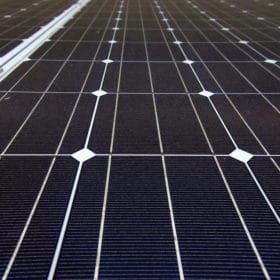
Solar module cooling technique based on multiple phase-change materials
Academics have utilized three PCMs, known as RT26, RT35, and RT42, and decided to pack them ascendingly depending on their melting points and heat-flow direction. The system is claimed to allow lower melting rates and longer thermal management of the modules.

Northvolt gets cash boost to expand capacity of Swedish gigafactory to 60 GWh
The battery manufacturer is planning to raise $2.75 billion through a private placement and to use the funds to expand the capacity of its lithium-ion battery manufacturing site which is currently under construction in Sweden, from 40 GWh to 60 GWh.

Simplifying solar cell deposition
Scientists in Germany have developed a new process for deposition of silicon dioxide layers during cell production. Without the need for high pressure, flammable gases, or vacuum conditions, the process could lead to cost reductions for cell manufacturers, provided it can be developed and applied in a large-scale production setting.

The Hydrogen Stream: 2.7 GW of operational electrolyzer capacity expected for Europe by 2025
According to two new pieces of research, Europe is on track to reach 2.7 GW of operational hydrogen electrolyzer capacity by 2025 and most of this capacity is expected to be located in Germany. Furthermore, three European gas associations have assessed the competitiveness of the different transportation options for hydrogen and have found it depends on the distance over which hydrogen is transported, as well as on scale and end-use.

Perovskite solar cell with 19.1% efficiency via CO2 doping
Thanks to a carbon dioxide doping technique, the solar cell interlayers exhibited conductivity around five times higher than that of a perovskite cell based on interlayers doped with oxygen. The device also showed an open-circuit voltage of 1.14 V, a short-circuit current density of 21.2 mA cm2 and a fill factor of 0.79.

Photovoltaics, heat pumps to rescue failed geothermal project in Poland
The Polish government is supporting a hybrid renewable energy project based on a deep-borehole heat exchanger (DBHE) whose heat pumps are powered by photovoltaics. The heat generated by the facility will be used for district heating.

Computational model for agrivoltaics
A U.S. scientist has developed a computational framework that assesses how well a hypothetical agrivoltaic project would perform in achieving desired outcomes such as the volume of PV electricity produced, and energy-to-agriculture. The method considers the high-frequency decomposition of solar irradiance into multiple rays and analyzes how these rays are propagated forward in time, to assess multiple reflections and absorption for various system configurations. It also takes into account panel inclination, panel refractive indices, sizes, shapes, heights, and albedo.
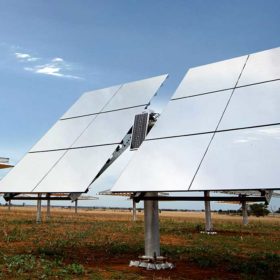
Australia to host 50 MWh ‘solar hydro’ plant with storage
RayGen Resources has secured funding to build a 3 MW/50 MWh ‘solar hydro’ power plant that could become one of the largest, lowest-cost storage projects in Australia.
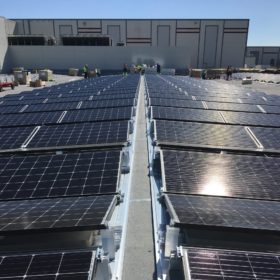
PV modules degrade less in Nordic climates
Norwegian researchers have used a year-on-year approach, considering the combined effect of temperature, humidity, and ultraviolet irradiation, to assess the degradation rate of polycrystalline modules with a temperature coefficient of -0.43%, mounted with an approximately 10-degree tilt, and located in eastern Norway. They found that these modules degrade in the range in the range of 0.1-0.19% per year, which is 0.4% less than panels operating in other climates.
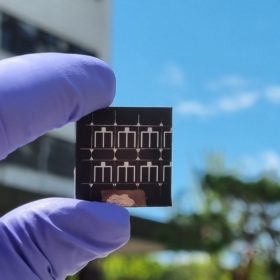
Cadmium-free kesterite solar cell with 9.82% efficiency
Researchers in South Korea have fabricated a cadmium-free heterojunction kesterite solar cell based on a zinc sulfide oxide Zn(O,S) buffer layer. They used a one-minute ammonium sulfide (NH4)2S treatment process for surface cleaning and passivation of the cell’s CZTSSe absorber.
