
Equipping transport trailer fleets with solar PV for fuel savings
Dutch solar PV systems integrator IM Efficiency has launched a complete solar PV system that includes battery and energy management system to power electrical systems on freight carrying trucks and transport trailers.
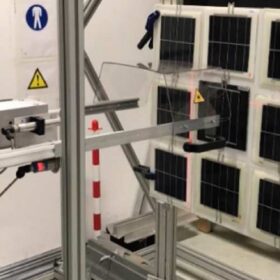
Hail-resistant front covers for vehicle-integrated photovoltaics
Researchers at Germany’s Fraunhofer ISE have tested glass fiber-reinforced polymer as a front cover material vehicle integrated PV modules, finding that it has the potential to reduce weight by 44% to 74 % compared to conventional glass-covered modules. Experimental devices withstood hail tests, avoiding cell cracking after impact.

Quantifiying benefits of vehicle-integrated photovoltaics
Austrian researchers developed a model to quantify the benefits of vehicle integrated photovoltaic (VIPV) on the energy needs of three different sizes of electric vehicle in the city of Graz, Austria, particularly the effect on battery energy and vehicle mileage.

Webasto unveils vehicle-integrated PV system covering rear window, roof area
Webasto, a German automotive industry supplier and developer of vehicle integrated PV, unveiled a new sun roof system concept with components that are 40% lighter and a capacity of 350 kWh per year.
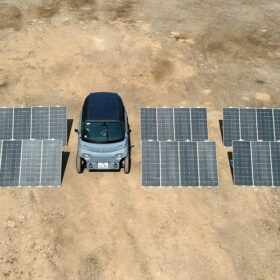
Citroën lightweight compact EV equipped with solar kits
La Croisière Verte is the name of a 13,500 km expedition from the north to south of Africa in a fleet of four Citroën AMI vehicles, each carrying 5,600 W of lightweight PV panels in foldable packs.
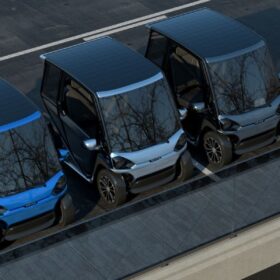
Lightweight mobility with vehicle-integrated photovoltaics
A European consortium of commercial and research groups is developing lighter weight, solar-powered, cost-conscious, three and four-wheel prototype vehicles for passengers and cargo. The $13.4 million project aims for a platform that has standardized components, including the battery, powertrain, and solar PV parts, as well as support for end-of-life, maintenance, and refurbishment.

VIPV in refrigerated trucks can ‘easily’ offset energy demand it creates and meet chiller demand
Germany’s Fraunhofer ISE investigated thermal effects and net energy gains of a 3.2 kW vehicle integrated PV (VIPV) system installed on a freight truck with a refrigerated cargo storage area. It found that with battery storage the system could potentially meet the entire energetic needs of the cooling unit throughout the year in some cases.
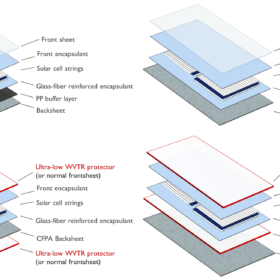
Lightweighting vehicle-integrated photovoltaic modules
A European research team has investigated interconnection and encapsulation strategies to improve the damp heat and mechanical resilience of vehicle integrated photovoltaic (VIPV) modules, finding carbon-fibre reinforced plastics to be promising.
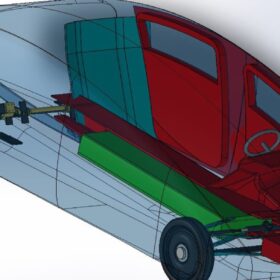
Crash test for lightweight 4-seater solar cars
Researchers at the University of Bologna carried out crash simulations to qualify a novel solar powered 350 kg passenger vehicle for the next edition of the 3,000 km Bridgestone World Solar Challenge (BWSC) across the Australian continent.

New dates, rules for 2025 Bridgestone World Solar Challenge
The Bridgestone World Solar Challenge has announced a new set of dates for for the 2025 edition of its unique 3,000 km solar car race across the Australian continent, along with some regulation changes.
