Hanwha Q Cells launches 590W solar module with 21.7% efficiency

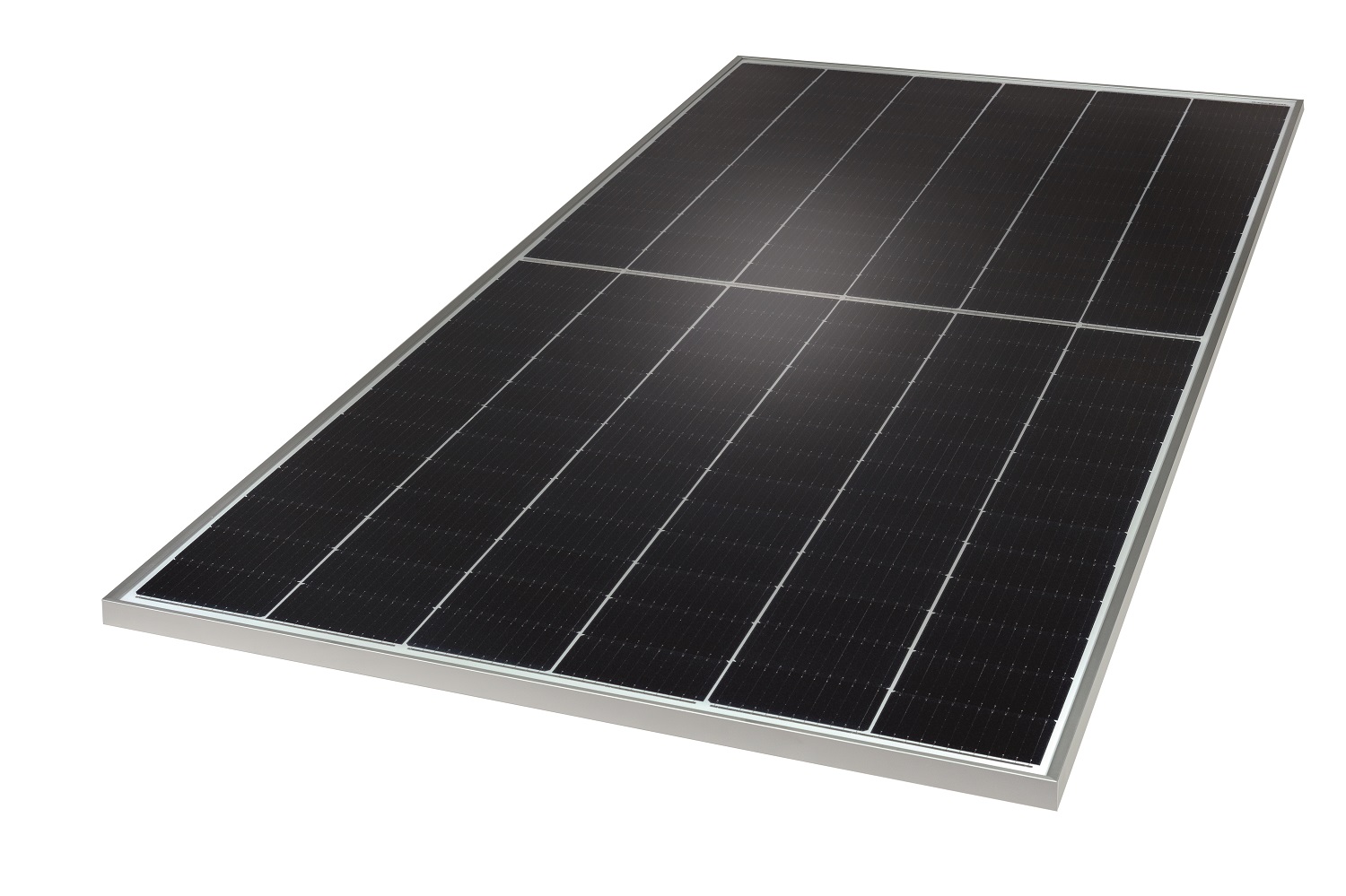
South Korea-based solar module manufacturer Hanwha Q Cells has unveiled its new Q.Peak Duo XL-G11.3 panel, which is the largest solar module produced by the company to date.
“For customers intent on pursuing a higher power class, Q Cells has developed the Q.Peak Duo XL-G11.3 solar module, which uses M10 wafers measuring 182mm to reach a power output of up to 590 W,” a company spokesperson told pv magazine. “This makes the Q.Peak Duo XL-G11.3 the first Q Cells module to surpass the 500 W mark, doing so with an efficiency of 21.7% using zero gap technology. The panel delivers extremely high yield per surface area thanks to the high-performance metrics of the company’s renowned Q.antum technology.”
The panel is available in five versions with power outputs ranging from 570 to 590 W, efficiency ranging from 20.8% to 21.7%, and a maximum system voltage of 1,500 V. It measures 2,416×1,134×35mm, including the frame, and weighs 30.7kg.
The new product is based on 156 monocrystalline Q.antum half cells and features an open-circuit voltage of 53.59 V to 53.70 V and a short-circuit current ranging from 13.49 A to 13.59 A. It also features an IP68 enclosure rating, 3.2mm thermally pre-stressed glass with anti-reflection technology, and an anodized aluminum frame.
The module can be used with operating temperatures of between -40 degrees Celsius and 85 degrees Celsius and its operating temperature coefficient is -0.34% per degree Celsius. It comes with a 25-year linear power output guarantee and a 12-year product guarantee. The degradation in the first year is claimed to be 2% and 25-year end power output is guaranteed to be no less than 86% of the nominal output power.
The new product is currently being sold in Asia and Europe.
This content is protected by copyright and may not be reused. If you want to cooperate with us and would like to reuse some of our content, please contact: [email protected].

Please login to comment

Can this product be used on residential project? Interested in solar panels for a south facing sunny southern Italy project.

This is great timing. I would like more information regarding an installation in Northern Virginia.

Perfect timing!!!! I’m going Solar on a new piece of property in Florida. Lithium battery prices are starting to be more reasonable and these panels on a 48volt system is perfect!!!

[…] 14kW station is equipped with 33 Q Peak Duo L-G8 solar modules from Korea-based manufacturer Hanwha Q-Cells. The modules are mounted on a frame developed by UK solar installer Renenergy which is similar to […]

This is a great game changer. Hopefully the price point is affordable too.

I am very interested in this product can you get me some more information

What is missing is the “Recycling Profile” of these (and other) PV Panels.
By achieving higher outputs TODAY will we end up preventing the Silicone etc… from being recycled in … 25 years…???
Has mankind not gone this path before…. to wallow in/meet your Needs today and Mortgage the Future with Pollution (in case of Nuclear Waste…. 100,000+ years).
If the PV Panels Industry wants to help ELIMINATE POLLUTION, it must VOLUNTARILY also ensure a Sustainable and Circular Future too… if it wants to “learn from mankind’s past mistakes”..,,
Perhaps pvmagazine should spend more time and effort in paying attention to the “rear end” of PV Technology as an essential part of its publications whose main focus today is mostly Cost and Output (aka Efficiency) with scant attention to what “happens after (the first) life”…

We’re sorry you feel that way Ajay, we’ve published numerous articles about PV panel recycling, circular manufacturing, and how to be more sustainable. Why don’t you have a look at our UP initiative which we have been running for more than two-and-a-half years? You can check it out at pv-magazine.com/features/pv-magazine-up-initiative/

very good product .bright future.

It’s amazing to get that kind of wattage on a single panel, but at that size and weight, is it logistically realistic in a residential roof installation? 95″ and almost 70 lbs. Who is carrying that up a ladder?

I would also use it on a van or caravan and camper. In fact I personally feel that if every house and building method the solar cells and tied into the existing electrical net for distribution a great deal of industrial waste and CO2 emissions would be eliminated because the electric companies would not have to generate as much electricity as they do. This is not mortgaging our future since the solar cell is relatively recyclable as opposed to burning fossil fuels which has no recycling future. The only counter argument that’s halfway valid is gas turbines burning natural gas. Which fails when the temperature reaches 20° f. Because natural gas liquifies at a relatively modest temperature.
I would

These panels are not for residential projects. These panels will only be used for large utility scale projects. But yes, they are pretty big.
[…] Un artículo de pv magazine Global […]
[…] von pv magazine International […]
[…] eines Solarkraftwerks in Südkorea Hanwha Q. Zellen Das Deutsche Forschungsinstitut Helmholtz Zentrum Berlin (HZB) gab bekannt, dass es einen […]