
Peel-off patterning technique to create stable semitransparent solar cells for window applications
The cells are intended to be built inside panes of window glass, turning passive buildings into active energy producers. A key hurdle was creating the micron-scale electrical connections between individual cells that comprise a solar module.
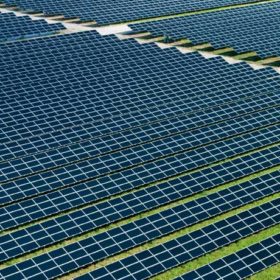
First Solar receives order from Akuo for 500 MW of advanced thin film modules
The multi-year agreement would see deliveries from 2024 to 2026 for US and international utility-scale solar projects.
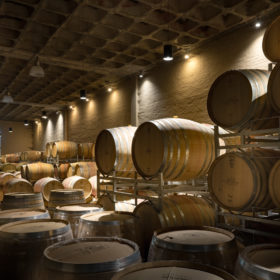
South Africa’s oldest wine estate goes solar
Small scale investors around the world have pledged cash to back a solar system to power winemaking and restaurant operations at the famous Groot Constantia estate.
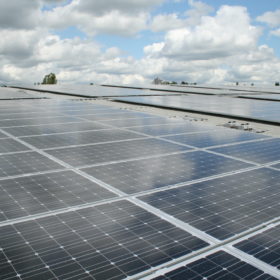
Belgium’s Flanders region wants to retroactively cancel green certificates for large PV systems
The retroactive measure should affect PV systems totaling more than 500 MW. The Flemish government claims the cancellation of the green certificates may help save up to €1.2 million, while the local renewable energy association ODE Vlaanderen is ready to question the legal underpinning of the draft law.
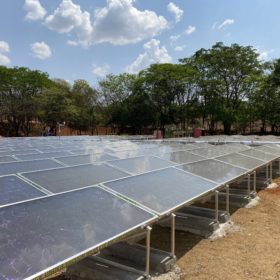
Solar thermal panel for large scale applications
The panel has an absorption area of 1.96 m2 and a weight of 27 kg per square meter. According to the manufacturer – Swiss startup TVP Solar – it may be a real booster for thermal output, by combining it with photovoltaics and heat pumps to provide enhanced output per square meter, in particular for low-temperature applications such as district heating.

New kind of black silicon shows improved light-trapping properties
Scientists in Russia have developed a new wide-band optical absorber called ‘black silicide’ which they claim is more adjusted to match AM-1.5 solar spectrum with theoretically higher photogenerated current density. It could be used for tandem operation in photovoltaic devices.

Monolithic perovskite-silicon solar cell with 20% efficiency via new lamination approach
The solar cell achieved an open-circuit voltage of 1.75 V, a short-circuit current density of 15.5 mA cm−2, and a fill factor of 73.6%. It was also able to retain 93% of its initial efficiency after 100 hours at a temperature of 80 C.

Australian Capital Territory charges ahead with Canberra’s 250 MW big battery project
The Australian Capital Territory government has firmed its commitment to deliver one of the largest battery storage systems in the Southern Hemisphere to support Canberra’s energy grid and the continued uptake of renewables with funding allocated in the upcoming budget to progress the Big Canberra Battery project.
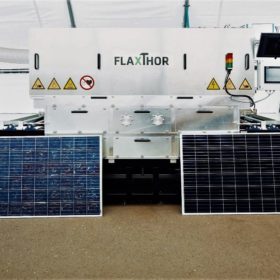
Industrial process for ‘mobile’ solar module recycling
German company Flaxres has developed an industrial process to recycle PV modules, and has begun operating a pilot facility at its new site where 10 tons of solar modules can be recycled daily. Flaxres plans to make equipment based on this facility available to international customers.

The Hydrogen Stream: Gas prices are higher than levelized cost of hydrogen for several technologies in Europe
In other news, Toyota unveiled plans to roll out light-duty hydrogen fuel-cell trucks for the Japanese market next year and the UK has launched a contract for difference scheme for large scale hydrogen projects. Furthermore, Japanese scientists have designed a ruthenium complex with a nitrogen-containing organic compound to improve high-temperature proton conduction in fuel cells.
