
Four-terminal tandem perovskite/CIGS solar cell with 25.5% efficiency
Researchers in China have developed a four-junction tandem perovskite/CIGS cell. They claim it is the most efficient device of its kind with an n-i-p structure thus far. They used a novel surface passivation strategy to improve the perovskite cell efficiency and fill factor.
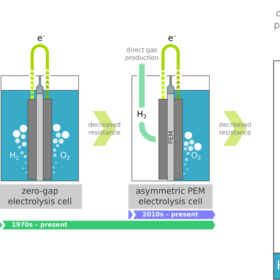
The Hydrogen Stream: Novel concept for alkaline capillary-fed electrolysis
Researchers from Australia’s University of Wollongong presented a study for alkaline electrolysis where the liquid electrolyte is continuously drawn up a separator, leading to bubble-free operation at the electrodes. Meanwhile, Korean researchers developed a novel heterostructured catalyst, Argentina’s province of Tierra del Fuego presented its hydrogen strategy, Lhyfe and shipyard Chantiers de l’Atlantique are working on the world’s first offshore renewable hydrogen production demonstrator, and Saudi Aramco outlined its hydrogen targets in its first sustainability report.

TotalEnergies, Gecol to build 500 MW of solar in Libya
TotalEnergies and Libya’s national utility plan to build a massive solar park in the Sadada region, 280 kilometers southeast of Tripoli.
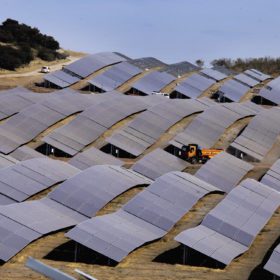
Spanish court orders Iberdrola to dismantle 60% of 500 MW operational PV plant
A Spanish court has ruled that Spain’s largest operational PV project – the 500 MW Nuñez de Balboa solar plant – occupies a piece of land that was illegally expropriated. Project owner Iberdrola must now shut down a large portion of the installation.

Australia set to ‘unleash’ investment in renewable energy market
Australian Federal Energy Minister Chris Bowen has declared that the nation is now “under new management,” with plans to “unleash private investment” in renewables projects.
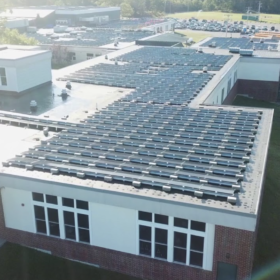
US government to support 12 remote, island communities in transition to clean energy
Communities will get help with strengthening energy infrastructure, reducing outage risk, and improving their future energy and economic outlook.

Global energy storage market set for rapid expansion by 2025
Taiwanese analyst TrendForce said it expects global energy storage capacity to reach 362 GWh by 2025. China is set to overtake Europe and the United States is poised to become the world’s fastest-growing energy storage market.
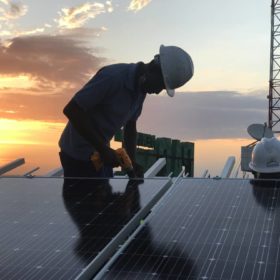
CrossBoundary Energy Access raises $25 million to finance solar-powered minigrids in Africa
CrossBoundary Energy Access (CBEA) has raised $25 million from ARCH Emerging Markets Partners, Bank of America, and Microsoft Climate Innovation Fund to finance the development of solar minigrids in Africa.
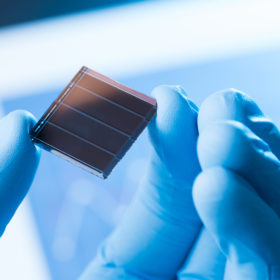
Femtosecond lasers for high-efficiency organic PV
UK scientists have developed a process using laser and x-ray pulses to observe what happens in the initial fractions of a second after light hits a solar cell. By applying the technique to various organic PV materials, they expect to gain insights that could quickly the improve the efficiency of such materials.

Battery metals: How quickly can supply ramp up?
A couple of weeks ago, Goldman Sachs sent shockwaves through battery metals markets, issuing a prediction that cobalt and lithium in particular were due for a sharp price decline in the next two years. But London-based Benchmark Mineral Intelligence is loudly pushing back, outlining its reasons why it believes the call on lithium was wrong. Meanwhile, US analyst Wood Mackenzie says that the battery raw material chain will remain tight, but notes that recycling could help to ease the supply deficit.
