
Pumped-hydro storage project takes shape in New Zealand
Lake Onslow, New Zealand, could become home to one of the world’s largest pumped-hydro storage facilities. A local consortium is now conducting a feasibility study and is investigating possible system designs and precise locations.
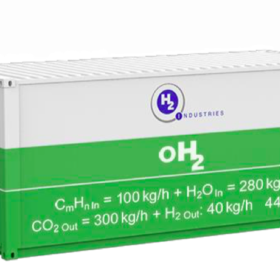
Hydrogen generation from organic waste, non-recyclable plastic
US-based H2 Industries plans to produce hydrogen from organic waste and non-recyclable plastic. pv magazine recently spoke with its executive president, Michael Stusch, about the main technologies behind the project.

Abu Dhabi to hold fourth clean energy certificate auction
Emirates Water and Electricity Co. has included nuclear among the “clean energy” sources that will generate certificates in its upcoming auction.
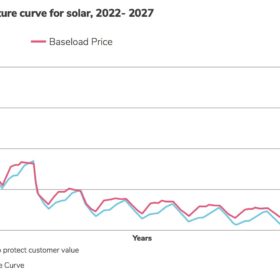
A simmering cauldron of renewables ‘revenue cannibalization’
There is enormous demand for renewables to enter the grid, and for power purchase agreements to make use of them. However, as more renewables feed into the grid at intermittent periods, the risk of “revenue cannibalization” increases. Swiss consultancy Pexapark’s latest report looks at the “cannibalization effect” and how the solar PPA market can adapt.
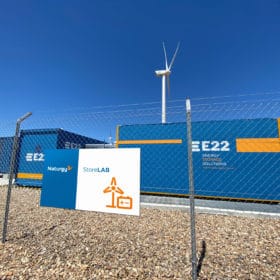
Lithium-ion vs. vanadium redox flow storage
UK scientists have compared the performance of lithium-ion storage systems and vanadium redox flow batteries for a modeled 636 kW commercial PV system in southern California. They have found that both technologies, coupled with an oversized PV array, could achieve a levelized cost of electricity of less than $0.22/kWh, while offering a self-sufficiency ratio of 0.95.

Thin-film flexible piezoelectric-photovoltaic cell based on selenium
Japanese scientists have developed a piezoelectric-photovoltaic cell with potential applications in indoor environments. They fabricated it on a flexible polyethylene terephthalate film with sputter-deposited ZnMgO thin film and photo-absorbing selenium as the n-type window layer and p-type layer, respectively.
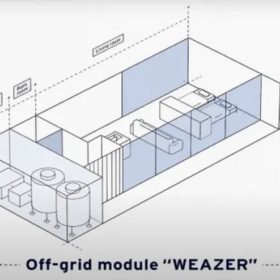
Solar-powered offgrid residential unit from Japan
Japan’s Arth has designed an autonomous habitation module that produces water in places without energy and water infrastructure. The company said the residential unit could also be used as an emergency evacuation site.

REC Silicon, Ferroglobe to establish traceable US solar supply chain
Investments by Hanwha Group and the potential passage of the Solar Energy Manufacturing Act could expand US production of polysilicon and metallurgical-grade silicon.
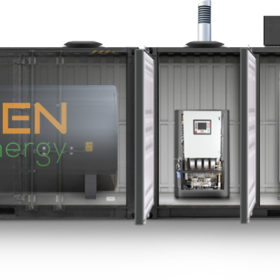
The mobility rEVolution: Microgrid for EV charging, hydrogen fueling, backup power
The EU Parliament has voted to end combustion vehicle sales in 2035, Siemens has announced plans to develop wireless charging for electric vehicles, and Lightyear has launched the final design of its long-range, production-ready solar car.
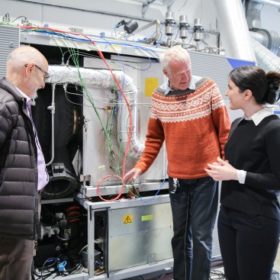
World record in hydrogen combustion in micro gas turbines
Scientists in Norway have managed to run a micro gas turbine plant on pure hydrogen. They claim their experiment paves the way for the use of existing infrastructure to generate heat and power with the green fuel.
