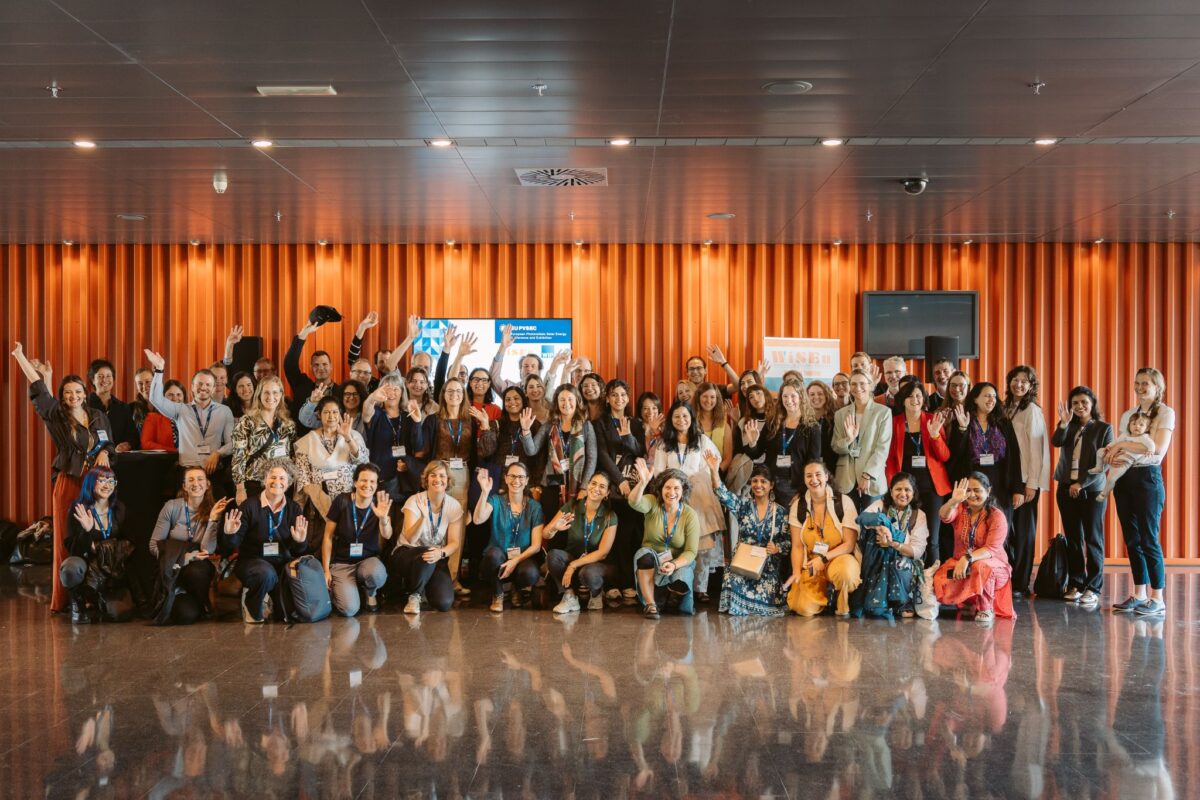





In an industry where innovation depends on diverse thinking, this WiSEu signature workshop encouraged participants to reflect on how inclusion traits apply in practice and how they shape everyday leadership decisions. Opening the discussion, Walburga Hemetsberger, CEO of SolarPower Europe, addressed cognisance of bias, reminding participants that bias is something everyone carries: “We all need to be aware of it and find ways to identify those biases. But identifying them is only the first step; integrating best practices to reduce bias in the workplace is often much harder.”
Real-life experiences shared during the session revealed how even when bias is recognized, resistance often follows. “You may hire someone from a less prestigious university, for example, and suddenly prejudices emerge within the organization,” she explained. Changing communication styles, training, and self-reflection all help, but ultimately, overcoming bias requires persistence. “Speak up when you sense bias in decisions or task distribution, check your own assumptions, and involve others. That is how diversity becomes truly integrated into decision-making.”
That call for courage was echoed by solar energy specialist Wim Sinke, who emphasized the need for leaders to create environments where people feel safe to express themselves. “Courage should be encouraged. Leaders must not take feedback personally in the wrong sense but use it to improve their approach and the team’s processes,” he said. Courage, he stressed, underpins everything else: “You cannot face bias if you don’t have the courage to do so.”
Curiosity emerged as another powerful tool. For Delfina Muñoz, senior researcher at CEA, curiosity means more than empathy or tolerance, it is about actively seeking to understand others. “Active listening, giving space, and discovering the details create opportunities to connect,” she said. When leaders cultivate curiosity, they open the door to transformation: “If we are curious, we step out of the box, empower everyone, and build stronger teams and societies.”
Cultural intelligence, as highlighted by Arno Smets of Delft University of Technology, often reveals itself in everyday interactions. “Something as simple as punctuality can create irritation, some cultures see arriving late as acceptable, while others view it as disrespectful. Or take Dutch directness, which may feel blunt to many, while in other cultures criticism is so subtle you may not even recognize it,” he explained. These differences can create friction in teams or even lead to exclusion, but they can also become a strength. “Having many cultures in a team makes it more efficient, because different approaches to solving problems come together,” Arno said. The key practices, he concluded, are listening, respect, understanding, and open-mindedness, while barriers are arrogance, exclusion, and nepotism.
Commitment, meanwhile, is the trait that ensures inclusion does not fade when challenges arise. For Eszter Voroshazi, Head of PV modules & Systems division at CEA, commitment is non-negotiable even in moments of fatigue. “Some days it’s difficult to stay committed, and that’s okay; another colleague may carry the torch. But if you don’t do it, who else will?” she said. For Eszter, reinforcing networks is a way to transform fatigue into renewed energy: “By giving and supporting each other, we can turn vicious cycles into virtuous ones.”
Finally, collaboration brought all the traits together. For Mélodie de l’Epine from the Becquerel Institute, inclusion only comes alive when people work side by side. “Collaboration means moving beyond individual agendas to co-create solutions where every voice matters,” she said. Her group also reflected on the risks of ineffective collaboration: homogeneous solutions, biased outcomes, and the failure to make use of the diverse strengths within a team. But when collaboration is done well, the results are empowering. “We came up with the idea of ‘cross ideas’, inputs from everywhere combining into fertile, diverse discussions that drive better results. Ensuring meetings have agendas, giving participants time to prepare, and explicitly creating space for each person to contribute all support inclusivity. “When everyone expects collaboration, and everyone provides it, the whole team is stronger.”
Across all six discussions, one message rang clear: inclusive leadership cannot be practised selectively, and approaching challenges with kindness is critical. Each trait strengthens the others, and together they create the conditions for innovation, resilience, and impact. As Wim Sinke put it, “These six massive areas, equally important, only make sense when they come together.” For an industry tasked with reshaping the way the world generates and uses energy, the conclusion is undeniable. Inclusive leadership is not simply about fairness; it is the engine of progress.
Interested in joining women industry leaders and experts at Women in Solar+ Europe? Find out more: www.wiseu.network
The views and opinions expressed in this article are the author’s own, and do not necessarily reflect those held by pv magazine.
This content is protected by copyright and may not be reused. If you want to cooperate with us and would like to reuse some of our content, please contact: editors@pv-magazine.com.


By submitting this form you agree to pv magazine using your data for the purposes of publishing your comment.
Your personal data will only be disclosed or otherwise transmitted to third parties for the purposes of spam filtering or if this is necessary for technical maintenance of the website. Any other transfer to third parties will not take place unless this is justified on the basis of applicable data protection regulations or if pv magazine is legally obliged to do so.
You may revoke this consent at any time with effect for the future, in which case your personal data will be deleted immediately. Otherwise, your data will be deleted if pv magazine has processed your request or the purpose of data storage is fulfilled.
Further information on data privacy can be found in our Data Protection Policy.