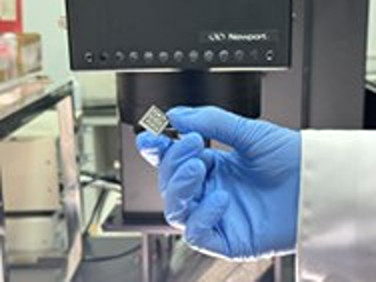





A group of researchers from China's Fujian Normal University and the University of Surrey in the United Kingdom has fabricated a carbon-based on antimony sulfoselenide (Sb2(S,Se)3) solar cell that achieved a record-breaking power conversion efficiency of 9.0%.
“We set a new benchmark for this low-cost and stable device architecture,” the research's lead author, Guilin Chen, told pv magazine, noting that the result represents a world record for this cell type.
Although Sb₂S₃ devices have a theoretical efficiency limit of 26% under radiative conditions, defects in the absorber material typically limit their performance to around 8%. “Our work provides a facile, scalable, and multi-functional electron transport layer (ETL) engineering strategy that not only breaks a performance bottleneck but also significantly enhances device stability, presenting a major step toward commercially viable, low-cost Sb2(S,Se)3 photovoltaics,” Chen explained.
Sb₂S₃ cells are typically constructed with a cadmium sulfide (CdS) ETL, but the layer’s doping and thickness often affect both the open-circuit voltage and short-circuit current.
“Through Situ Ozone Treatment (IOT), we developed a one-step method for oxygen doping of the CdS electron transport layer (ETL) during the standard chemical bath deposition (CBD) process, eliminating the need for complex, high-temperature, or post-deposition treatments,” Chen explained.
The proposed approach is said to suppress typical Sb2(S,Se)3 impurities, as it induces a hexagonal-to-cubic phase transition in CdS, which thermodynamically disfavors the epitaxial growth of the detrimental Sb2(S,Se)3 impurity phase during absorber deposition, leading to a purer and higher-quality absorber.
Furthermore, it reportedly creates an oxygen-rich, graded Cd layer at the buried interface between the CdS layer itself and the substrate made of glass coated with fluorine-doped tin oxide (FTO), which strengthens adhesion and reduces interfacial recombination centers.
“IOT promotes a gradient oxygen distribution within CdS by leveraging the competition between oxygen and sulfur species. This widens the effective bandgap, reducing parasitic light loss,” the scientists said, noting that the CdS bandgap was increased from 2.19 eV to 2.26 eV, which reduced parasitic absorption of short-wavelength light and increased photocurrent.
The cell was built with the glass FTO substrate, the CdS ETL, the Sb2(S,Se)3 absorber, a lead sulfide (Pbs) layer, and a carbon contact.
Tested under standard illumination conditions, the device achieved an efficiency of 9.0%, an open-circuit voltage of 0.4908 V, a short-circuit current density of 26.88 mA/cm2, and a fill factor of 68.19%.
“The cell demonstrated remarkable stability without encapsulation, maintaining performance over 8 months in ambient air and retaining 70% of its initial efficiency after 1000 hours of harsh damp-heat testing, significantly outperforming conventional Spiro-OMeTAD/Au-based devices,” said Chen.
The cell was described in “9% Certified Efficiency Record for Carbon-Based Sb2 (S,Se) 3 Solar Cells Enabled by Gradient-Oxidized Treatment of CdS Electron Transport Layer,” published in Advanced Functional Materials.
“Our study provides comprehensive experimental evidence, using Raman, transmittance, and XPS depth profiling, that the IOT creates a longitudinal oxygen-sulfur gradient within the CdS film, with the highest oxygen concentration at the critical FTO/CdS interface,” Chen concluded. “Through advanced characterization and modeling, the study quantitatively demonstrates that optimal oxygen doping at the interface significantly strengthens the adhesion energy between CdS and FTO, leading to superior carrier transport and reduced recombination.”
In July 2024, another international research team outlined a new Sb2S3 solar cell design that can reportedly result in 30% higher efficiency compared to existing Sb2S3 solar cell concepts.
This content is protected by copyright and may not be reused. If you want to cooperate with us and would like to reuse some of our content, please contact: editors@pv-magazine.com.


By submitting this form you agree to pv magazine using your data for the purposes of publishing your comment.
Your personal data will only be disclosed or otherwise transmitted to third parties for the purposes of spam filtering or if this is necessary for technical maintenance of the website. Any other transfer to third parties will not take place unless this is justified on the basis of applicable data protection regulations or if pv magazine is legally obliged to do so.
You may revoke this consent at any time with effect for the future, in which case your personal data will be deleted immediately. Otherwise, your data will be deleted if pv magazine has processed your request or the purpose of data storage is fulfilled.
Further information on data privacy can be found in our Data Protection Policy.