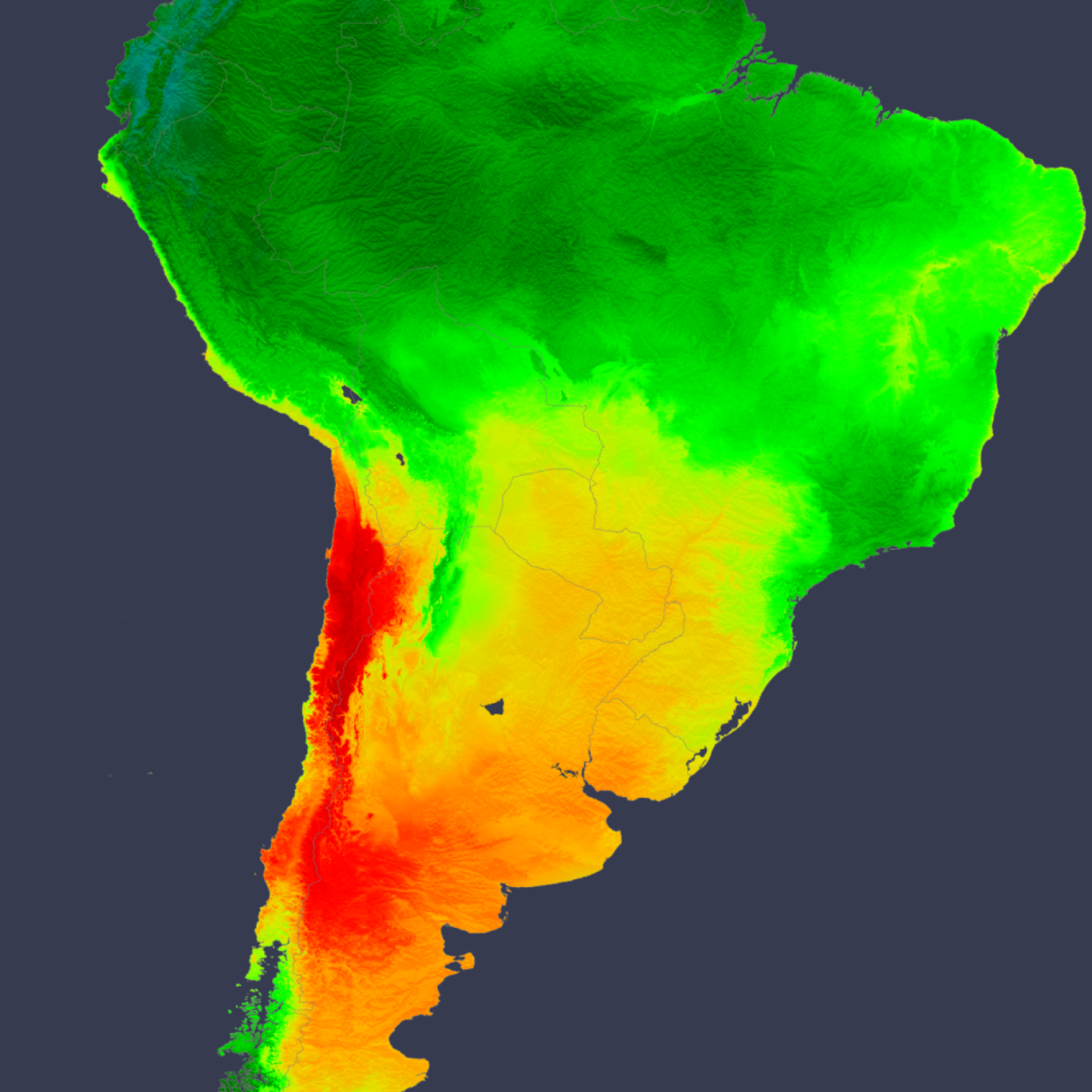





January brought a month of sharp contrasts for South America, with floods in the north, intense heat and wildfires in the south, and scattered severe weather events across Brazil and Ecuador, according to analysis using the Solcast API. Northern regions saw sustained rainfall linked to tropical atmospheric variability, cutting irradiance well below seasonal norms. Meanwhile, southern areas faced extreme heat and prolonged dryness that lifted irradiance levels but also generated large wildfire outbreaks and aerosol-driven reductions. Additional storms, tornadoes and industrial fires contributed to a month defined by highly variable irradiance outcomes across the continent.
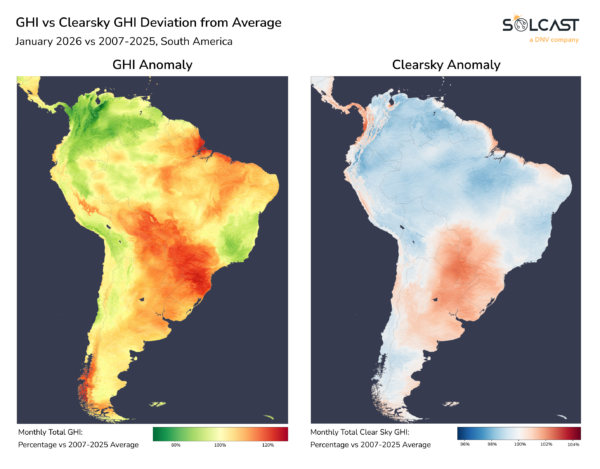
Across northern South America, an active phase of the Madden–Julian Oscillation supported higher-than-normal rainfall and repeated storms through January. This pattern drove the overflow of major rivers in Colombia and Venezuela, causing widespread flooding and infrastructure damage. Daily rainfall totals reached around 9 mm above typical levels for the month, reflecting the strength and persistence of the tropical moisture. For solar assets across the region, the sustained cloud cover and storm activity translated into irradiance reductions of up to 15% compared with the January average. Farther south, an opposite pattern unfolded. Northern Argentina and central Chile faced temperatures up to 6 C above normal as a strong high‑pressure system settled over the region in early January. This feature acted as a heat dome, suppressing cloud formation and intensifying surface temperatures.
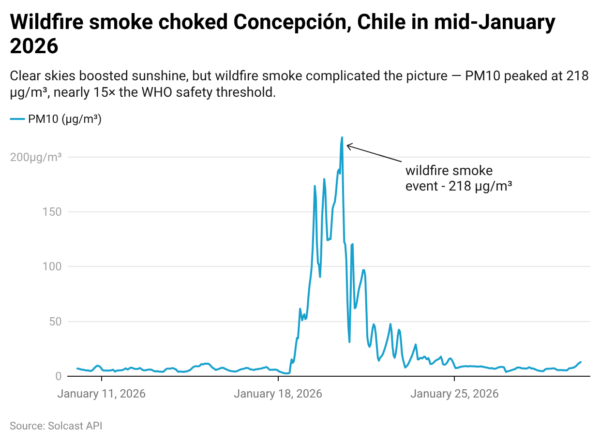
In Chile, hot, dry and windy conditions fueled widespread wildfires that forced evacuations and destroyed infrastructure. Southern Bolivia also experienced a rainfall deficit of up to 12 mm per day, reinforcing the broader dryness. The reduced cloud cover meant some southern areas saw more than a 15% increase in typical sunshine, but wildfire smoke created a complex irradiance picture: aerosol concentrations spiked, as seen in particulate matter data from Concepción, reducing sunlight even on otherwise clear days.
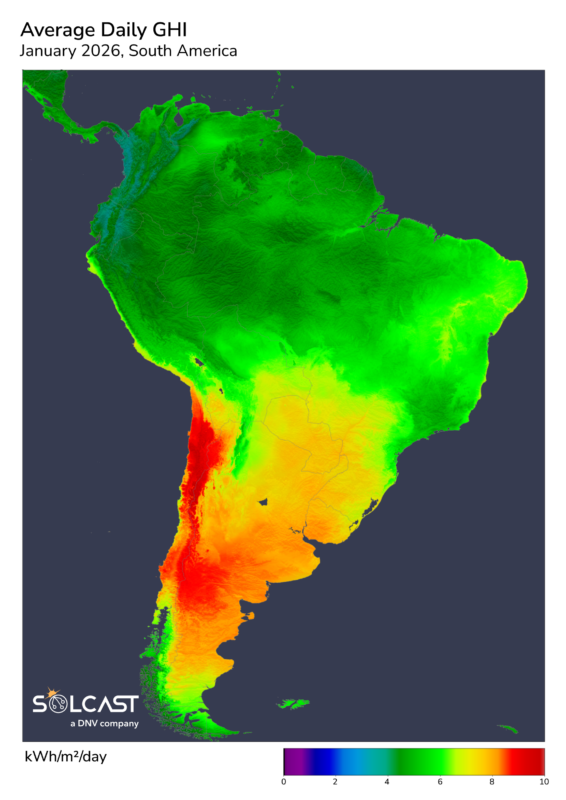
Elsewhere in the continent, weather extremes continued to shape irradiance outcomes. While much of Brazil experienced enhanced sunshine, the state of Minas Gerais saw reductions of up to 10% due to persistent thunderstorms, with Uberaba recording storms on nearly every day of the month. In Paraná, a destructive tornado with winds exceeding 155 mph caused severe damage and loss of life. To the west, Ecuador faced its own industrial-scale hazard when the Esmeraldas oil refinery caught fire on January 30, marking the second such incident in eight months. These varied events contributed to highly localized shifts in cloud cover, aerosols and atmospheric conditions, reinforcing the month’s regional divergence in irradiance across South America.
Solcast produces these figures by tracking clouds and aerosols at 1-2km resolution globally, using satellite data and proprietary AI/ML algorithms. This data is used to drive irradiance models, enabling Solcast to calculate irradiance at high resolution, with typical bias of less than 2%, and also cloud-tracking forecasts. This data is used by more than 350 companies managing over 300 GW of solar assets globally.
The views and opinions expressed in this article are the author’s own, and do not necessarily reflect those held by pv magazine.
This content is protected by copyright and may not be reused. If you want to cooperate with us and would like to reuse some of our content, please contact: editors@pv-magazine.com.

By submitting this form you agree to pv magazine using your data for the purposes of publishing your comment.
Your personal data will only be disclosed or otherwise transmitted to third parties for the purposes of spam filtering or if this is necessary for technical maintenance of the website. Any other transfer to third parties will not take place unless this is justified on the basis of applicable data protection regulations or if pv magazine is legally obliged to do so.
You may revoke this consent at any time with effect for the future, in which case your personal data will be deleted immediately. Otherwise, your data will be deleted if pv magazine has processed your request or the purpose of data storage is fulfilled.
Further information on data privacy can be found in our Data Protection Policy.