




From pv magazine USA
VDE Americas, a California-based solar technical services and analysis firm, has developed an enhanced version of its proprietary Hail Risk Model incorporating newly analyzed wind speed data.
According to VDE, severe storms with wind-driven hail struck dozens of utility-scale solar arrays in 2025. At the same time, catastrophic losses were lower than in previous years due to the operators’ increasing use of weather alert services and adoption of hail-stow modes for their trackers.
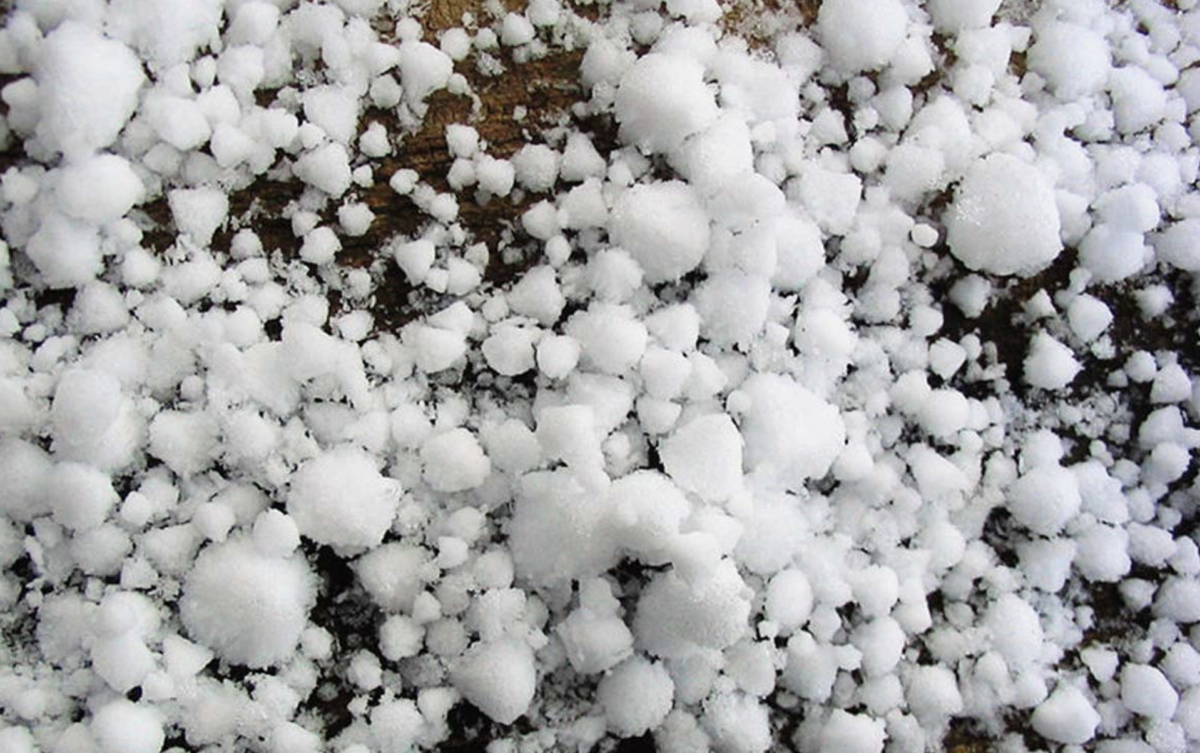
Nevertheless, VDE says hail remains the number one high-damage risk facing the solar industry. Insurance industry sources report that hail accounts for 73% of total solar losses despite representing only 6% of loss events. Furthermore, solar operators may not realize they are at risk for hail if their risk analysis does not include sufficient historical weather data.
VDE says the update to its Hail Risk Model provides better early warning of particularly damaging convective storms, which are characterized by greater than 45-mm hail stones. The company has also updated its technical guidance on recommend maximum tilt angle during hail stow. The latter emphasizes the need for structural design consideration for enabling trackers to hold in hail-stow mode under expected severe wind conditions accompanied by damaging hail.
Brian Grenko, president and CEO of VDE Americas, told pv magazine USA that the updated Hail Risk Model and accompanying guidelines is a recognition that large-scale solar projects are entering the mid-life phase of their productivity and considerations are more focused on the long haul. Developers of new-build projects are also becoming more aware of risks from catastrophic hail events.
“Twenty years ago, people really weren’t giving much thought to hail because industry drivers like the renewable portfolio standard in California were new,” Grenko said. “And so, we started building utility scale projects in locations like Southern California and Arizona and west of the Rockies generally where, comparatively speaking, the hail risk is low.”

As utility-scale solar became more economical over time, it expanded into new regions, in some ways chasing solar irradiance to maximize productivity. Once large-scale solar projects appeared east of the Rockies, the incidents of damaging hail events increased more sharply, particularly in the Midwest and South.
“In 2019, the Midway project in Texas was a wake-up call for the industry,” Grenko said. “There was a $70 million insurance claim for a project that was completely destroyed by a severe hail event. The hardening of the insurance industry thereafter led developers to realize, okay, we now need to do something about this.”
An appropriate response required an early warning of potentially damaging hail events and the technical means for a tracking array to position itself to reduce the exposure of the solar panels. The key to better early warning is a more thorough understanding of storm dynamics, statistical frequency, and the interaction of wind and hail.
One of the key issues is that stow modes to mitigate the effects of wind and hail individually are different. Also, stow modes are likely to result in a decrease in energy production, which utility-scale projects are very sensitive to. According to Grenko, VDE’s improved Hail Risk Model is an effort to give operators more effective warning of pending hail events with fewer false alarms and more precise guidance on stow angles for specific types of events.
“When we developed the model originally, we looked at when hail happens and we looked at wind on a large basis,” Grenko said. “Now that we have more experience with single-axis trackers and know that you can stow for hail, we can focus on improving your response strategy. It’s important to understand the profile of wind specifically during hail events in more detail and with more confidence.”
Incorporating more accurate wind data and weather information into the Hail Risk Model is just one part of the equation. Grenko said that enabling trackers to achieve better stow modes may come at the cost of adding materials and components that affect the levelized cost of energy (LCOE) for the project. The trick is designing stow modes for existing arrays that provide statistically better chances of surviving catastrophic hail events with few or no additional physical changes.
At the same time, Grenko said that VDI has been working with many of the major tracker manufacturers to develop different strategies on a product level.
“We have started to see a shift initially with major manufacturers like Array Technologies, Nextpower and GameChange developing product variants that could stow for hail at the max tilt angle instead of flat,” he said. “This has required a lot of re-engineering in their products and re-engineering of the foundations supporting the trackers. Because if you stow at an angle to reduce hail damage, the wind causes the tracker to act as a sail. Obviously, there are cost implications and value engineering involved.”
With LCOE issues front and center on large-scale solar projects, developers, owner-operators, financiers and insurers need more granular information about risks and mitigation strategies. VDE’s enhanced Hail Risk Model and accompanying technical guidance are intended to help solar owners weather potential storms profitably.
This content is protected by copyright and may not be reused. If you want to cooperate with us and would like to reuse some of our content, please contact: editors@pv-magazine.com.


By submitting this form you agree to pv magazine using your data for the purposes of publishing your comment.
Your personal data will only be disclosed or otherwise transmitted to third parties for the purposes of spam filtering or if this is necessary for technical maintenance of the website. Any other transfer to third parties will not take place unless this is justified on the basis of applicable data protection regulations or if pv magazine is legally obliged to do so.
You may revoke this consent at any time with effect for the future, in which case your personal data will be deleted immediately. Otherwise, your data will be deleted if pv magazine has processed your request or the purpose of data storage is fulfilled.
Further information on data privacy can be found in our Data Protection Policy.