Emiliano Bellini

US scientists claim 15-fold performance increase for solar thermoelectric generator
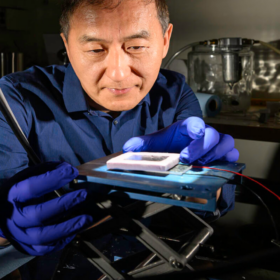
A research team have fabricated a solar thermoelectric generator (STEG) that is reportedly 15 times more efficient than current state-of-the-art devices by concentrating on the managing the hot and the cold sides of the device rather than its semiconductor materials.
Mitsubishi, Evhacs launch world’s first integrated heat pump, EV charger
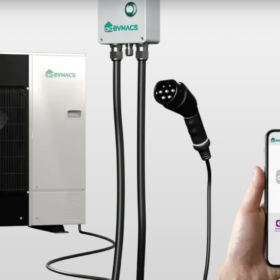
The integrated system is claimed to efficiently provide dynamic load balancing, while supporting demand-side management and future smart grid applications. The heat pump technology comes from Mitsubishi’s Ecodan, Mr. Slim, and M heat pump series, which Evhacs modified for integration with the EV charger.
Perovskite-silicon tandem solar cell relying on silica nanospheres achieves 33.15% efficiency
Researchers in China have improved interface engineering in perovskite-silicon solar cells by using industrially textured silicon. The result is a highly efficienct tandem device that also showed remarkable stability.

Indoor perovskite solar cell built with triple passivation strategy achieves 37.6% efficiency
An international research team has constructed an indoor perovksite PV device by using a triple passivation treatment to reduce crystal defects in the perovskite film. The cell achieved remarkable efficiency and was also able to retain 92% of its initial performance after 3,200 h.

New research shows cast mono wafers are still far from commercial maturity
A Chinese research team has investigated impurity and defect levels in solar cells based on mono cast wafers and have found that around 30% of the devices present an “excessive” reduction in power conversion efficiency. The scientists concluded that cast monocrystalline silicon will unlikely capture a meaningful market share in the near future.
JinkoSolar presents 475 W TOPCon dual-glass solar panel with 23.77% efficiency
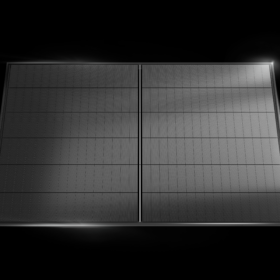
The Chinese manufacturer said its new IEC 61215-certified rooftop PV module relies on a 30 mm aluminum frame and dual-glass construction that reportedly help it withstand extreme snow loads and wind pressure.
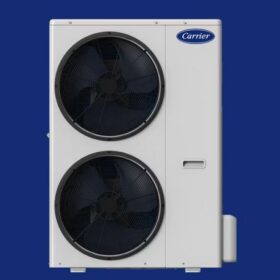
Carrier launches new heat pump for residential, light commercial use
Carrier, a US-based heating solutions provider, has introduced a new heat pump system featuring a cooling seasonal energy efficiency rating (SEER2) of up to 29.7 and a heating seasonal performance factor (HSPF2) of up to 12.2.
Is China’s $7 billion plan to reduce polysilicon overcapacity feasible?
OPIS, Wood Mackenzie, and Bernreuter Research have spoken with pv magazine about China’s alleged $7 billion plan to reduce polysilicon oversupply and restore a sustainable pricing environment for the PV supply chain, but opinions remain divided on its feasibility and effectiveness.
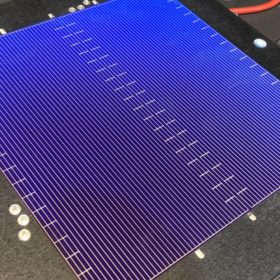
New research warns of unexpected UV-induced degradation in TOPCon solar cells from invisible light
Researchers from UNSW have found that invisible light accelerates UV-induced degradation in TOPCon solar cells, producing the same degradation effects as visible light but at a much faster rate. This can lead to significant open-circuit voltage losses and reduce cell efficiency.
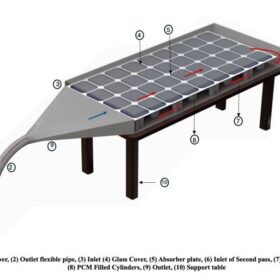
Photovoltaic-thermal solar air heater based on PCM cylinders, air convection
Researchers in Malaysia designed a photovoltaic-thermal system that can be used in solar drying, space heating, rooftop systems, and off-grid thermal applications. It relies on a double-pass cooling technique based on air convection and phase change material that can reportedly increase PV efficiency from 7% to 9% and thermal efficiency by 31.45%.
