Emiliano Bellini

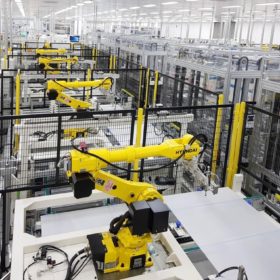
Hyundai enters heterojunction PV module business
Hyundai wants to use a partnership with South Korean PV equipment supplier Jusung Engineering to commercialize solar modules based on 24.45%-efficient heterojunction solar cells.

Fimer files for creditor protection
The Italian inverter maker claims to have been impacted by the post-pandemic supply constraints. The proceedings are being managed in full business continuity without any interruption of operational activity, said the legal firm hired by Fimer to implement a debt restructuring process.

Iberdrola moves forward with Portugal’s largest pumped-hydro storage project
The Spanish energy company is building a huge hydropower complex across three water reservoirs in northern Portugal. The project will rely on 880 MW of pumped-hydro storage and is expected to become fully operational in 2024.
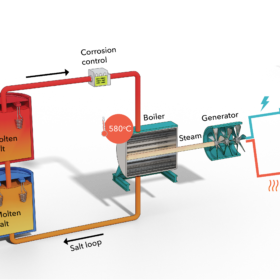
Storing solar power with grid-scale molten hydroxide
Seaborg Technologies, a Danish manufacturer of molten salt nuclear reactors, has turned a technology that was originally developed for nuclear power into a large-scale storage solution for wind and solar. It has developed a storage system that uses renewable energy to heat salt with electrical heaters, based on two-tank molten salt storage designs developed for concentrated solar power plants.
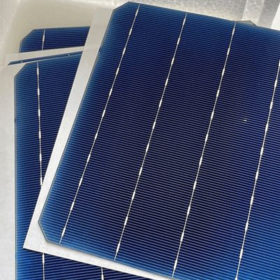
German consortium develops 19.7%-efficient PERC solar cells made of recycled silicon
Led by German research institute Fraunhofer ISE, the consortium has built the solar cells with 100% crystalline silicon recycled from end-of-life photovoltaic panels. The silicon is recycled through a technique conceived by German specialist Reiling GmbH & Co. KG and the Fraunhofer Center for Silicon Photovoltaics CSP.

Taiwan sets solar FITs for 2022
The new feed-in tariffs range from NT4.0031 ($0.14) to NT5.8952 ($0.21) per kWh. PV systems of all types will be applied a grid tariff of NT0.0656 ($0.002)/kWh and the funds raised through this fee will be used to set up a PV module recycling scheme.
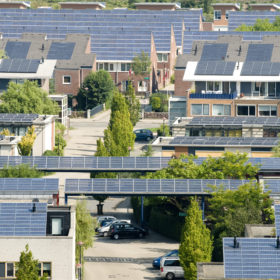
Italian region devotes €22 million to ‘energy communities’
Italy’s Lombardy region will use €22 million to build up to 6,000 “energy communities,” for a total installed capacity of up to 1.3GW.
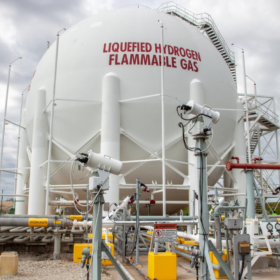
Large-scale storage options for compressed hydrogen
Researchers from Finland and Sweden have reviewed different ways to store compressed gaseous hydrogen, including storage vessels, geological storage, and other underground options.

Photovoltaics for curved surfaces
Researchers in Japan have used heat-shrinkable polymers to laminate organic photovoltaics onto curved surfaces. The process improves efficiency while minimizing damage to photovoltaic components.
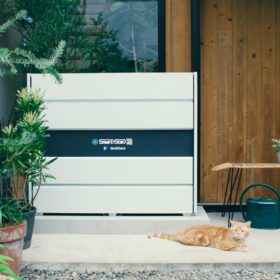
Itochu starts leasing new residential battery in Japan
Itochu’s new 13.4kWh storage system is equipped with AI-based software for optimal battery control. It can be used for grid-connected and offgrid projects and has a charging feature for electric vehicles.
