Emiliano Bellini

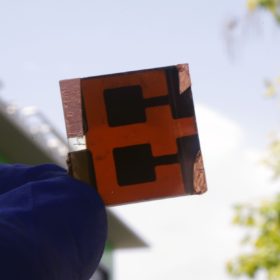
Ligand-free perovskite quantum dot solar cell with 9.3% efficiency
The quantum dots used for the device are based on methylammonium lead iodide and are synthesized within a porous silica (SiO2) matrix. Compared to its bulk counterparts, the ligand-free solar cell exhibited a more stable performance.

Swedish developer announces 1 GW PV project pipeline in home country
Helios Nordic Energy has secured another 500 MW of unsubsidized solar projects across southern Sweden.

Indium supply not an issue for CIGS industry
Scientists Ayodhya Tiwari and Daniel Lincot recently spoke to pv magazine about the future of copper indium gallium selenide solar tech, which could play a key role in providing flexible, lightweight products in the building-integrated PV segment.
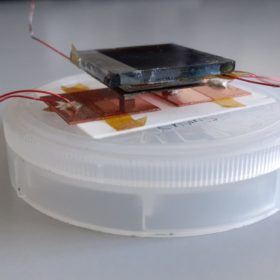
Recovering waste heat from solar cells via a thermoelectric generator
Scientists in Italy have created a hybrid thermoelectric photovoltaic (HTEPV) system based on a thermoelectric generator and a wide-gap perovskite solar cell. The device is able to recover waste heat from the PV unit and produce additional power. According to its creators, this configuration needs large gap cells as these are less sensitive to temperature in terms of efficiency
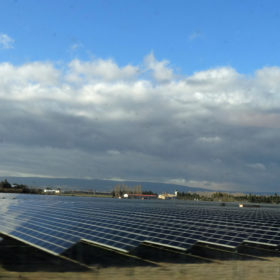
Change in ownership for 153 MW PV project in Romania
The 153 MW Ratesti PV project was acquired by Israel-based independent power producer Nofar Energy. The facility will be located in the Arges county, in southern Romania.

South African state lender launches call to finance PV, wind projects
The Development Bank of Southern Africa (DBSA) has announced plans to support the construction of wind and solar plants ranging in size from 10 MW to 75 MW.
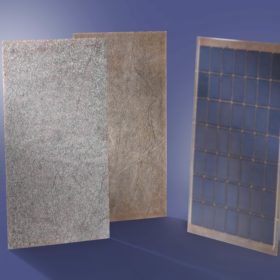
Facade BIPV modules designed with stone veneers
Developed by a German group of scientists, the panels are considered an ideal solution for aesthetically demanding applications in buildings with stone facades. Although their power yield is more than halved compared to conventional modules, the modules can also be used as partial shading walls or semi-transparent roof elements.

Double-layered anti-reflective coating for heterojunction solar cells
South Korean scientists have developed a novel coating that purportedly reduces average cell reflectance and significantly increases short-circuit current. The coating is based on aluminum oxide and indium tin oxide.

Agrivoltaics for rabbit farming
U.S. scientists have developed a new way to combine PV generation and rabbit farming. They claim their new approach to agrivoltaics produces lower emissions and uses less energy than non-integrated methods.

Mongolia launches EPC tender for 10 MW solar park
The PV project is part of a program aimed at deploying 40.5 MW of solar and wind capacity in the country’s western and Altai-Uliastai regions.
