Emiliano Bellini

Climate data-based methodology for residential air-source heat pump sizing
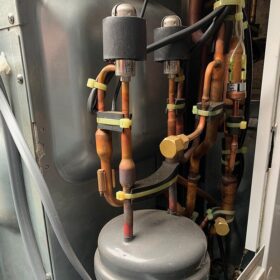
A European research team proposed a new air-source heat pump sizing approach that utilizes long-term climate data and adjusts system operation based on actual local climate conditions. The sizing algorithm incorporates peak heat demand, unitary final energy demand, and seasonal heat demand across different house sizes.

Saudi Arabia’s 3.7 GW solar tender attracts lowest bid of $0.0129/kWh
Saudi Power Procurement Co. (SPPC) has announced the shortlisted bidders for the the fifth round of the Saudi Arabian government’s renewable energy tender program.
Trina Solar sues Canadian Solar for alleged TOPCon patent infringement
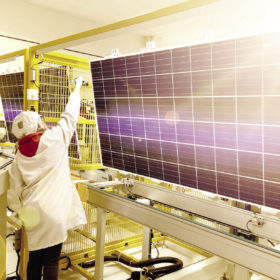
Trina Solar has filed a lawsuit against Canadian Solar in a US court, claiming patent infringement on an unspecified tunnel oxide passivated contact (TOPCon) solar cell technology.

Belgian grid operator accelerates smart meter deployment for PV system owners
Belgian grid operator Fluvius plans to install around 403,000 smart meters in solar-powered homes by 2025, when their use becomes mandatory. So far, the company has installed 553,500 smart meters in Flemish homes with PV systems.
Dutch grid operators propose limitation contracts to free up 880 MW of capacity
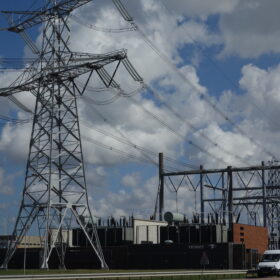
Dutch grid operators TenneT, Enexis, Liander, and Stedin say that expanded use of “capacity limitation contracts” among renewable energy operators could free up about 880 MW of additional grid capacity. The contracts are granted by congestion service providers (CSPs), which act as intermediaries in the Netherlands.

With or without PV, air-source heat pumps are among cheapest residential heating sources
New research from Germany shows that identifying the cheapest residential heating source remains challenging, as the final results depend on the assumptions made and energy prices. The scientists, however, demonstrated that air-water heat pumps and gas heating systems are currently the most cost-effective solutions.

Tunisia launches 200 MW solar tender
Tunisia’s Ministry of Industry, Mines and Energy has kicked off a new procurement exercise for large-scale solar.

First attempt to build solar cells based on gallium phosphide, titanium
After conducting theoretical studies on gallium phosphide, titanium solar cells for years, a group of Spanish researchers has now sought to build the first intermediate band device based on this material combination and has found it can achieve enhanced external quantum efficiency at wavelengths above 550 nm.
General Motors launches residential storage system
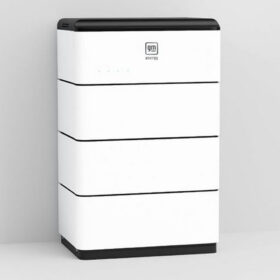
The US-based automotive manufacturing company said its new storage system offers the option of integrating with PV systems. It can be scaled to reach a capacity of up to 35.4 kWh, which the company said would enable approximately 20 hours of storage.
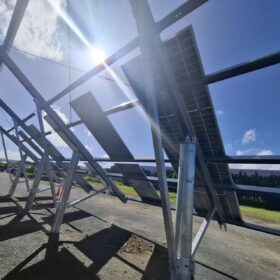
JinkoSolar, Trina say TOPCon modules outperform p-type back-contact panels
JinkoSolar and Trina Solar have separately reported that on-field testing shows tunnel oxide passivated contact (TOPCon) solar modules outperform p-type back-contact PV modules in monthly power generation.
