Emiliano Bellini

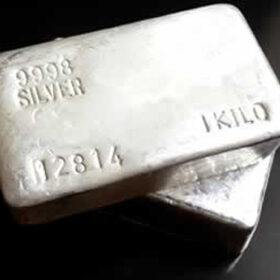
Silver prices resume upward trend
Silver prices have resumed their climb, reaching $95 per ounce this morning. Silver analyst Philip Newman tells pv magazine that escalating tensions in the Middle East are expected to continue driving investment demand for safe-haven assets such as gold and silver.
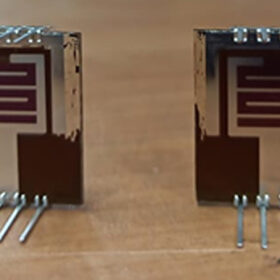
Indian researchers build transparent perovskite-silicon tandem solar cell with 30.2% efficiency
The transparent four-terminal perovskite solar cell employs an ion-modulated spiro-MeOTAD hole transport layer, which passivates interfacial defects, enhances carrier dynamics, and allows for a tunable work function in wide-bandgap perovskites. When integrated into mechanically stacked 4T tandems with an n-TOPCon cell, the device achieved an overall efficiency of 28.4–30.2%, along with improved open-circuit voltage and fill factor.

Growatt debuts high-voltage battery for residential, small C&I solar
The APX HV Battery 2.0 supports 5–30 kWh capacities and up to 15 kW of output. The IP66-rated system features a stacked, cable-free design.
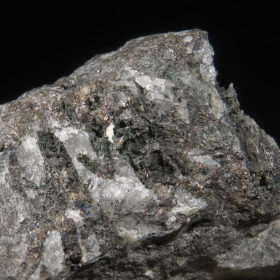
Chinese Academy of Sciences achieves world record efficiency of 15.45% for kesterite solar cell
The cell was fabricated using a new interfacial phase equilibrium strategy that suppressed uncontrollable metal ion migration. The device achieved an exceptionally high open-circuit voltage of over 600 mV at a bandgap of 1.10 eV.

Chinese scientists build ‘ultra-stable’ polymer solar cell with 19.1% efficiency
The polymer solar cell is able to retain 97% of its performance after 2,000 hours in air. By blending small-molecule acceptors into polymeric matrices, the research team improved molecular packing, enhancing both stability and charge transport for “ultra-stable” flexible devices.
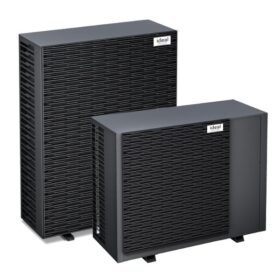
Ideal Heating launches new monobloc propane heat pump for commercial buildings
The UK-based manufacturer has expanded its Ecomod 290HT range with a new 65 kW monobloc air-source heat pump using R290 refrigerant, offering flow temperatures up to 70 C, a COP of 4.6, and cascade capability of up to 7 units.

New solar tracking strategies aim to maximize crop yield in agrivoltaics
Swedish researchers developed two novel single-axis solar tracking strategies that dynamically adjust panel tilt based on crop light requirements, balancing photosynthesis and energy production. One strategy prioritizes daily light integral targets before shifting to energy capture, while the other uses the light-response curve to optimize photosynthesis, offering improved dual-use efficiency compared with conventional tracking methods.
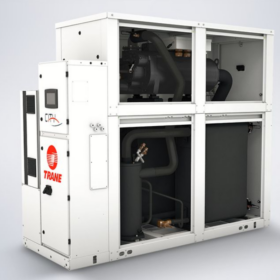
Trane presents high-temperature water-to-water heat pump
The Irish heating specialist has launched a high-temperature heat pump delivering up to 110 C hot water and heating capacities of 100 kW to 370 kW for industrial and district heating applications. The system achieves a coefficient of temperature of up to 4.63.

JinkoSolar achieves record-breaking 26.66% efficiency for TOPCon solar cell based on M10-size wafer
The Chinese manufacturer claims the new efficiency result sets a world record for industrial-scale TOPCon solar cells on M10-size wafers. The achievement was verified by an undisclosed independent third-party organization in China.
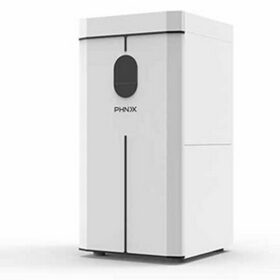
Phnix unveils indoor monobloc heat pump for space‑constrained urban retrofits
The Chinese manufacturer said its new airMono indoor monoblock heat pump is tailored for space‑limited urban retrofits, providing heating, cooling, and domestic hot water without an outdoor unit. The system’s coefficient of performance ranges from 2.5 to 4.1, while the seasonal coefficient of performance spans 4.5 to 4.7.
