
Optimizing endless PV-driven heat pump scenarios for costs, self-sufficiency
Researchers have used mixed-integer linear programming-based multi-objective optimization to optimize 30,912 unique scenarios showing heat pumps operating in combination with PV power. The optimization modeling was conducted under day-ahead spot market prices terms.

Novel MPPT technique uses fuzzy logic control with new inputs
Academics have developed a maximum power point tracking (MPPT) algorithm for PV systems that combines incremental conductance with fuzzy logic control. The inputs used are the sum of conductance and incremental conductance and its rate of change. It had an average efficiency of 97.7%.
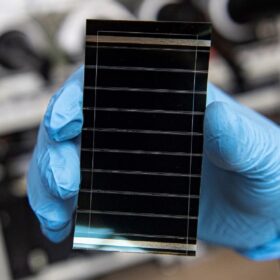
Perovskite solar cell based on chalcogen-molecules achieves 25.37% efficiency
An international research team has used Lewis molecules to improve efficiency and stability of a perovskite solar cell built with a fully encapsulated trapping tactic aimed to reduce perovskite surface defects. The cell achieved a certified power conversion efficiency of 25.18% and a champion efficiency of 25.37%.
Avalon ST acquires PASAN to expand solar testing operations
Avalon ST, a Swiss LED-based solar simulation and metrology company, has acquired xenon-based solar simulator firm PASAN for an undisclosed sum. The companies will integrate operations and staff in Switzerland China, aiming to expand global reach and product innovation.
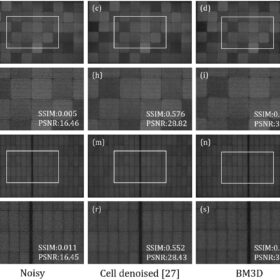
Denoising outdoor electroluminescence images of PV panels through deep learning
Researchers in Australia have developed a simplified residual network-based architecture method to filter out noise from electroluminescence images of PV modules. The proposed technique reportedly enhance the accuracy and efficiency of automated inspection systems for utility-scale PV plants.
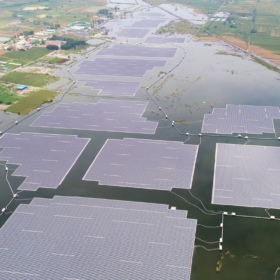
Water-based photovoltaics reach global capacity of 21.18 GW
An international research team has developed an index-based remote sensing method to see trends in the global development of water-based PV. It has found that China currently accounts for 80% of the global total deployed capacity.
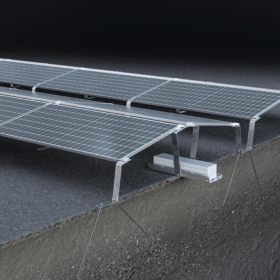
Aerocompact debuts ground-mounted PV solution for small-scale solar
Aerocompact has launched COMPACTGROUND GS 10 PLUS, a ground-mounted PV solution designed for small projects and diverse terrain like farmland and asphalt.
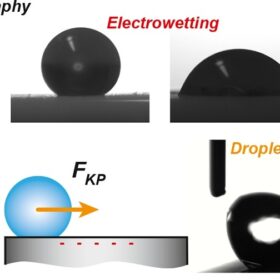
Novel photovoltaic technique to charge patterns for droplet manipulation
Scientists have used photovoltaic charge lithography to imprint surface charges on passive dielectric substrates by shining a halogen lamp onto iron-doped lithium niobate. The technique may support next-generation microfluidic, biomedical, and chemical applications.
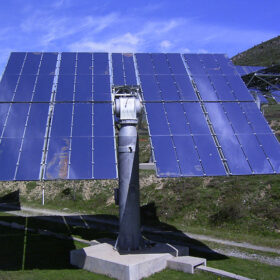
CSP-driven multigeneration system combines hydrogen generation with compressed air, pumped hydro storage
Researchers have designed a novel multigeneration energy system that provides five outputs, namely electricity, hydrogen, cooling, heating, and hot water. The system is mainly powered by a solar heliostat system and incorporates compressed air and pumped hydro storage technologies for storing surplus power.
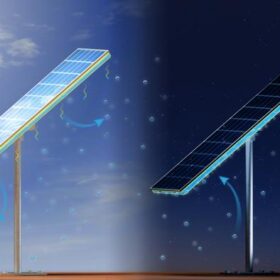
New cooling gel could raise PV module efficiency by 12%
Researchers in Saudi Arabia have developed a hydrogel composite that absorbs moisture in solar modules overnight and facilitates evaporative cooling throughout daylight hours. The system has undergone lab tests and outdoor experiments on two continents.
