
Can dimethyl ether replace propane as refrigerant in heat pumps?
New research from Spain has sought to understand if dimethyl ether and ternary mixtures of carbon dioxide, dimethyl ether and butane could represent an alternative to propane in heat pump systems. Their analysis has shown dimethyl ether could be the best alternative to R290, as it offers the highest coefficient of performance values for both cooling and heating, and avoids issues related to temperature glide.

Global PV dataset shows 2019-2022 data
Using Google Earth imagery and 2019-2022 Sentinel-2 datasets, Chinese scientists have developed a two-stage classification framework to obtain the annual global dataset of solar photovoltaic panels at 20-meter resolution from 2019 to 2022.

How to assess bifacial PV system performance on sloped terrains
Scientists have developed a precursor formulation for different PV simulation tools that can help calculate the expected performance of solar farms deployed on hilly slopes. Validation tests against an experimental setup showed an error of less than 3%.
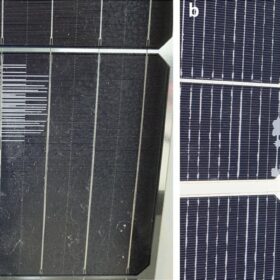
Three-year field test shows TOPCon, HJT solar module reliability in desert areas
A three-year field experiment comparing the performance and reliability of passivated emitter and rear cell (PERC), tunnel oxide passivated contact (TOPCon), and silicon heterojunction (SHJ) modules in desert climates found that HJT modules exhibited the highest degradation, while TOPCon modules showed the lowest degradation.

New method to optimize bifacial PV system performance in residential applications
Scientists in Qatar have outlined a new approach to optimize residential bifacial PV systems by combining south-facing and vertically mounted east-facing configurations. The novel methodology reportedly results in a 21.6% increase in a system’s net present value.
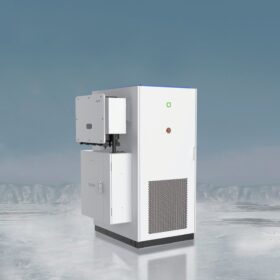
Sofar releases two new C&I storage solutions
Chinese storage manufacturer Sofar has released a flexible energy storage system for small and medium-sized commercial and industrial (C&I) users, as well as a storage cabinet for AC-coupled scenarios.
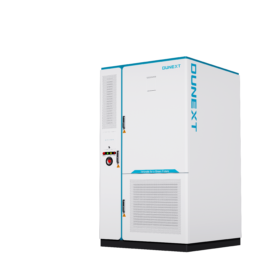
Dunext introduces outdoor energy storage cabinet
The Chinese company said its new product is intended for commercial and industrial use. It uses 233 kWh LiFePO4 batteries.
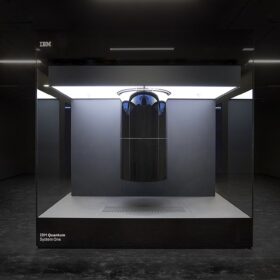
Quantum-based energy management method for PV-powered buildings
Scientists from Cornell University combined quantum computing with model predictive control to manage the energy of two PV-equipped university buildings. Compared to deterministic approaches, the quantum strategy achieved a 6.8% improvement in energy efficiency and an annual reduction of 41.2% in carbon emissions.

Novel smart coating for space solar cells
Researchers in China have investigated how transparent smart radiation devices (TSRD) can be used to protect space solar cells from extreme thermal fluctuations. Through a series of simulations, they have shown that the proposed technique could become an “effective” solution for spacecraft solar cell thermal management.
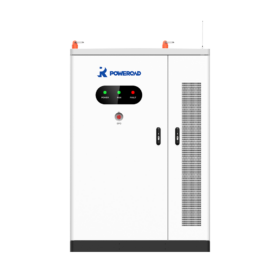
Poweroad launches 233 kWh battery for C&I solar
The Chinese manufacturer said that up to 10 battery cabinets can be connected in parallel to reach a total storage capacity of 2.33 MWh.
