Marija Maisch

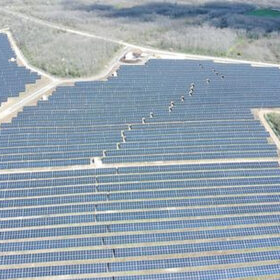
Serbia seeking partner for 1 GW of solar, 200 MW battery storage
The Serbian government is seeking a strategic partner to develop at least five PV plants with a cumulative capacity of 1 GW/1.2 GWdc and at least 200 MW/400 MWh of battery energy storage. State power company Elektroprivreda Srbije (EPS) will own and operate the assets.
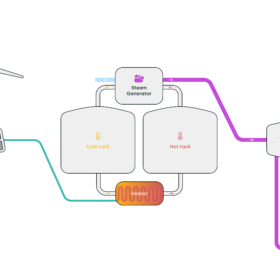
Storing renewables with molten hydroxide salts
Hyme Energy has awarded Semco Maritime an engineering, procurement, and construction (EPC) contract for services for the 1.6 MWh Molten Salts Storage (MOSS) Project in Esbjerg, Denmark. The long-duration energy storage plant will charge from the grid and be used to demonstrate and test the molten hydroxide storage technology in a practical setting.
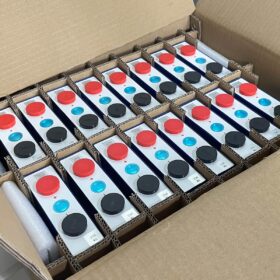
Lithium-iron phosphate prismatic battery cells with energy density of 138 Wh/kg
Chinese energy storage company Imren Battery has introduced its new EVE LF105 lithium-iron phosphate (LFP) prismatic battery cells, which can be used in a wide range of applications, including EVs, renewable energy storage, and other applications.

Rimac Tech enters stationary energy storage with new tech, gigafactory plans
Croatian high-performance EV component supplier and car manufacturer Rimac Technology has developed a novel battery architecture that is said to reduce efficiency losses by up to 50% while decreasing the system footprint by up to 40% compared to current state-of-the-art solutions.

EnerVenue completes metal-hydrogen battery safety testing
Unlike lithium-ion battery cells, EnerVenue’s nickel metal-hydrogen technology showed no fire propagation during induced thermal runaway in UL battery safety testing.
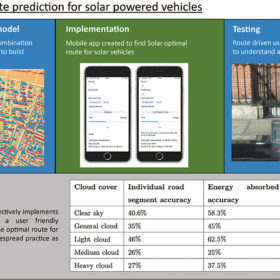
Mobile application to predict optimal energy efficient route for solar vehicles
Irish researchers have created a mobile app that calculates the best route for solar-powered vehicles based on user preferences for time and energy efficiency. The app’s experiment predicted the most energy-absorbing route with 51.65% accuracy and chose the most energy-consuming route with 86.65% accuracy.
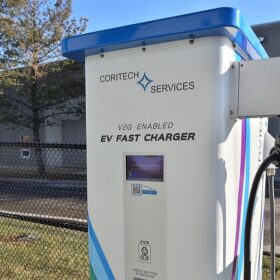
Adaptive control of V2Gs incorporating EV owner expectations
Australian researchers have developed a novel adaptive decentralized control strategy for electric vehicle (EV) integration, incorporating both microgrid and EV-side conditions into the primary frequency control. They have proposed new indices to evaluate the charge and discharge capabilities of EV batteries, as well as the satisfaction levels of EV owners.
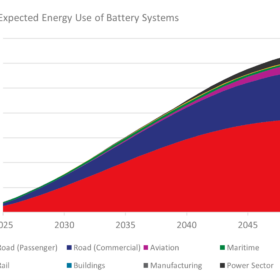
Role of hydrogen, batteries in UK’s decarbonization efforts
Hydrogen and battery technologies are expected to play an increasingly vital role in the UK’s transition to net zero by 2050, but the varying time scales of their rollouts are driving uncertainty in predicted market share profiles over time, according to a new report.
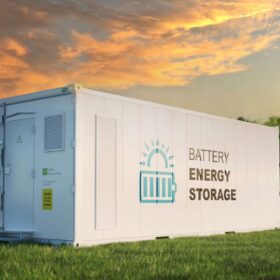
Europe’s big battery fleet to surge to 95 GW by 2050, says research firm
According to Aurora Energy Research, Europe is on track to install at least 95 GW of grid-scale battery energy storage systems by 2050, up from 5 GW of installed capacity today, and representing more than €70 billion ($76.9 billion) of investment.
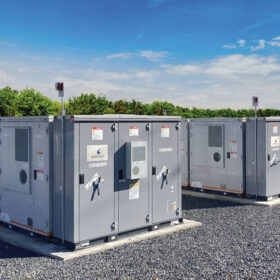
Weekend read: Pathfinders for grid stability
Non-synchronous renewable energy affects grid stability but storage-as-transmission (SAT) assets offer grid companies a trump card. Whether it’s “virtual transmission” in Australia, Germany’s “Grid Booster” program, or the giga-scale pipeline of projects emerging in the United Kingdom, energy storage is finding a way.
