Mark Hutchins


Narrowing down a million molecules for the optimal flow battery
Scientists in the United States turned to artificial intelligence to speed up their search for new materials for use in a flow battery. The group developed a machine learning algorithm that could search a dataset of potential materials and identify those with the ideal balance of different characteristics that make it suitable for use in a flow batteries. The group says its algorithm could be applied to other battery technologies, and even in other fields.
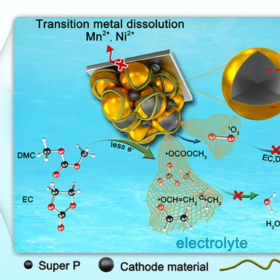
New ‘bioinspired’ solution to battery degradation
As part of their efforts to bring lithium-ion battery degradation under control, scientists in China have looked to emulate natural defenses many organisms have evolved to reduce oxidation reactions and related damage. With an additive that ‘scavenges’ reactive particles before they can contribute to degradation, the group was able to demonstrate significantly lower electrolyte decomposition in a working battery.
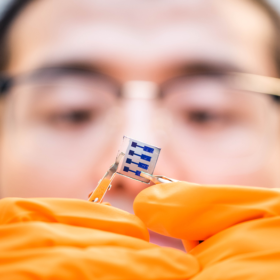
Green solvents for a 17%-efficient organic solar cell
Scientists in Sweden and China developed a solution-based process to produce organic solar cells, demonstrating efficiencies better than 17%. The process utilizes paraxylene as a solvent, which the researchers claim is less toxic and more stable than others used to reach high organic solar cell efficiencies, and with more work could be scaled up to produce large area devices.

The Good, the Bad and the Ugly: defects in perovskite solar cells
Scientists in the UK delved deep into the structure of a perovskite solar cell, looking to understand the complex relationship between the materials that make up the perovskite layer, and the role of different defects in both limiting and improving performance. The findings could allow for new perovskite materials that are specially structured to maximize PV performance.
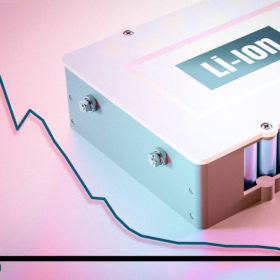
Behind the price drops in lithium-ion batteries
Scientists in the United States pieced together data from hundreds of different sources, looking to establish the key factors that have led to consistently falling prices for lithium-ion technology since their commercialization thirty years ago. They find that public-funded research, primarily in chemistry and materials science, has made the largest contribution to cost reduction. And they offer suggestions on policy and investment to ensure that the research can continue to make these important contributions to reduction in battery costs.
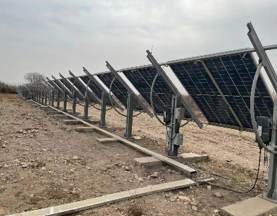
ITRPV: More work needed to process 210mm wafers
In an update to its annual International Technology Roadmap for Photovoltaics, German engineering association VDMA discusses the readiness level for various technologies in PV cell and module manufacturing, finding that more process development is needed for 210mm wafers – the largest format currently on the market – to match the throughputs that will soon be achievable with smaller formats including 182mm.
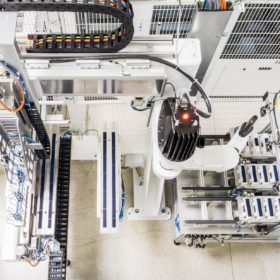
Shingled solar modules and shading
Scientists at Germany’s Fraunhofer Insititute for Solar Energy Systems (ISE) evaluated the performance of its newly introduced ‘Matrix’ approach to interconnecting shingled solar cells. The institute finds that, thanks to optimized current flows, energy yield of the Matrix approach could almost double that of standard shingled cell interconnection under random shading conditions.
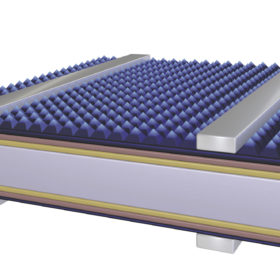
New optimizations for a 24.5% efficient heterojunction solar cell
Scientists in Germany analyzed the main sources of performance loss in a silicon heterojunction cell, and developed several optimization strategies to improve overall performance. By adding a second layer of amorphous silicon at the rear of the device, and a magnesium fluoride anti-reflective layer, they were able to boost cell efficiency by around 1% to reach 24.51%.
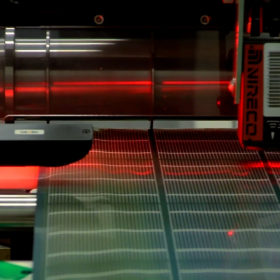
Mesoporous carbon for a 20-year stable perovskite solar cell
Scientists in Japan and Europe investigated the long-term stability of perovskite solar cells utilizing layers of mesoporous carbon, building on previous work demonstrating the strong potential of this approach. This latest work demonstrates a light-soaking effect, which allowed them to fabricate cells that retained 92% of their initial performance after 3,000 hours in damp heat conditions – which the researchers say is equivalent to 20 years in the field.
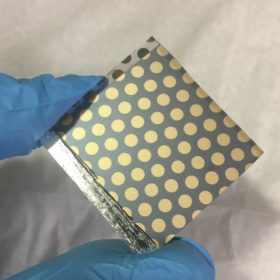
Rear-side passivation for 17.4% efficient CdTe thin film
Scientists in the United States investigated adding a layer of copper-aluminum oxide to the rear side of a cadmium-telluride thin film cell, finding positive impacts on carrier lifetime and efficiency. With further work, the scientists say, the discovery could open up new routes to higher efficiencies in CdTe solar cells.
