Mark Hutchins


Webinar Q&A: A recipe for improved performance
In a recent pv magazine webinar, module degradation experts took our audience through the role of temperature and mechanical stress in causing modules to under-perform. We were treated to a look at some impressive results for modules integrated with Coolback – a solution that replaces the backsheet/rear glass and frame in a conventional panel and promises lower operating temperatures and better mechanical strength. Here, Simon Meijer and Alex Masolin, from Coolback – along with Fraunhofer ISE’s Andreas Beinert – answer some of the questions we didn’t have time for during the live broadcast.
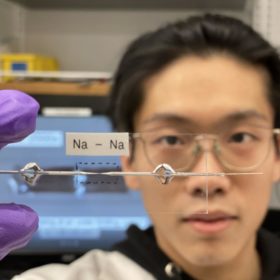
A stable sodium battery, without the anode
Scientists in the U.S. demonstrated a sodium-ion battery with no anode, that retained 99.93% of its initial capacity per cycle. Their design was able to overcome many of the stability issues associated with using ‘pure’ alkali metals in batteries, thanks to carefully minimizing water content in the liquid electrolyte.
A different angle on perovskite defects
Scientists in China took a closer look at the role of defects in limiting the performance of perovskite solar cells, demonstrating a screening effect that could be tuned to make material defects “invisible” to charge carriers, greatly improving cell performance. Using this approach they demonstrate a 22% efficient inverted perovskite solar cell, and theorize several new pathways to even higher performance.
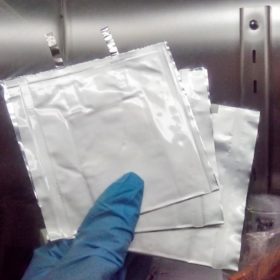
Lithium saturation to make old batteries new
Scientists investigating the aging mechanisms affecting today’s lithium-ion batteries observed that the loss of lithium over time is one of the main causes of performance loss. With this in mind, they developed and tested a “relithiation” process that promises to eliminate much of the cost and complexity from recycling battery components and materials.
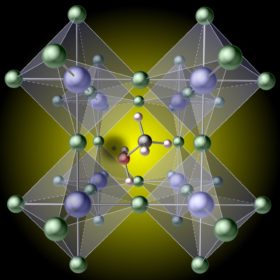
Keeping track of hydrogen for perovskite performance
Scientists in the United States discovered that hydrogen plays a leading role in the formation of defects in a perovskite film, which limit their performance as PV devices. The discovery, according to the researchers, offers further insight into observations already established by trial and error and could help to push the impressive efficiency achievements already made by perovskites even higher.
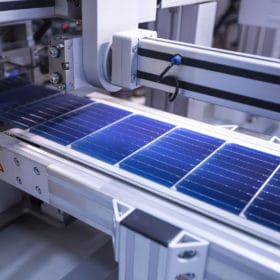
ITRPV: Large formats are here to stay
The 2021 edition of the International Technology Roadmap for Photovoltaics (ITRPV) was published today by German engineering association VDMA. The report, which forecasts technology trends across the solar industry, expects PERC to maintain its position as the dominant cell technology and notes that large wafer formats are here to stay.
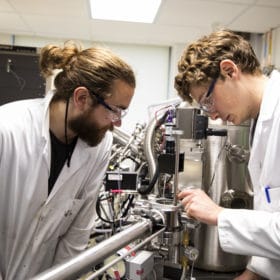
Cracking the case for solid state batteries
Scientists in the UK used the latest imaging techniques to visualize and understand the process of dendrite formation and electrolyte cracking in an all solid-state battery. With new insight into the mechanisms by which these cracks form and ultimately lead to battery failure, the results could help direct the focus of future research into solid-state battery technology.

Enabling aluminum in batteries
Scientists in South Korea and the UK demonstrated a new cathode material for an aluminum-ion battery, which achieved impressive results in both specific capacity and cycle life. The material allows researchers to better take advantage of aluminum’s energy storage characteristics, and produce batteries with much higher capacity.
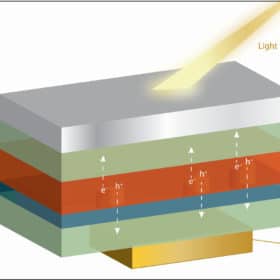
Doping and capping promise perovskite stability
Scientists demonstrated two new approaches to improving the stability of perovskite solar cells. By both incorporating rubidium into the structure of the perovskite, and adding a film of two-dimensional perovskite as a capping layer, they were able to demonstrate a significant reduction in the cell’s sensitivity to moisture. The group says its research will open up new routes to improved performance and stability in perovskite PV.
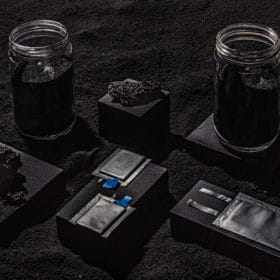
Silicon for batteries moves to commercial production
U.S. company Group14 Technologies today announced the launch of a factory capable of producing 120 tons per year of its innovative silicon-carbon-based anode material for lithium-ion batteries. The factory is located at Group14’s headquarters in Woodinville, Washington and is the first of several planned by the company.
