Pilar Sánchez Molina
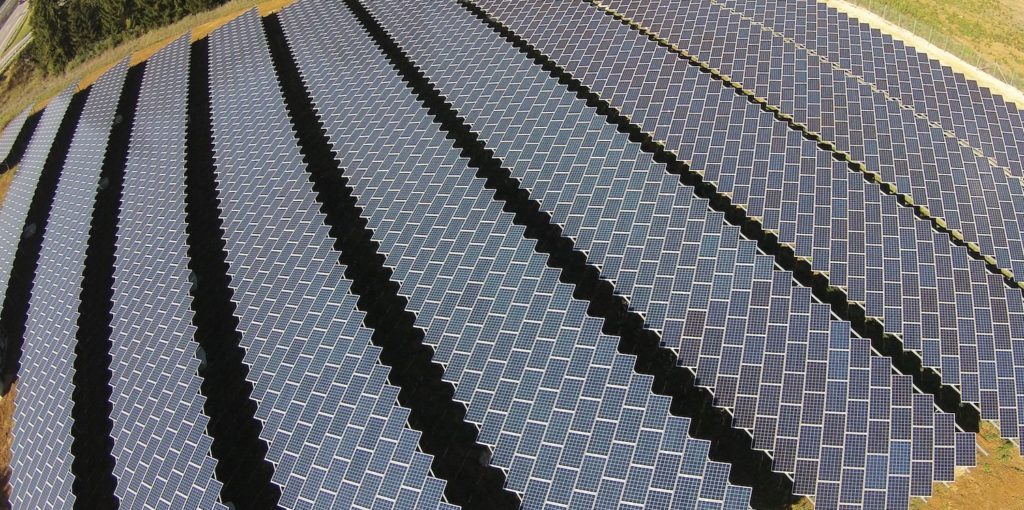
Brazil reaches 5 GW of signed solar PPAs
A new CELA Clean Energy Latin America study looks at 70 power purchase agreements signed for wind and solar PV projects in Brazil.

Spanish developer plans 1 GW solar plant coupled to 80 MW of storage, 100 MW electrolyzer
Soto Solar has submitted the project proposal to the Ministry of the Ecological Transition and the Demographic Challenge (Miteco). The solar plant could start production in 2023 or 2024 and will have a generation capacity of more than 2,000 GWh/year.

Colombia to hold renewables auction by the end of October
Project selected in the auctions will be granted a 15-year PPA and will have to begin delivering power in December 2022.
Fraunhofer ISE reveals Spain may host 5 GW module factory
The vertically integrated factory is expected to be located near Sevilla, in southern Spain. The factory will be owned and operated by the newly created company Greenland Gigafactory.
Auctions will not influence PPA prices in Spain
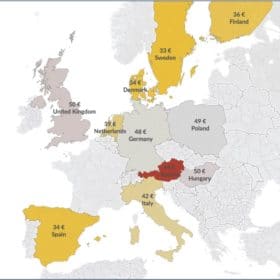
LevelTen Energy reports each quarter on the prices that wind and solar project developers have offered for power purchase agreements, and makes medium-term estimates for the most important markets. Italy and Spain have been the most active markets in the first quarter of 2021.

Latin America’s first CSP plant now online
A consortium led by Abengoa and Acciona has commissioned a 110 MW concentrated solar power project, paired with 100 MW of PV, in Chile’s Atacama Desert.
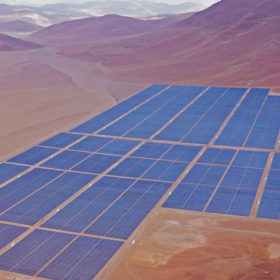
Chile’s cumulative PV installations hit 4.6 GW
New statistics from ACERA, the Chilean renewable energy association, show that solar covered around 12.9% of the country’s total electricity demand in March.
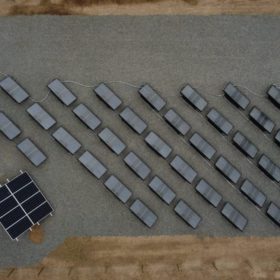
Chilean startup using PV to produce potable water from humidity
A Chilean startup is using solar energy to produce high-quality drinking water from the humidity in the air. The first plant is located in Chile, but there are plans in the works to expand to Colombia and Peru.

Iberdrola, Mapfre set up renewable energy joint venture
The new company, which will be majority-owned by the Spanish insurance group, is currently developing 130 MW of photovoltaic projects across Spain.
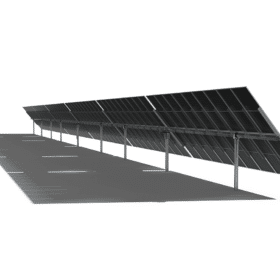
PVH launches tracker for high-power modules
The new solar tracker from PVH was specifically designed to be compatible with large-format modules and was developed in static and aeroelastic wind tunnels.
