The Hydrogen Stream: Chinese scientists exploring new catalysts for hydrogen
Shanghai University scientists have started researching molybdenum-doped nickel-cobalt phosphide catalysts for hydrogen production, and Indian scientists have devised a method to produce hydrogen from methanol.
The Hydrogen Stream: Germany to use hydrogen ‘in all sectors’
The German authorities have announced plans to double domestic electrolysis capacity to 10 GW by 2030, BloombergNEF has reported that green hydrogen became competitive with gray hydrogen earlier than expected, and Chinese researchers have presented new research on microbial hydrogen production.
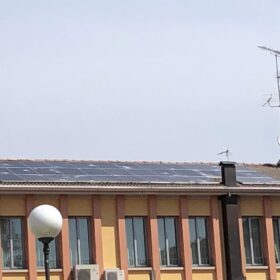
How big must hailstones be to damage PV systems?
The hail storms that occurred recently in northern Italy damaged several photovoltaic systems. pv magazine Italy retrieved a report from the Vrije Universiteit Amsterdam from 2019 which tried to shed light on the damage caused to solar installations by hail by analyzing the effects of a severe hailstorm that occurred in the Netherlands in 2016. According to their assessments, damages to PV modules are mostly derived from hailstones of at least 3 cm in diameter.

The Hydrogen Stream: Gasunie reports strong interest in salt cavern H2 storage
Dutch gas supplier Gasunie says several market participants have reserved capacity in the first salt cavern for large-scale hydrogen storage near the Dutch city of Groningen. According to current planning, the first cavern will be operational by 2028.

The Hydrogen Stream: US scientists hit PV water-splitting efficiency of 20.8%
US researchers have developed new integrated halide perovskite photoelectrochemical cells, while Fortescue Future Industries has revealed plans to acquire a hydrogen project from Nikola in Arizona.
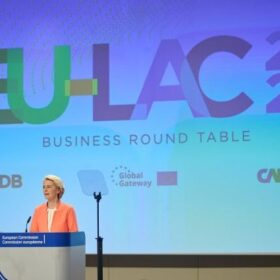
The Hydrogen Stream: EU, Argentina, Chile, Uruguay to partner on hydrogen
The European Commission and the European Investment Bank have agreed to collaborate with Argentina, Chile and Uruguay on hydrogen, while Masdar, Mitsubishi and Inpex have said that they will use green hydrogen to produce e-methane and polypropylene.
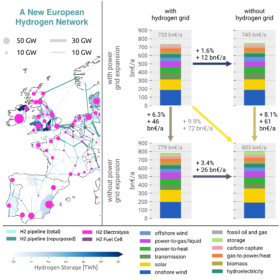
The Hydrogen Stream: Hydrogen grid could cut Europe’s energy costs by 3.4%
German researchers say gas-grid retrofits for hydrogen transport, combined with power grid expansion, could decarbonize Europe’s economy, while S&P says the global ammonia trade could expand by nearly 10 times by 2050.
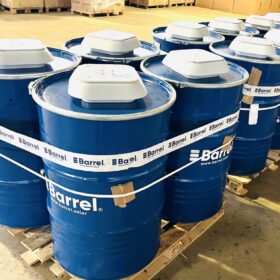
Italian startup offers solar kits packed in barrels
Italy’s Barrel claims that solar kits packed in barrels are ideal for remote areas and conflict zones. Its standard packages consist of 6 kW solar modules, 5.6 kW single-phase hybrid inverters, and 3.55 kWh lithium batteries.

Clementy Group to finalize acquisition of Fimer
Clementy Group, a UK-based investment firm, is ready to acquire Italian inverter maker Fimer. In September, Fimer announced an industrial relaunch after entering composition-with-creditors proceedings at a tribunal in Italy.
The Hydrogen Stream: Scientists use perovskite compound to store ammonia
Japanese scientists have developed an organic-inorganic halide perovskite compound for the chemical storage of ammonia (NH3), while Bosch is preparing to exhibit new products in the hydrogen value chain.
