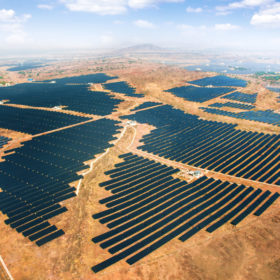
Indian hydropower producer to deploy 10GW of PV over next 10 years
SJVN Limited, an Indian state-owned hydropower producer, has revealed plans to develop 10 GW of solar power projects over the next five years.

ReNew Power commissions 17.6 MW wind-solar hybrid project in India
Indian developer ReNew Power has commissioned a 17.6 MW captive wind-solar project to supply clean energy to Grasim Industries Limited’s Chlor-Alkali unit in the Indian state of Gujarat. The second phase will involve an additional installation of 16.68 MW.
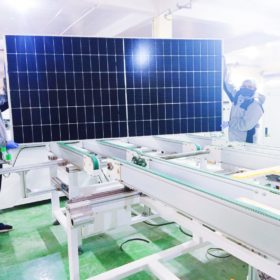
Indian manufacturer Saatvik Solar doubles module capacity to 1GW with new fab
The Indian solar company’s new facility in Haryana is equipped to make mono PERC, half-cut, multi-busbar technology, to produce high-efficiency PV modules with 530-610Wp of power output.
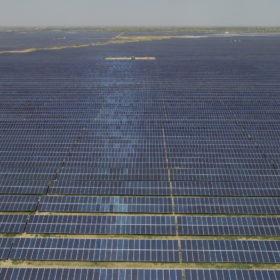
Scatec, Acme put 900 MW PV project on hold in India
Norway’s Scatec – which has a 50% stake in Acme’s 900 MW solar project in Rajasthan, India – has put the planned installation on hold due to a lack of domestically produced solar panels and a 40% import duty on PV modules that will go into effect from April.

India targets domestic production with 40% PV import duty, boost to manufacturing-linked incentive
India’s Union Budget, presented this week by Finance Minister Nirmala Sitharaman, allocates an extra INR 19,500 crore ($2.6 billion) to the production-linked incentive scheme for solar from April.
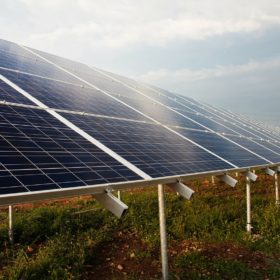
Indian state of Maharashtra launches 865 MW tender for small solar parks
The tendered capacity is expected to provide day-time power to agricultural consumers. The selected projects will range in size from 2 to 10 MW and will be awarded a 25-year power purchase agreement.
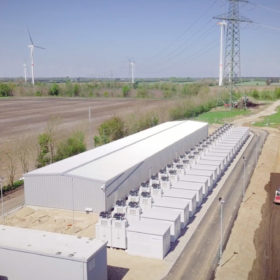
India’s NTPC tenders 500 MW/3,000 MWh of energy storage projects
Global bids are invited to develop a cumulative 500 MW of energy storage system facilities on a “build-own-operate” basis anywhere in India. The proposed plants can be set up ranging in sizes from 100 MW to 500 MW, with the capacity to store at least six hours of electricity — for example, a 500 MW project with a minimum energy storage capacity of 3,000 MWh. Bidding closes on March 11.

RenewSys expands solar encapsulant capacity to 3 GW, aims for 11 GW
Solar manufacturer RenewSys has expanded its encapsulant capacity to 3GW with the addition of a new line at its facility in Bengaluru, India. The company aims to eventually expand its encapsulant capacity to 11 GW.
India’s solar module manufacturing capacity on track to soar 400% in four years
Ratings agency Crisil estimates India will have 38-43GW of annual solar module manufacturing capacity by the end of March 2025. Production capacity will be driven by strong domestic demand, favorable government policy, raised module conversion efficiency, and price competitiveness, according to the ratings agency.
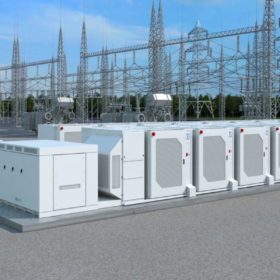
Fluence, ReNew to set up energy storage venture
Fluence and ReNew Power will set up a new joint venture to provide energy storage products for the Indian market. ReNew will become its first customer by procuring a 150 MWh battery-based energy storage system for a 300 MW project in the Indian state of Karnataka.
