
Enphase acquires German IoT specialist GreenCom Networks
Enphase is now waiting for final approval from the EU authorities and expects to finalize its plans to buy GreenCom Networks in the fourth quarter.

Micro hydropower system for building applications, usable with solar
Japanese startup Yumes Frontier has developed a 2.7 kW micro-hydropower system that can be used in some buildings. It can also be combined with solar to provide power for lights and surveillance cameras.

India’s Reliance Industries presents scaled-up solar, battery ambitions
Reliance Industries says that production will begin at its 10 GW factory for solar cells and modules by 2024. It plans to double the facility’s capacity to 20 GW by 2026 and is aiming for 50 GWh of annual cell-to-pack battery capacity by 2027.

Aluminum-sulfur battery for small-scale storage at $8.99/kWh
Massachusetts Institute of Technology researchers have developed a battery with two electrodes made of aluminum and sulfur, and a molten salt electrolyte placed between them. They said the sulfur electrodes with a high loading of 12.0 mg cm2 can sustain a high capacity of 520 mAh g–1 over 100 cycles at 5 C.
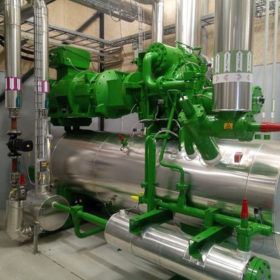
Ammonia heat pump for wastewater
Aalborg CSP will connect a 2.5 MW ammonia heat pump to a district heating system operated by E.ON Denmark. The facility will be located at a local wastewater treatment plant.

Grid-forming inverter to stabilize microgrids
Toshiba has developed a smart synchronous inverter that stabilizes power fluctuations in microgrids. The Japanese company said it has tested the device in combination with PV and battery storage.
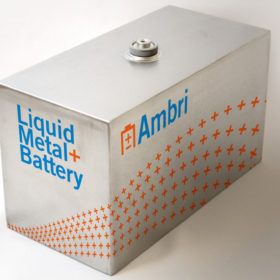
US utility to demonstrate liquid metal long-duration storage at solar test site
US utility Xcel Energy will test the use of Ambri’s energy storage technology at the Solar Technology Acceleration Center.
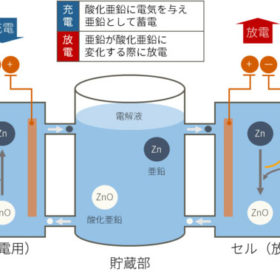
Sharp begins developing zinc-air flow batteries for renewables storage
Sharp is developing a zinc-air battery tech for renewables storage. The device will be reportedly safer than their lithium-ion counterparts, with high energy densities.
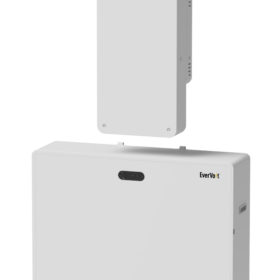
Panasonic launches new warranty package for solar and battery storage
The company now offers a 25-year warranty for its panels and 10 years for its energy storage system.
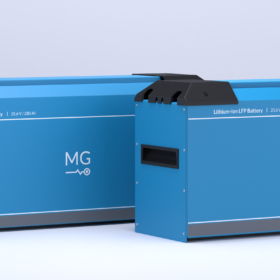
New battery for residential, commercial applications
Dutch manufacturer MG Energy Systems is offering a new storage system in two versions, with capacities of 5.8 kWh and 7.2 kWh and nominal capacities of 230 Ah and 280 Ah.
