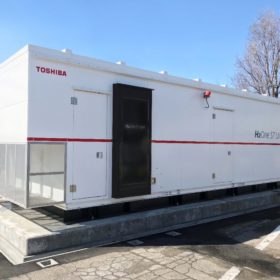
Toshiba energizes PV-powered hydrogen refueling station in Japan
The system is reportedly able to refill about eight hydrogen fuel cell vehicles, each in three minutes. It is also able to supply electric power by using hydrogen produced with renewable energy within the station.
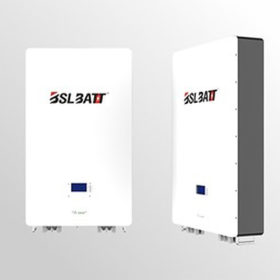
New residential lithium-ion battery from China
Chinese manufacturer Bslbatt has unveiled an upgraded version of its residential battery. The device has a storage capacity ranging from 5.12 to 12.8 kWh and is reportedly able to provide steady operation for up to 6,000 charge cycles.
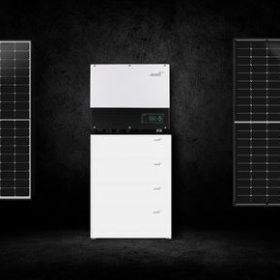
JinkoSolar unveils battery system for Australian residential market
Having established a strong foothold in the Australian market with its solar PV panels, Chinese manufacturer JinkoSolar is now seeking to expand its influence in the energy storage space with the launch of its modular Suntank home battery storage system.
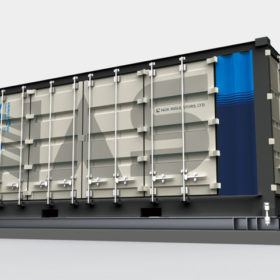
NGK Insulators links 200 kW/1,200 kWh NAS battery to 2.6 MW rooftop solar array at Japanese factory
Both the battery and the PV system are due to begin commercial operations in 2024.
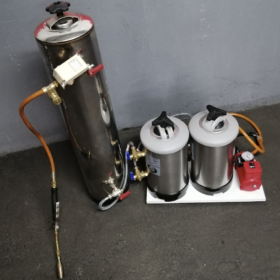
UPDATED – New tech to produce hydrogen from tap water
A Spanish scientist has developed a system that reportedly produces hydrogen on-site without expensive electrolysis. The prototype utilizes a water tank that is initially filled with water, ferrosilicon, and sodium hydroxide.
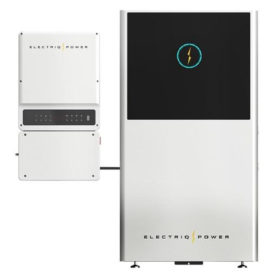
Electriq Power residential batteries beat the heat with backup power, smart time of use
A home battery paired with rooftop solar can provide backup power during rolling blackouts, shift power usage schedules to avoid peak demand charges, among other benefits.
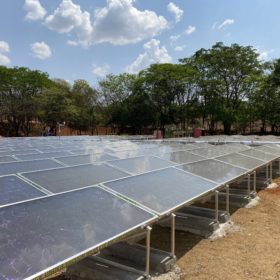
Solar thermal panel for large scale applications
The panel has an absorption area of 1.96 m2 and a weight of 27 kg per square meter. According to the manufacturer – Swiss startup TVP Solar – it may be a real booster for thermal output, by combining it with photovoltaics and heat pumps to provide enhanced output per square meter, in particular for low-temperature applications such as district heating.
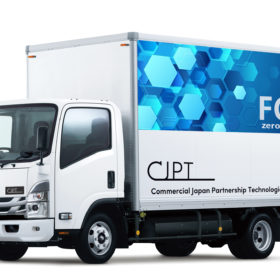
The Hydrogen Stream: Gas prices are higher than levelized cost of hydrogen for several technologies in Europe
In other news, Toyota unveiled plans to roll out light-duty hydrogen fuel-cell trucks for the Japanese market next year and the UK has launched a contract for difference scheme for large scale hydrogen projects. Furthermore, Japanese scientists have designed a ruthenium complex with a nitrogen-containing organic compound to improve high-temperature proton conduction in fuel cells.

PEM fuel cell with novel biomimetic design
Spanish scientists developed a proton exchange membrane fuel cell with a bipolar plate based on a nature-inspired structure. This architecture, according to its creators, shows remarkable performance when operating at high relative humidity values of 90%.
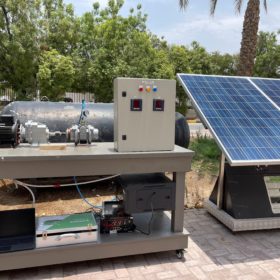
Compressed air storage vs. lead-acid batteries
Researchers in the United Arab Emirates have compared the performance of compressed air storage and lead-acid batteries in terms of energy stored per cubic meter, costs, and payback period. They found the former has a considerably lower Capex and a payback time of only two years.
