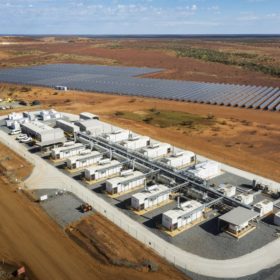
56 MW hybrid wind-solar plant powers up at Australian gold mine
The unique solar, wind, and battery project has been completed at Gold Fields’ Agnew Gold Mine, marking Australia’s largest hybrid microgrid of its kind.
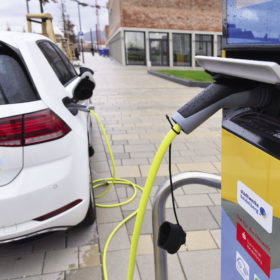
Electric vehicles show more resilience than conventional cars during Covid-19 shock
EV sales are set to be 1.7 million off because of the economic fallout of the Covid-19 crisis, however analyst BloombergNEF predicts that will be less of a hit than the anticipated fall in sales of conventional cars, increasing the penetration of electric models into the overall market.

University of Queensland’s Tesla battery paying for itself
The University of Queensland has released a performance report on the Tesla Powerpack it installed in December 2019. Across a range of revenue streams, the Powerpack is already earning the university some serious cash.

Big solar and power-to-gas arrive in Finland
Energy company EPV Energy is planning to build a 100 MW solar park to replace peat energy production. Peers Wärtsilä and Vantaa Energy are planning a power-to-gas facility to produce carbon-neutral synthetic biogas using electricity and carbon dioxide from a waste-to-energy plant.
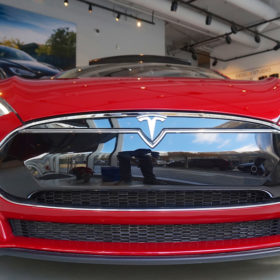
Battery electric vehicle sales in UK were outpacing hybrids – before Covid-19 struck
Pure EVs had begun to claim a rising market share before coronavirus containment measures decimated sales last month. Even in the face of an 88% monthly fall in EV sales from March to April, however, clean energy models fared better than petrol and diesel sales.
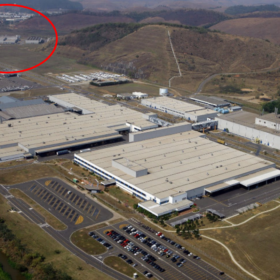
Brazilian buses to help drive down cost of lithium-sulfur batteries
British manufacturer Oxis Energy has announced plans to help Brazil to an all-electric bus fleet by 2045.

A closer look at battery degradation, assisted by machine learning
Scientists at the SLAC National Accelerator Laboratory in the U.S. have developed a machine learning algorithm that can identify and track individual particles within a lithium-ion battery cell. Their findings shed more light on how the batteries lose performance over time, and could challenge previous assumptions of scientists working to develop batteries with longer lifetimes.

A 3 GWh redox flow battery factory in Saudi Arabia
German production equipment provider Schmid and Saudi chemical group Sabic are planning to begin activities at a new factory in Saudi Arabia, with production being expected to begin in 2021.
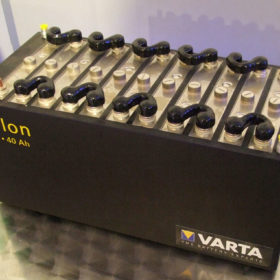
Lithium-ion storage is here to stay
A German-Israeli research group has gathered for three days to discuss which storage technologies may outperform lithium-ion batteries in the future. They concluded that there is no such a thing as a “post Li‐ion” era in sight. They recommended a “side‐by‐side” approach for multiple technologies in different applications, as well as the hybridization of technologies. The group highlighted the strong potential of redox flow storage, which in their view may outperform Li‐ion, although only for stationary applications.

Form Energy claims aqueous air battery provides 150 hours of storage
The holy grail of energy storage has always been low-cost and long-duration. Form Energy intends on deploying a 1 MW/150 MWh system with a Minnesota utility before 2023, an unprecedented energy storage duration if successful.
