EU lender pitches in for LG Chem battery gigafactory in Poland
The European Bank for Reconstruction and Development is lending €250 million for a project which has expanded from producing an initial 100,000 EV batteries per year to an hoped-for 1 million by 2022, creating 1,000 new jobs along the way.
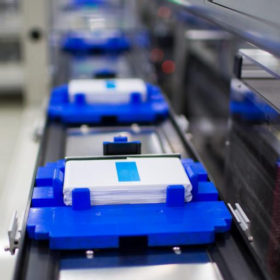
E-waste company opens battery recycling plants in Singapore and France
TES issued a press release announcing the new facilities that is light on detail but claimed the plants would position it as ‘a leader’ in battery recycling. The company also announced an intent to move into the reuse of spent electric vehicle batteries in commercial and residential applications.

Tuvalu granted $6m for renewables ambition
The Asian Development Bank has signed off a grant for the South Pacific island nation to move on its plans to be 100% renewable by 2025.

Pyrazine polymer PHATNs up cathode in sodium-ion batteries
Scientists at the University of Maryland have developed an organic polymer electrode which they claim demonstrates stable function for a sodium-ion battery over 50,000 cycles and also offers encouraging performance in magnesium-ion and aluminum-ion storage devices.

Grid solutions: An interview with Greg Tremelling of Oztek
In this interview, pv magazine sits down with Greg Tremelling, VP of business development at Oztek Corp, to talk about his company’s semi-custom solutions and where he sees the energy storage industry going.
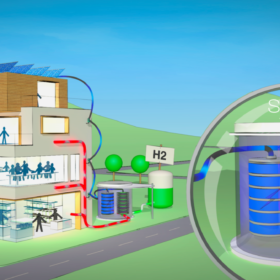
French consortium develops hybrid storage and co-generation system
The Smart Energy Hub can operate in electrolysis mode to store renewable energy as hydrogen, or in fuel cell mode to produce electricity and heat from previously produced hydrogen or methane. Its developers are the French Alternative Energies and Atomic Energy Commission and start-up Sylfen.

EDF Pivots towards bigger electric vehicle and storage activity
The French energy giant has acquired U.K. start-up Pivot Power, which has a 2 GW pipeline of storage projects in Britain.
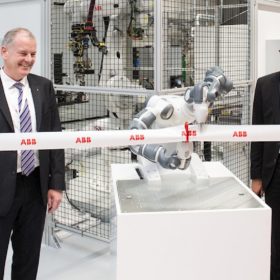
ABB strengthens e-mobility profile and builds digital microgrid at factory
The Swiss multinational has opened a production facility for energy storage systems for the mobility market and placed a 900 kW rooftop array on one of its Italian factories.
A banner year for advancing non-battery storage
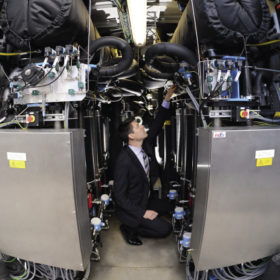
This has been a breakthrough year for non-battery storage, with key advances in pumped hydro, power-to-gas, and thermal storage technologies. Many industry players are moving beyond pilot projects to contracted projects, which could lead to increased scale and lower costs.

Swedish Solar Expo touts solar and hydrogen community project
Where seasonal storage is paramount, hydrogen comes into play. Under-the-radar solar market Sweden has presented its hydrogen projects and technological solutions to overcome the country’s natural solar barriers.
