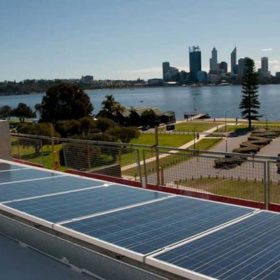
ANZ, CEFC deepen ties to help businesses invest in PV, EVs, storage
Australian banking and financial services giant ANZ has extended its collaboration with Sydney-based Clean Energy Finance Corp. via an additional $67.7 million financing commitment to help the nation’s businesses cut energy costs and reduce carbon emissions. The bank is also offering financial discounts for upgrades and new investments in solar PV, energy storage, electric vehicles and other technologies.

Lithium-ion batteries still set for US tariffs on September 1
The energy storage market is set to be the latest affected by Trump’s trade war as lithium-ion batteries were excluded from the group of Chinese imports for which the U.S. president announced tariffs would be delayed until December 15.

Ganfeng Lithium’s Hong Kong-based shareholders rebel
Holders of almost two-thirds of the miner’s Hong Kong listed stock voted down a proposal to issue new non-Chinese shares that would dilute their investment by around a quarter. The board had proposed the move to raise funds for further lithium extraction overseas.
Asian battery manufacturers eye European riches on offer
A report produced by an AI and automation market research company says an anticipated boom in the European storage market – driven by a desire to reduce carbon emissions – will attract producers as demand outside China tails away.

Flanders provides incentives for residential storage
Since the beginning of August the Flemish government has granted a €250/kWh rebate for the purchase of domestic batteries. The program is set to run until the end of next year.

New US study finds renewable energy storage costs need to drop 90%
Researchers in the US have published a study that brings 20 years of renewable energy (solar PV and/or wind plus storage) generation into line with historical energy-demand profiles, to ascertain at what storage cost point renewables can cost-effectively consistently meet 100% demand.
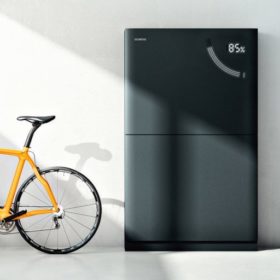
Residential storage in Europe to grow 500% by 2024
A new report from analysts at Wood Mackenzie forecasts 6.6 GWh of residential energy storage to be installed across Europe by 2024. The economics of the technology are at a tipping point, increasingly reaching grid parity in European markets. With rising electricity demand and falling battery system costs, the trend will further spread across the continent and fuel an uptick in demand.

Everything is growing at Sunrun – including customer acquisition costs
Sunrun saw growth in deployments, revenues, cash and funding, as it expands its solar+storage business and pursues capacity sales. But the company and the larger third-party solar space are facing a sticky problem.
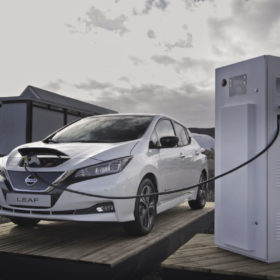
‘Unprecedented’ collaboration between EV manufacturers could launch large-scale transition
Energy analysts from the United Kingdom have found that many of the world’s largest car manufacturers that are launching EVs, or looking to launch EVs, are engaged in an “unprecedented” level of collaboration in order to share the costs and risks inherent in EV development. Cornwall Insight found that the collaboration could see a major boom in supply from the early 2020s.
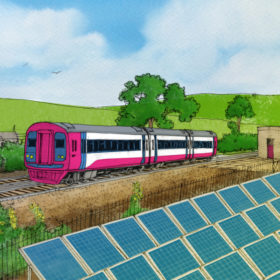
Don’t have a node for your solar plant? Connect it to the railway!
Railway operators can now feasibly connect solar plants to traction substations, claims a consortium that is now working on a similar demonstration project in the U.K. Almost all of the 30 kW installation’s output will be used to move trains, but in the future storage could come into the picture for larger “railway-connected” solar power projects, says 10:10, the U.K.-based climate change charity that developed the pilot.
