
Eaton talks business cases for energy storage systems in stadiums, hospitals and data centers
At the end of June, Amsterdam’s Johan Cruijff ArenA inaugurated Europe’s largest energy storage system using new and second-life energy storage batteries in a commercial building, alongside partners Eaton, The Mobility House, Nissan and BAM. pv magazine attended the event and spoke to those involved. Below is the first in a series of three interviews with the partners, looking at their involvement in the project, and what their future plans are.
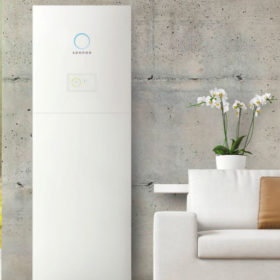
Sonnen hits almost €10 million in PV storage sales in June
The German PV home storage provider delivered around 1,500 solar batteries globally last month. At around 75%, most systems went to Germany, Austria and Switzerland.
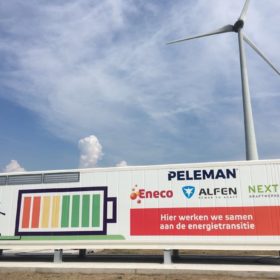
Next Kraftwerke connects 2 MW battery to its VPP in Belgium
The virtual power plant (VPP) solutions provider connected its product with a 2 MW storage system in Belgium. It will be the country’s first storage system to take part in the grid’s frequency control reserve.
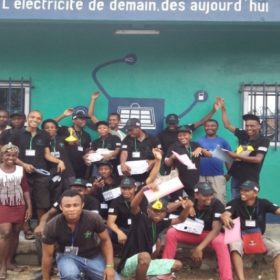
Veolia Foundation supporting a nano-grid project in Madagascar
The project connects four to six households, and lets dwellers pre-purchase daily access to electricity using a mobile app. A successful trial phase has just been finished and the executing association, Nanoé Développement has set new goals to reach in the near future.
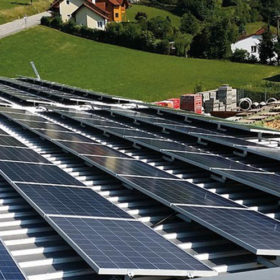
Swiss scientists develop machine learning algorithm to optimize home solar-plus-storage
The research team used real-world energy consumption data from 4,190 Swiss households to analyze how different cost scenarios may influence optimal photovoltaic-battery (PVB) system deployment.
Distributed energy storage standards project launched in Australia
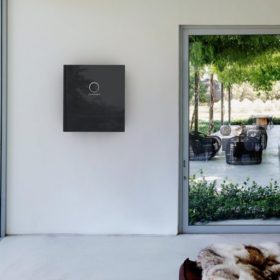
DNV GL, Deakin University, the CSIRO, and the Smart Energy Council have come together to collaborate on a two-year project to develop a new performance standard for distributed energy storage systems. The work behind the proposed Australian Battery Performance Standard is being funded $1.9 million from ARENA and the Victoria state government.
China’s CATL to invest €240 million in Europe’s first battery cell fab
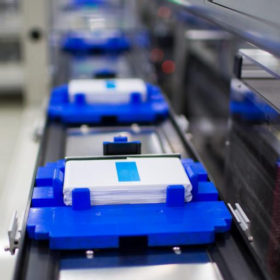
The Chinese battery manufacturer has said it will establish a fab in Germany’s Thüringen with an annual capacity of 14 GWh. The battery cells will be primarily produced for the electric vehicle (EV) industry. Up to 600 jobs are expected to be created. In related news, BMW has entered a €4 billion long-term partnership with CATL.
New solar water-splitting cell demonstrates 19.3% efficiency, increasing longevity significantly
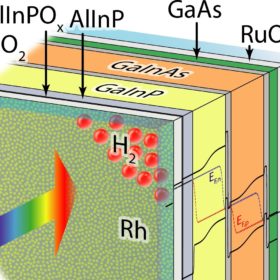
The cell uses a novel approach that increases its conversion efficiency and longevity at the same time. Researchers claim it is a new world record for this type of application and highlight its importance in storing renewable energy in hydrogen to compensate for output and demand fluctuations.
Power2U energy management platform launched in Sweden
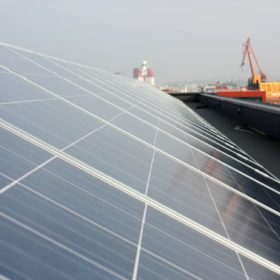
InnoEnergy has launched its energy management platforms with local partners in Sweden. The platform would help integrate renewable energy resources through battery storage management algorithms. An expansion into other markets is planned already.
Panasonic mulls further investment in Tesla battery gigafactory as shortages loom
The suggestion of additional investments beyond the $1.6 billion follows reports of battery cell shortages as Tesla’s Model 3 picks up production. It is unknown what impacts this will have on Tesla’s stationary storage business.
