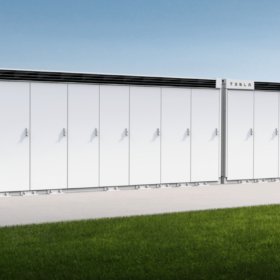
Tesla, Harmony Energy switch on 98 MW/196 MWh storage project in UK
Tesla and Harmony Energy have connected a 98 MW/196 MWh storage project to the grid in Hull, England. The Pillswood battery energy storage system (BESS) features Tesla’s Megapack solution.
Australian startup to fast-track gravity energy storage system
Australian renewable energy startup Green Gravity plans to accelerate the commercialization of its gravitational energy storage technology – which aims to generate clean, dispatchable energy by lowering weights down old mine shafts – after signing an agreement with global professional services company GHD.
Weekend read: A game of risk
The rising popularity of “baseload” power purchase agreements (PPAs) has posed questions to solar electricity suppliers in the German market. How can projects that do not generate at night, and with wide seasonal output variation, effectively supply constant power to consumers? More importantly, who shoulders the price risk?
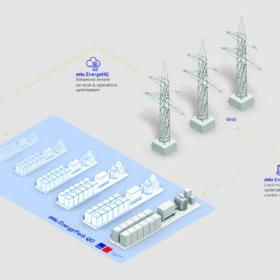
Rolls-Royce to supply largest battery in Netherlands
Rolls-Royce has agreed to install a 30 MW/60 MWh storage system based on nickel-manganese-cobalt (NMC) batteries in the Netherlands. It will be the country’s largest energy storage system upon completion in spring 2023. It will provide grid frequency regulation services to the Dutch grid.
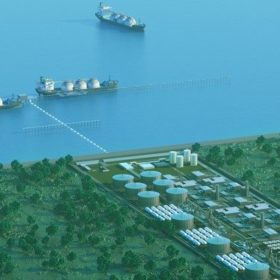
The Hydrogen Stream: TES, EWE plan 500 MW electrolyzer in Germany
A group of German companies plans to set up a 500 MW electrolyzer for a 1 GW green hydrogen project in the North Sea. US scientists, meanwhile, have engineered a light-activated nanomaterial to convert ammonia into hydrogen, and Canadian researchers have unveiled a new way to structure catalysts for fuel cells.

Neoen secures grid approval for hybrid wind-solar-storage project in Australia
Neoen has signed a grid-connection agreement with ElectraNet for the first stage of its AUD 3 billion ($2 billion) Goyder South project in Australia, paving the way for future wind, solar and battery storage opportunities at the site.
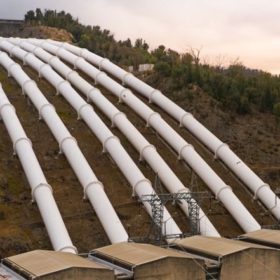
Australian companies targeting 4.5 GWh of pumped hydro storage
The developers behind a proposed AUD 5.5 billion ($3.7 billion) pumped hydro renewable energy project in Australia have announced a new partnership to pair 4.5 GW of long-duration energy storage with new renewables capacity and green hydrogen production.
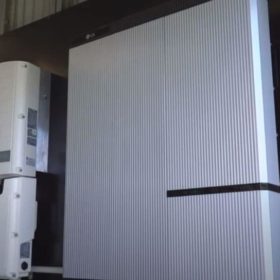
Australian consumer watchdog expands LG solar battery recall
The Australian Competition and Consumer Commission (ACCC) has started contacting about 5,000 households as part of an updated recall of solar batteries, mainly due to fire concerns.
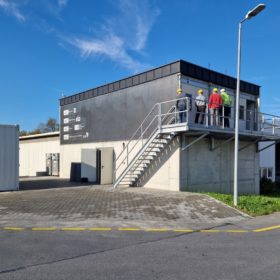
Lithium-vanadium battery for renewables storage
AMG Advanced Metallurgical Group has energized its first hybrid storage system based on lithium-ion batteries and vanadium redox flow batteries in Germany. The system reportedly combines the advantages and electrochemical properties of both storage technologies.
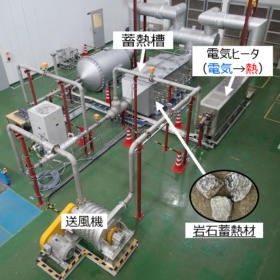
Toshiba, Marubeni launch rock-based thermal energy storage tech pilot
Toshiba and Marubeni have revealed plans to build commercial projects based on thermal storage technology using rocks. They have set up a demonstrator with 100 kWh of storage capacity and a relatively high heat storage density.
