The weekend read: From solar to gas
The opportunities for power-to-gas have long interested the solar community, but large-scale projects have been exceptionally rare. The outgoing CEO of SolarPower Europe, James Watson, has presided over a transformative period at the organization, and departed in January to head up Eurogas – right at the point the region’s solar sector is set for revival. Advancing a power-to-gas agenda, Watson tells pv magazine editor in chief Jonathan Gifford, will be a big part of his new challenge.

Australia on track for 50% renewables by 2024, at “zero net cost”
Clean energy is driving the country to its Paris commitments well ahead of schedule. The Australian National University published findings today that conclude Australia is on track to hit 50% renewable electricity in 2024 and 100% in 2032 – at a net cost “of approximately zero”. Despite the good news, the Clean Energy Council warned federal policy may see the opportunity squandered.
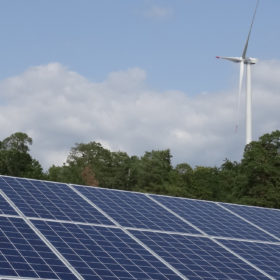
China’s largest renewables hybrid project adds 100 MWh battery
Chinese li-ion battery manufacturer CATL has delivered a 100 MWh battery storage system to the country’s largest mixed renewables plant, which features 400 MW of wind energy, 200 MW of PV and 50 MW of concentrating solar.

Large-scale solar arrives in Quebec
State-owned utility Hydro-Quebec will deploy its first 10 MW of ground-mounted solar to test the technology at the province’s latitude. The hydropower company is also using storage to better manage winter peak demand. Bifacial modules will be included in both projects.
Super-grids vs prosumer states: storage may decide the battle
Indra Overland, head of the Center for Energy Research at the Norwegian Institute for International Affairs, explains how the world’s future energy landscape may include pan-regional super-grids. However, prosumer states seeking energy independence could also be in the mix. According to Overland, the two developments will go hand in hand and the balance between them will be determined by the competitiveness of storage technologies.

Massive solar-plus-storage projects move forward in Australia
The Robertstown region could host two big renewable energy projects – a 500 MW solar farm co-located with a 250 MW/1 GWh battery storage capacity, and a construction-ready 200 MW PV project with 120 MWh of storage that forms part of the Solar River Project, the size of which could eventually double.
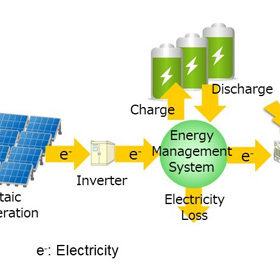
Japanese scientists seek to lower costs of PV-powered hydrogen
A research team has conducted a demonstration of the economic feasibility of battery-assisted, low-cost hydrogen production from solar. The scientists claim their system will mean hydrogen could be produced for $0.15-0.25 per cubic meter in 2030.
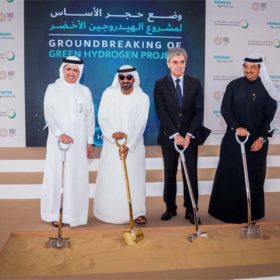
DEWA begins work on hydrogen facility at Rashid Al Maktoum park
Only three months after issuing the project tender, the Dubai Water and Electricity Authority is building the plant with the support of Expo 2020 Dubai and Siemens.

Tokyo Gas invests further in solar and creates JV for storage
The acquisition of a 4.8 MW solar plant in the Kyoto prefecture and creation of a joint venture with Japanese storage specialist Exergy are part of the group’s 2020 plan to diversify its business into renewables and acquire 1 GW of capacity in them.

Debunking the low-cost nuclear myth
An article published in the FT this week was right to point out that pricing new energy capacity involves more than just comparing strike prices, but if you are in the business of calculating real costs, do it properly. For nuclear in particular, that’s a case of ‘in for a penny, in for (several) pounds’.
