Green Deal will remain after EU elections, just with different marketing, says analyst
In an interview with pv magazine, Linda Kalcher, executive director at European think tank Strategic Perspectives, described the possible consequences of the recent EU elections on the continent’s energy landscape. “Investors and businesses need security and predictability to thrive,” she said. “If cleantech is not manufactured here, the jobs and investments go to the US and China and a deindustrialisation looms. This cannot be in the interest of any politician,”

PV installation triggers border dispute between Chile and Argentina
Chilean President Gabriel Boric complained that the solar array installed on a military base in Argentine Patagonia were located three meters inside Chilean territory. “They must remove those solar panels as soon as possible or we are going to do it,” he warned. The Argentine government recognized the error.
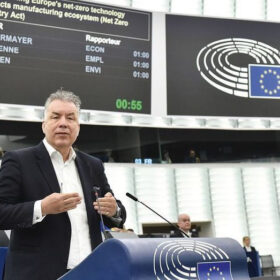
EU set to dig into raw materials supply
The European Union has drawn up new regulations to boost the domestic mining of raw materials and support production of renewable energy products and materials at home. Will it be enough to incentivize investment, or will Europe trail other major economies, such as the United States and China?
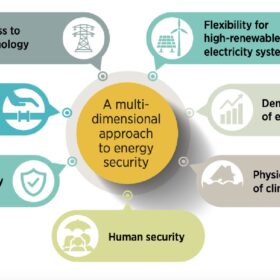
Energy security in renewables-based systems
A new report from the International Renewable Energy Agency (IRENA) examines the global energy system’s transformation and its implications for energy security. It tells policymakers that energy security in renewables-based systems will require multi-dimensional thinking.
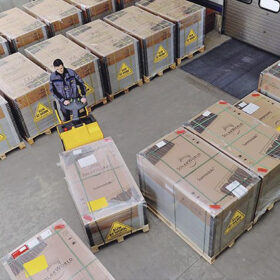
US solar prices double European costs amid regulatory challenges
The requirements of measures such as the Uyghur Forced Labor Prevention Act (UFLPA) mean that solar panel prices in the United States can be twice as much as in Europe.
India, Australia sign deal to secure supply chains
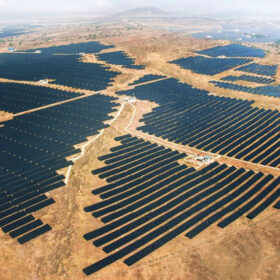
Economic cooperation between India and Australia may open doors for investment in clean energy technology, but challenges still abound in a competitive global market. Vibhuti Garg and Shantanu Srivastava, of the Institute for Energy Economics and Financial Analysis (IEEFA), discuss the role that public funding and resource pooling could play in supporting manufacturing ambitions.
Solar key to easing Burundi’s severe energy crisis
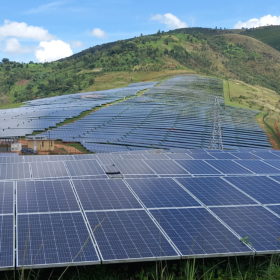
Burundi, the poorest country on earth, is unable to buy fossil fuels on theinternational market due to a lack of hard currency. pv magazine spoke with the United Nations Development Programme (UNDP) and a PV analyst to assess the true potential of PV in the nation’s current energy crisis.
South Korea plans 120 GW space solar project
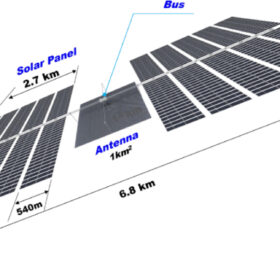
Two Korean research institutes are designing the 2.2 km × 2.7 km Korean Space Solar Power Satellite project with the aim of providing approximately 1 TWh of electricity to the Earth per year. The proposed system should use 4,000 sub-solar arrays of 10 m × 270 m, made out of thin film roll-out, with a system power efficiency of 13.5%.
Attica-Crete leg of Mediterranean super grid due mid 2025
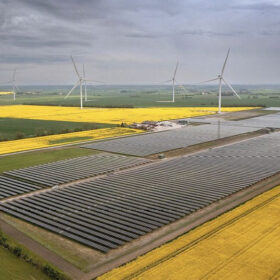
Greece has grand plans for an interconnector network that runs from the Middle East through to the heart of Europe. pv magazine examines the latest developments on the road to a Mediterranean super grid and what it might mean for the regions involved.
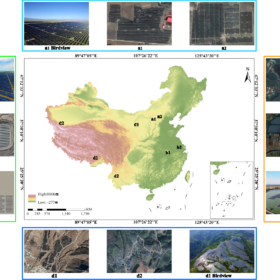
Online map for ground mounted solar plants in China
The China Agricultural University has created an online dataset presenting all PV plants deployed in China at the end of 2020. The tool shows China ground mounted solar facilities occupied a surface of 2,467.7 km2 at the end of December 2020.
