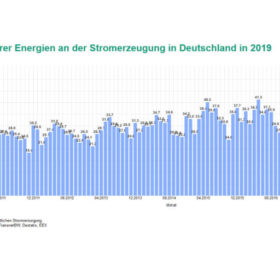
Germany: renewables covered 54% of net power production in March
Germany set a new record in March as more than half of its power was generated from wind, PV and other renewables. In the first quarter, renewables accounted for 45.4% of net electricity generation, according to Energy Charts from Fraunhofer ISE.
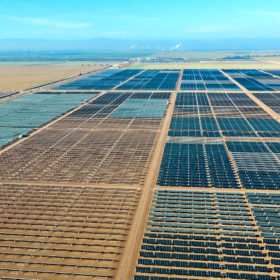
Solar Frontier becomes a unit of Idemitsu
The Japanese CIS solar module maker has been acquired — along with its parent company, Showa Shell Sekiyu — through a share exchange by Japanese oil refiner Idemitsu. The transaction was announced in mid-October, while the preliminary agreement was signed in July.
Tunisia reveals winners of second 70 MW PV tender
The Tunisian government awarded contracts for six 10 MW solar projects in the country’s second solar tender. The tender process was launched last August.
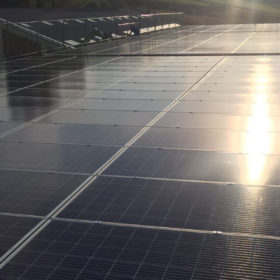
Germany deployed 1 GW of solar in first two months of 2019
Approximately 420 MW of solar power was newly installed in February. The strong growth for the first two months of the year was mainly due to the FIT cuts for commercial PV projects.
Goldman Sachs to snatch up 233 MW of C&I solar from SunPower
The transaction feeds the growing appetite of institutional investors for solar projects and provides SunPower with more cash.
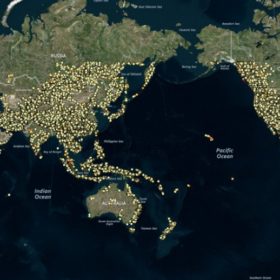
More than a half million pumped-hydro sites for a world of 100% renewables
A recent Australian National University study shows that newly developed geographic information system algorithms can identify prospective sites for off-river pumped hydro projects throughout the world. The researchers, who identified around 530,000 potential sites, said pumped-hydro installations could enable large-scale energy time-shifting, as well as a range of ancillary services such as frequency regulation, which could help to integrate high levels of PV and wind into electricity systems.

Exponential or slow growth?
The Turkish solar market finds itself at a crossroads in 2019, with previous policy settings coming to an end and more questions than answers being raised by recent government efforts. While the YEKA projects to date have delivered little in terms of installations, Muren Guler from Global Energy Ltd believes that ‘Mini YEKA’ could provide just the boost manufacturers, suppliers, and developers are looking for.
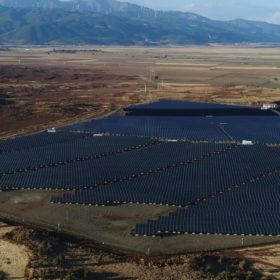
Mega projects, mega problems
The clouds gathering over Turkey’s 1 GW solar park in Konya, the first YEKA tender, are dominating discussion among the country’s PV players. Developments surrounding the Konya tender illustrate the Turkish solar market’s challenges, as the country’s unsteady economy and its policy preference for local manufacturing appear to be acting as a brake on installations.

Brazil’s PV capacity exceeds 2.5 GW
With around 2,056 MW of operational installed capacity from large-scale PV and more than 500 MW of installed distributed-generation capacity, Brazil has now surpassed Chile to become Latin America’s second-largest solar market after Mexico. According to new statistics released by Brazilian industry association ABSOLAR, utility-scale solar currently accounts for around 1.2% of the country’s total generating capacity.
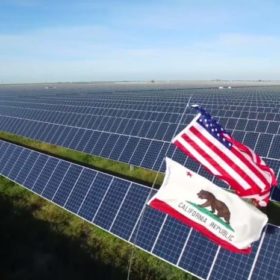
Big batteries are coming to California
Macquarie has closed on funding for a third portion of a 340 MWh project in Southern California, and LADWP is planning 1.8 GW of batteries.
