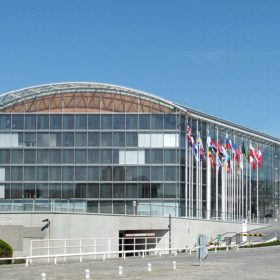
EIB committed €1 billion to solar last year
The European Investment Bank (EIB) made its solar investments in 13 European Union countries, as well as in India, Mexico and Peru in 2017. The bank’s total investment volume for solar projects since 2002 amounts to around €6.3 billion.
pv magazine Storage Highlights’ ranking 1 to 24
Overall, 24 exhibitors from the upcoming Energy Storage Europe event in Germany’s Düsseldorf submitted proposals to the pv magazine Storage Highlights’ jury. They were ranked in the following categories: Relevance to industry; USP; Market impact; Contribution to the energy transition; and Innovation. Read on to discover how they fared.

Trump imposes ‘flexible’ steel and aluminum tariffs
U.S. President Trump has exempt Canada and Mexico from 25% import duties on steel and 10% duties on aluminum, and has further left the door open to exempting any nations with which the United States has a “security relationship”.

Australian researchers demonstrate first working proton battery
Scientists at the Royal Melbourne Institute of Technology (RMIT) have demonstrated the first working example of a “proton battery”, which utilizes a carbon electrode and a reversible hydrogen fuel cell for the storage of energy. The scientists say their small prototype has already demonstrated similar storage capacities to commercially available lithium-ion batteries, with plenty of potential for further optimization.

Sungrow signs storage inverter supply agreement for 30 MWh storage project in Japan
The Chinese power electronics company will ship its turnkey energy systems comprising storage inverters, NCM lithium batteries and an energy management system to a 30 MWh storage project being built in Hokkaido, Japan.
Kazahkstan tenders 290 MW of solar
Overall, new auctions launched by the Kazakh government will allocate 1 GW of renewable energy generation capacity, including 620 MW of wind power plants.
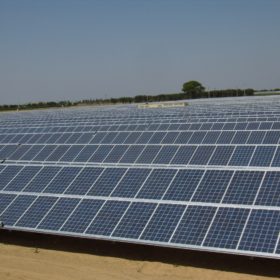
Solar Ventures plans 1 GW of ‘grid-parity’ projects in Italy, Spain
The Italian solar plant operator has decided to re-enter the Italian PV market, as costs for large-scale solar are now under €1 million/MW and conditions for unsubsidized projects are improving. Overall, it plans to invest around €800 million in solar in the two southern European countries over the next five years.

Building a better world of smart structures on the smart grid
It is a truth universally acknowledged that billions of people around the world live in poverty. But does it have to be that way? Today’s technological progress means that tomorrow we will be able to produce more, more efficiently – lifting people above the breadline with accelerated economic growth all around the world. Key to these efforts are smart buildings, argues Hussain Kazmi, a PhD student at KU Leuven and Enervalis.
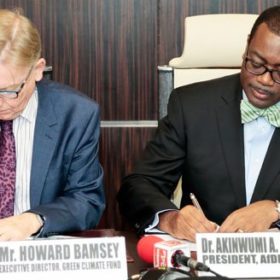
Over $50 million funding approved for solar projects in Zambia
The Green Climate Fund (GCF) has approved over US$50 million in funding for the development of up to 100 MW of renewable energy projects, primarily solar, in Zambia.
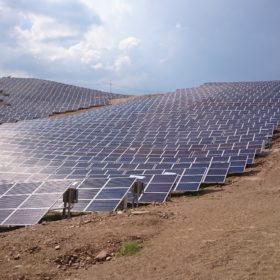
Turkey registers 522 MW of new unlicensed PV capacity in first two months of 2018
Overall, the country’s registered unlicensed solar capacity has reached 3.9 GW (AC), according to new data released by local grid operator, TEIAŞ. There are, however, differing views on how much has actually been completed and is operational.
