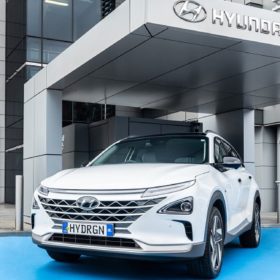
Australian gas supplier signs green hydrogen deal with Hyundai
Utility Jemena has agreed to produce hydrogen gas for Hyundai’s Macquarie Park headquarters in greater Sydney from early 2021.
Power-to-gas facility in Canada could pay back in just under three years
The facility’s size and operational pattern could be optimized using a mixed-integer linear programming-based model. By selling hydrogen, supplying grid ancillary services and selling by-product oxygen, power-to-gas economics could be dramatically improved.
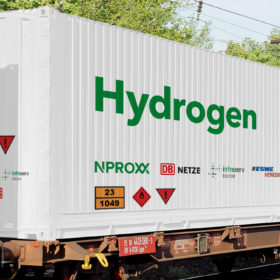
Hydrogen can be transported by rail, German railway company says
A study by DB Energie shows that technically and legally there is nothing to be said against the transport of hydrogen by rail. However, there is still a lack of suitable transport containers.
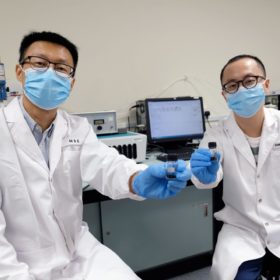
Low-cost catalysts for hydrogen production
Researchers in Singapore have taken a deep dive into spinel oxides – a class of materials known to act as a catalyst in the production of hydrogen through water electrolysis. Better understanding of how the materials work enabled the scientists to develop a machine learning model to predict their efficiency.
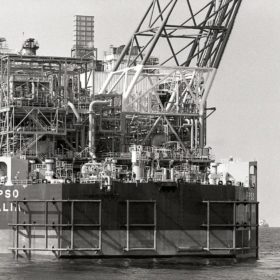
BP’s latest green pledge includes fossil fuel assets sell-off
The British energy company has pledged to raise investment in low-carbon energy – including biomass and natural gas-fired hydrogen – tenfold by 2030 and said it would reduce its upstream oil and gas activity 40% over the same period.
Green hydrogen economy assessment for US, Europe
A new report by the International Council on Clean Transportation provides forecasts for green hydrogen prices by 2050. The group claims to have included system costs that have been ignored in green hydrogen economy assessments thus far. Average green hydrogen prices, however, will almost be halved in the United States and Europe.
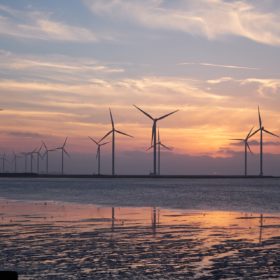
Testing floating PV, storage and hydrogen at Netherlands’ largest off-shore wind complex
Energy companies Shell and Eneco have secured the tender to build the 759 MW wind power plant. The partners will build a pilot solar park, short-term storage capacity and a green hydrogen plant at the facility, to assess their capabilities of balancing intermittent power.
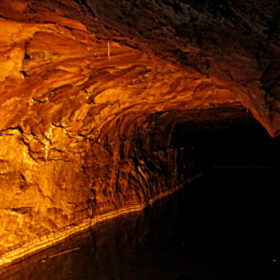
Hydrogen storage in salt caverns in France
Hydrogène de France and gas grid company Teréga plan to launch a feasibility study for a 1.5 GWh pilot hydrogen storage project in caverns in the southwest of the country.
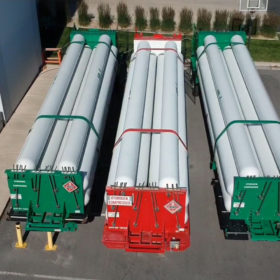
Portuguese consortium plans 1 GW green hydrogen cluster
A consortium will develop the huge project with Danish wind turbine maker Vestas by 2030.
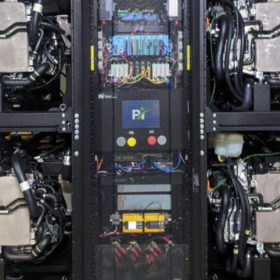
Microsoft trials hydrogen-powered data centers
The software giant has begun testing hydrogen fuel cells as a back-up power source at one of its U.S. data centers. A 250 kW pilot system successfully powered part of the facility for 48 hours and the company is now eyeing 3 MW systems to replace back-up diesel generators.
