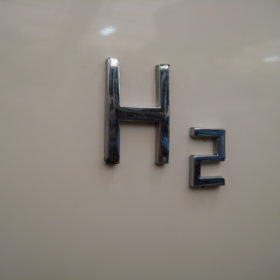
A perovskite electrode to improve hydrogen production
The material was used by scientists in the U.S. in electrochemical cells which use electricity to separate steam into hydrogen and oxygen. The researchers say the oxide of perovskite used in the electrode improves cell performance and reduces operating temperatures.
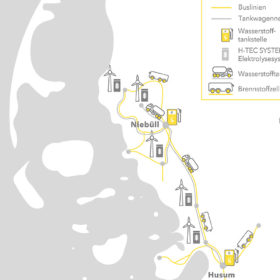
North German pilot hydrogen project gets cash boost
German company GP Joule wants to build hydrogen transport infrastructure in North Friesland. The electricity generated by five wind farms in the region will be converted to green hydrogen to be delivered to filling stations in Husum and Niebüll and used by two fuel-cell buses and five cars.

France makes 44 GW solar target official
Today’s edition of the Official Journal of the French Republic featured two long-awaited decrees: One concerning the multi-year energy program and another on national carbon budgets and the state’s low-carbon strategy.
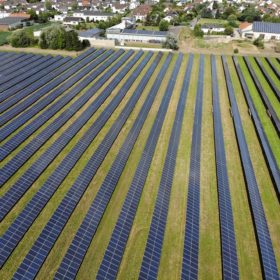
Would solar decarbonize French energy – or just replace nuclear?
A thinktank has studied whether increased solar energy would contribute significantly to reducing the carbon footprint of the French and European electricity systems in an attempt to respond to a common French refrain the nation needs no further decarbonization of energy because it has nuclear power.
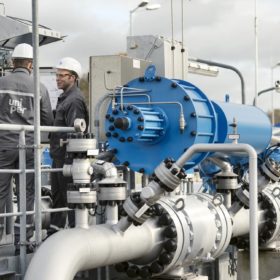
Bringing green hydrogen to market
German companies Uniper and Siemens will cooperate on joint projects to advance the use of green hydrogen and sector coupling. Conventional, gas-fired hydrogen production plants will be gradually transformed as part of the initiative.
Australian researchers enhance clean hydrogen electrolysis
Griffith University scientists have unlocked a catalytic process to enhance the breakdown of water into hydrogen and oxygen and bring Australia a step nearer clean, efficient hydrogen fuel.

South Korea’s president makes zero-carbon economy election pledge
For the first time ever, President Moon Jae-in’s ruling Democratic Party has vowed to achieve a zero-carbon economy, just weeks ahead of the April 15 legislative election.

Green hydrogen can power green Alpine tourism
An Austrian consortium has developed a hydrogen generation, storage and fueling station along with fuel cell-propelled snowmobiles. The team was so certain of the readiness of the solution they launched it during an FIS World Cup skiing event.
A power-to-gas system integrating co-electrolysis and methanation
Researchers in Italy extensively analyzed four different configurations of their proposed system to assess its potential, including under non-optimal, ‘off-design’ conditions and concluded that, for now, subsidies would still be required for the commercial production of synthetic natural gas.
The sky’s the limit: How solar and storage can set a post-Covid-19 example
The airline industry has been among the hardest hit by the Covid-19 pandemic; carriers are in ‘freefall’ as Glen Peters, research director at the Center for International Climate and Environment Research in Oslo recently wrote, with governments mulling stimulus packages for airline bailouts. How we react to the coronavirus outbreak is crucial for society as a whole and the solar and energy storage industries can lead the charge in rewriting the status quo.
